
When Ursula von der Leyen signed the EU–India agreement in New Delhi on 27 January, she called it “the mother of all deals”.
The agreement eliminates or reduces tariffs on 90% of trade between the two sides, which already amounts to more than €180 billion annually and supports close to 800,000 European jobs. European exporters are expected to save up to €4 billion per year in duties, with EU exports projected to more than double over time.
But what does that mean for Cyprus?
The trade balance
According to Antonis Fragkoudis of the Cyprus Employers and Industrialists Federation (OEV), Cyprus exported approximately €28 million worth of goods to India in 2024, mainly metals such as copper and iron. Imports from India reached close to €90 million, consisting largely of chemicals, pharmaceutical products, clothing, food items and electrical goods.
“Opening up trade with India presents very large prospects,” Fragkoudis said. “If raw materials can be sourced from India at significantly reduced tariffs, that would benefit us directly.”
At the same time, he cautioned against overstating the impact. “I do not see any extraordinary, Cyprus-specific gain beyond the broader benefits that the European Union as a whole may obtain,” he said, adding that KEVE supports agreements that widen markets and reduce trade barriers.

Positioning Cyprus
For KEVE’s Philokypros Rousounidis (Cyprus Chamber of Commerce and Industry), the agreement should be read within a broader strategic context.
“Cyprus is part of the IMEC corridor, which passes through the island,” he said, referring to the India–Middle East–Europe Economic Corridor. “This elevates the strategic importance of our geographic location.”
He argues that Cyprus can position itself as a gateway to Europe for Indian companies seeking access to the EU’s 450 million consumer market.
“Cyprus operates under European jurisdiction. We share a common law framework and offer a stable, competitive tax environment. It is easier to conduct business in Cyprus and via Cyprus,” he said.
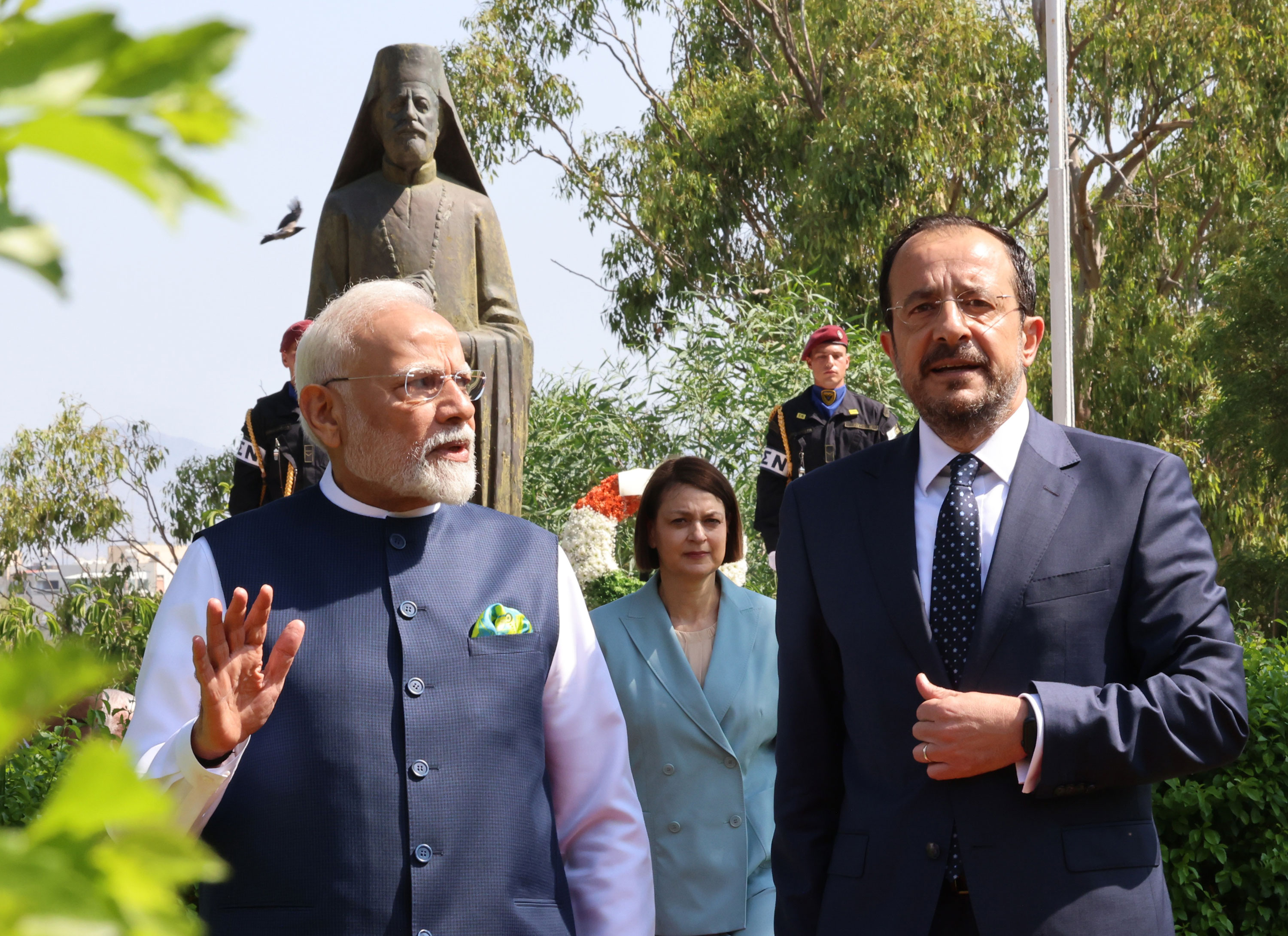
He also pointed to housing costs, healthcare infrastructure, safety and administrative speed as comparative advantages. “The visit of Prime Minister Modi and the upcoming visit of our President to India show that Cyprus is being taken seriously. It is important to build on this momentum,” he added.
A tangible signal of deepening commercial ties is the presence of Cypriot banking interests in India. Eurobank has established a presence in the country, a move that business leaders view as an early indicator of institutional confidence in the market. For Mr Rousounidis, this development “signals the beginning of a deeper commercial relationship with this vast market”. Banking infrastructure matters in trade expansion, as it facilitates investment flows, corporate structuring and financial intermediation between jurisdictions.
Shipping and pharmaceuticals were highlighted as potential sectors of interest. Many shipping companies headquartered in Cyprus already operate in India. “There may also be opportunities in pharmaceuticals, given the size of the Indian market,” Rousounidis said.
Von der Leyen herself referred to “the pharmaceutical entrepreneur in Cyprus considering whether to hire new staff to adapt for a distant market”, signalling that smaller member states are not outside the Commission’s line of sight.
Beyond trade
The agreement also includes the first EU–India security and defence partnership, covering maritime security, joint naval exercises against piracy, cybersecurity cooperation, counter-terrorism and space security dialogue.
Von der Leyen framed the deal as part of Europe’s effort to reduce strategic dependencies in an era of tariff escalation and economic fragmentation. In her words, “strength today is not built through isolation, but diversification”.
For Cyprus, which hosts one of the world’s largest ship management clusters, maritime security cooperation in the Indian Ocean region is not a theoretical concern. Protection of sea lanes remains directly linked to shipping operations connected to the island.
Mobility and growth
The deal deepens cooperation under Horizon Europe, the EU’s €100 billion research programme, and foresees innovation hubs and increased mobility. An EU Legal Gateway office in India will support talent mobility towards Europe.
Cyprus’ growth is forecast above the EU average this year, with estimates hovering around four percent. Sustaining that pace requires labour reinforcement.
“To sustain and capitalise on growth, we need workforce reinforcement,” Rousounidis said, adding that attracting high-skill talent from India could form part of the strategy.
The agreement expands the field of possibility in a world where trade routes, alliances and dependencies are being recalibrated. The extent to which Cyprus benefits will depend on how effectively the island converts access into activity.