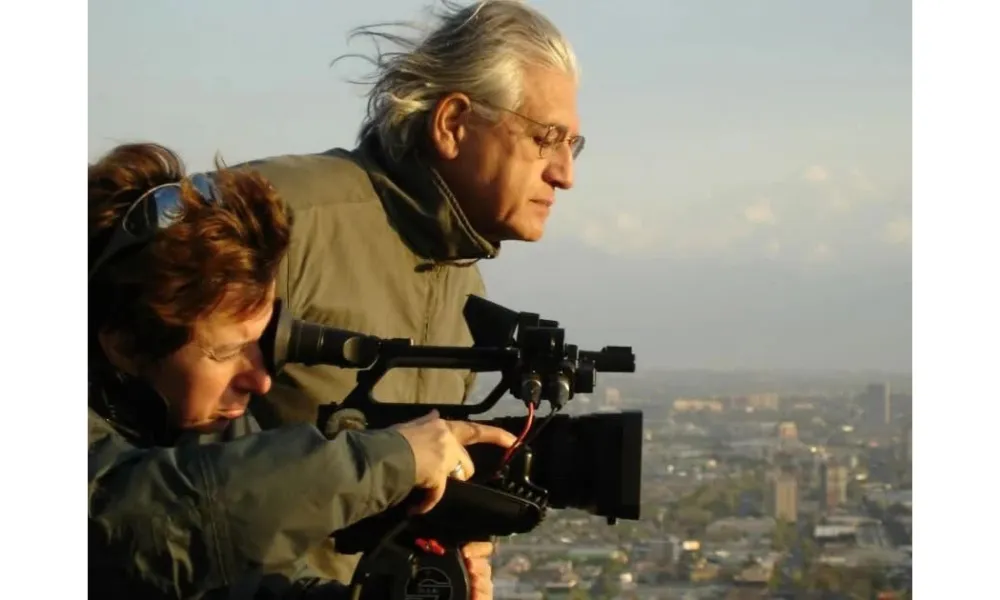

Patricio Guzmán, the Chilean documentary filmmaker whose landmark works chronicled the 1973 military coup in Chile and the country's long struggle with the legacy of dictatorship, has died at the age of 85.
Guzmán died in Paris on 15 September, his daughter Andrea Guzmán Urzúa announced. The filmmaker had lived in the French capital for more than three decades after years in exile following the military coup led by General Augusto Pinochet.
Widely regarded as one of Latin America's most influential documentary filmmakers, Guzmán built his reputation on two acclaimed trilogies about Chile. The first documented the political upheaval surrounding the overthrow of President Salvador Allende in 1973, while the second explored memory, loss and the lasting scars left by the dictatorship.
From Allende's Chile to the military coup
After studying film in Madrid, Guzmán returned to Chile in 1971, shortly after Allende's socialist government came to power.
His first feature documentary, "The First Year" ("El Primer Año", 1972), examined the early period of Allende's administration and attracted the attention of French filmmaker Chris Marker, who helped the film reach European audiences.
As tensions mounted in Chile, Guzmán began filming what would become his defining work. Already documenting the country's political crisis during the turbulent 1973 parliamentary elections, he was on the ground when military forces launched the coup that toppled Allende.
Guzmán was later detained by Chilean authorities and held for roughly two weeks in Santiago's National Stadium alongside thousands of others. Before his arrest, however, associates had succeeded in hiding and smuggling his footage out of the country. After his release, he left for Cuba, where he recovered the material and began editing it.
The Battle of Chile
The result was "The Battle of Chile", a three-part documentary consisting of "The Insurrection of the Bourgeoisie" (1975), "The Coup d'État" (1976) and "Popular Power" (1979).
The trilogy offered a detailed account of the political conflict that culminated in the coup and became one of the most acclaimed political documentaries ever produced.
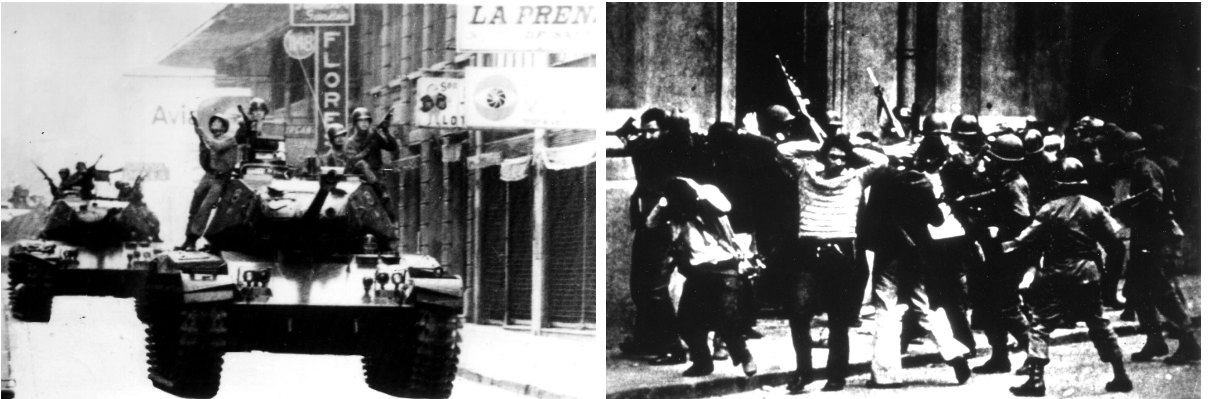
Among its most hard-hitting sequences is footage of cameraman Leonardo Henrichsen being shot and killed while filming, with his camera continuing to record.
"The Battle of Chile" established Guzmán as a leading figure in documentary filmmaking and a prominent cinematic critic of the Pinochet regime. The film was later included by Cineaste magazine among the most important political films ever made.
The work also condemned him to years of exile. After periods in Cuba and Spain, he eventually settled in France, returning to Chile only after the end of Pinochet's rule.
Memory, exile and a second trilogy
When Guzmán returned to Chile, he encountered a society still deeply divided over the dictatorship and its legacy.
Those questions became the focus of a second trilogy: "Nostalgia for the Light" (2010), "The Pearl Button" (2015) and "The Cordillera of Dreams" (2019).
More reflective and poetic than his earlier films, the trilogy examined Chile's landscapes as repositories of memory and history.
"The political is always present in everything, not only in my films," Guzmán told Documentary Magazine in 2011.
For Guzmán, politics was an ever-present element of human life, inseparable from memory, identity and artistic expression.
His later works continued to receive international acclaim. In 2019, "The Cordillera of Dreams" shared Cannes Film Festival's Golden Eye award for best documentary.
His final feature, "My Imaginary Country" (2022), focused on the mass social protests that erupted across Chile in 2019.
"I believe there will be another revolution, but it will take a long time," he told Film Comment in 2023.
A lifetime focused on Chile
Born in Santiago on 11 August 1941, Guzmán studied theatre, history and philosophy before turning to filmmaking. He later earned a film degree from Madrid's Complutense University.
Although he spent much of his life abroad, Chile remained at the centre of his work. More than half of his films dealt directly with the country's politics, history and collective memory.
He is survived by his wife, producer Renate Sachse, and his daughter Andrea, who collaborated on several of his later films.
Sources: The New York Times, Documentary Magazine, Film Comment