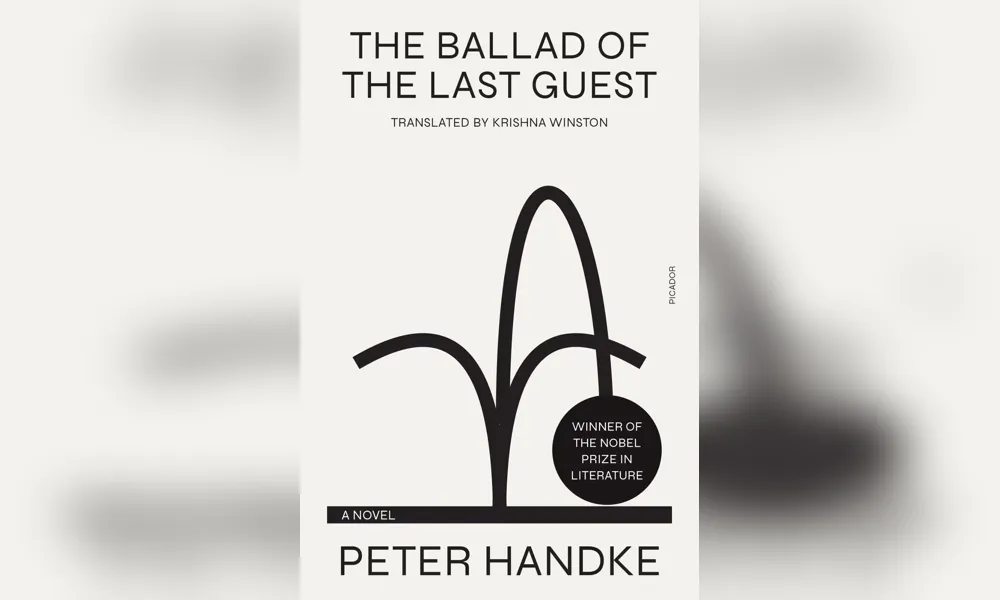

At first glance, The Ballad of the Last Guest is built around a simple premise. Its protagonist, the one-eyed Gregor, returns for a few days to his native village. Yet this homecoming offers little comfort. The place he remembers has been transformed, gradually absorbed by the relentless expansion of the modern urban landscape. Familiar roads, landmarks and faces have either disappeared or become almost unrecognisable.
What endures is memory. As the physical world changes, memory preserves images of places and people that survive only in recollection.
A return shadowed by loss
Gregor's journey is not motivated solely by nostalgia. He carries a difficult burden: informing the family of Hans, a man who served in the Foreign Legion, of his death in battle.
His forthcoming meeting with the dead man's parents and sister becomes the catalyst for a deeper confrontation with the past. Old friendships, accumulated silences and long-buried losses gradually resurface, transforming a practical mission into a profoundly personal reckoning.
As is often the case in Handke's work, the external event serves mainly as the starting point for an inner journey. The novel's true movement lies not in action but in reflection.
Memory, belonging and the disappearance of place
Written in Handke's characteristically meditative prose, the novel evolves into a contemplation of memory, loss and the enduring human need for belonging.
At the same time, The Ballad of the Last Guest engages with concerns that resonate strongly in contemporary life: the disappearance of traditional communities, the weakening connection between people and place, and the struggle to find meaning amid the accelerating pace of modern existence.
Yet despite these broader themes, Handke never loses sight of the individual experience. His focus remains firmly on the human scale, where personal memories and encounters illuminate larger questions about identity and time.
Quiet, thoughtful and deeply humane, The Ballad of the Last Guest continues Handke's lifelong exploration of how people inhabit, and remember, the worlds they once called home.