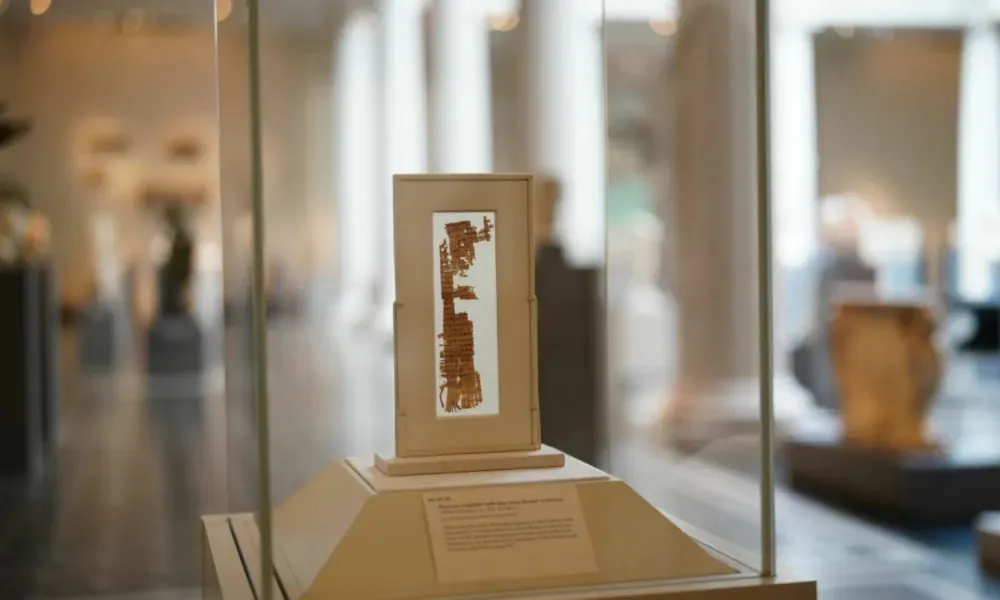

One of the oldest surviving written fragments of Homer's Odyssey has returned to public display at the Metropolitan Museum of Art in New York, offering a rare glimpse into a version of the epic that differs from the text familiar to modern readers.
The small papyrus fragment, dating back approximately 2,300 years, has been on display since 5 August in Gallery 162 of the museum after spending a long period out of public view. According to Séan Hemingway, head curator of the Met's Department of Greek and Roman Art, it is the oldest surviving fragment of the Odyssey known today.
The papyrus dates from approximately 285-250 BC, during the early Hellenistic period, and originates from Egypt. It was discovered in 1902 outside the ancient Egyptian city of El Hibeh and was donated to the Metropolitan Museum by the Egypt Exploration Fund in 1909. Measuring around 19 centimetres in height, it forms part of the museum's Greek and Roman collection.
Three lines missing from today's Odyssey
The significance of the papyrus extends beyond its age.
The fragment contains verses from Book 20 of the Odyssey, including three lines that do not appear in the standard version of the epic that has come down to the present day.
The variation provides rare physical evidence of the different versions of Homer's text that circulated in antiquity.
According to Hemingway, the Homeric epics were originally intended for oral performance. Storytellers could adapt the narrative, add details or alter sections, resulting in multiple versions of the same work circulating throughout the ancient world.
The papyrus captures one of those versions and offers a glimpse into a period when the Odyssey had not yet acquired the fixed textual form by which it is known today.
From oral tradition to the Library of Alexandria
The fragment was written during a period that coincided with the rise of Alexandria as one of the ancient world's leading intellectual centres.
The Library of Alexandria, founded by the Ptolemies in the early third century BC, collected copies of Homeric poems from different parts of the Greek world, including versions originating from Chios, Argos and Sinope.
Scholars began comparing the various texts, identifying additions and variations in an effort to establish a more standardised version of the Homeric epics.
Within that context, the three additional lines preserved on the Met papyrus take on particular importance.
They capture a moment in the long history of the Odyssey before the text was standardised and serve as a reminder that one of the foundational works of world literature reached modern audiences through centuries of oral transmission, copying, revision and scholarly editing.
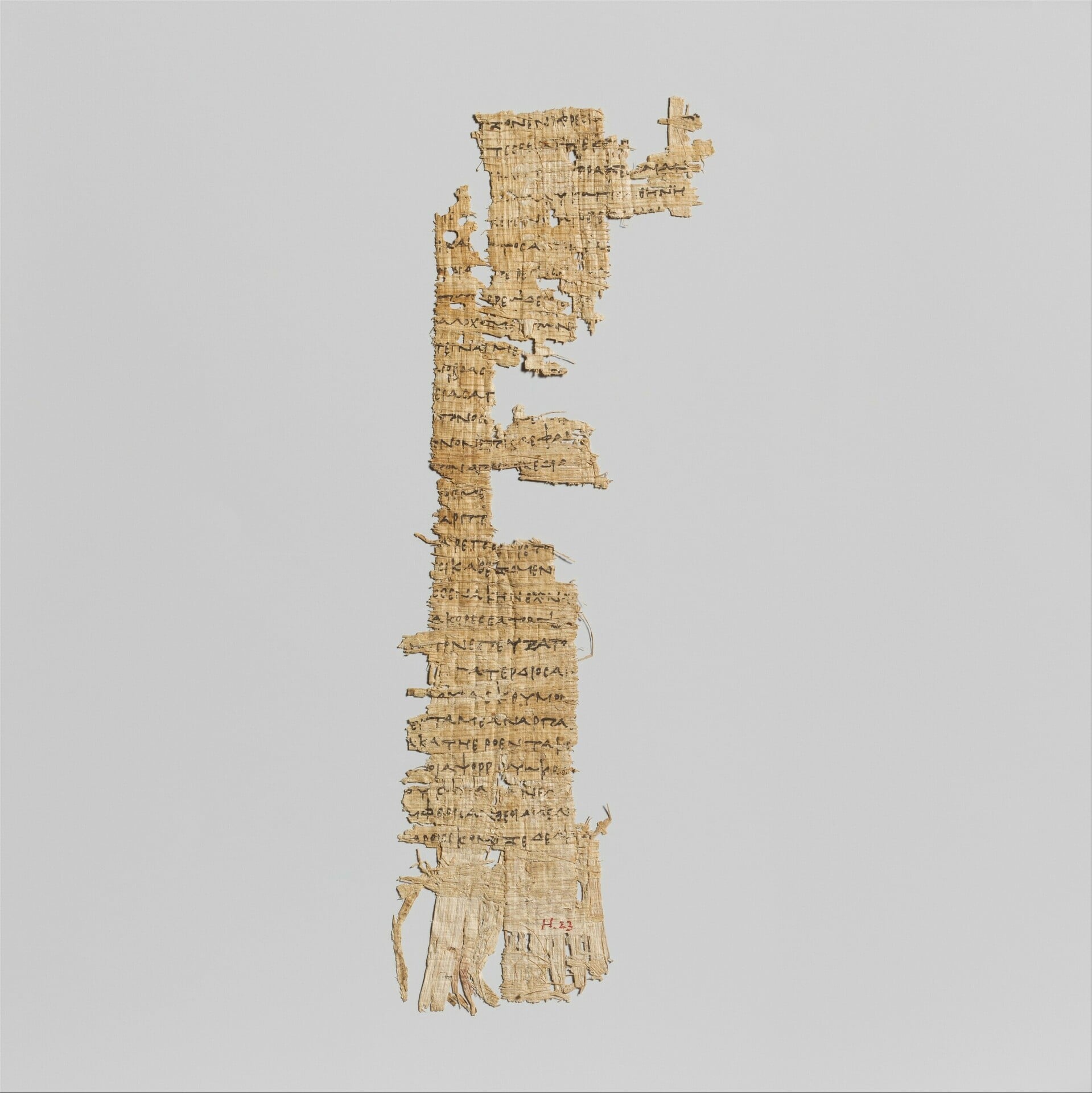
Papyrus fragment containing verses from Homer's Odyssey*, dating to around 285-250 BC. The Metropolitan Museum of Art, New York.*
Back in the spotlight
The papyrus has returned to public view at a time when the Odyssey has once again entered contemporary cultural discussion, this time through cinema.
Director Christopher Nolan's upcoming adaptation of the epic has renewed interest in the story of Odysseus more than two millennia after its ancient versions first circulated.
While each new adaptation reinterprets the work for a modern audience, the small fragment displayed at the Met demonstrates that different versions of the Odyssey are not solely a modern phenomenon.
The history of the text itself is, in many ways, a story of transmission, revision and change.
Source: Hyperallergic and The Metropolitan Museum of Art