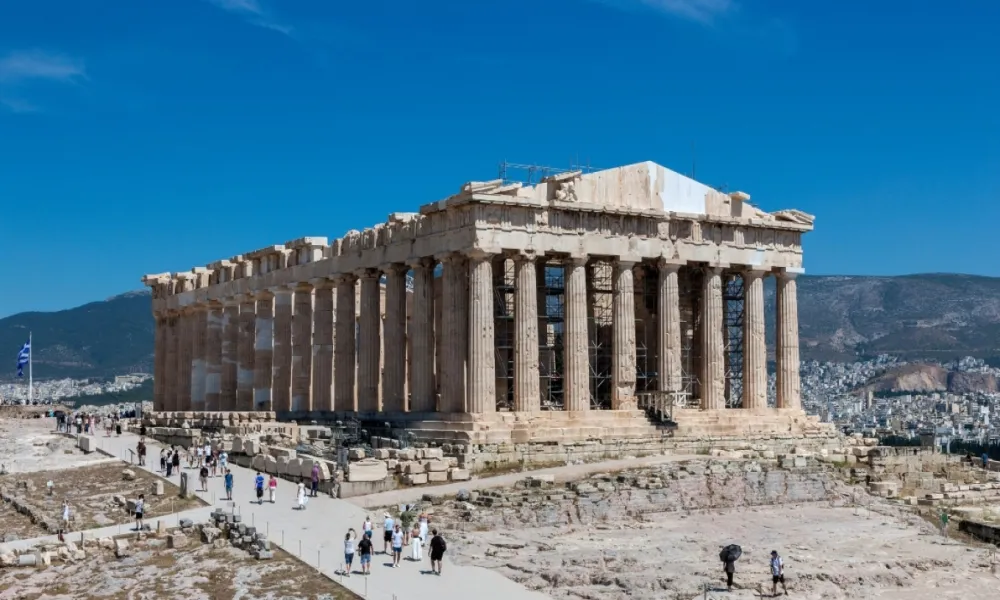


The completion of restoration work on the west pediment of the Parthenon, and the permanent removal of external scaffolding from the monument's west face, marks a particularly significant milestone in the protection and promotion of the Acropolis monuments.
For the first time in around 220 years, Greece's Ministry of Culture says the west face of the Parthenon can now be seen in its fullest possible form, after two orthostates were placed in the previously empty spaces of the west pediment and restoration of the wall behind it was completed, restoring the pediment's architectural unity.
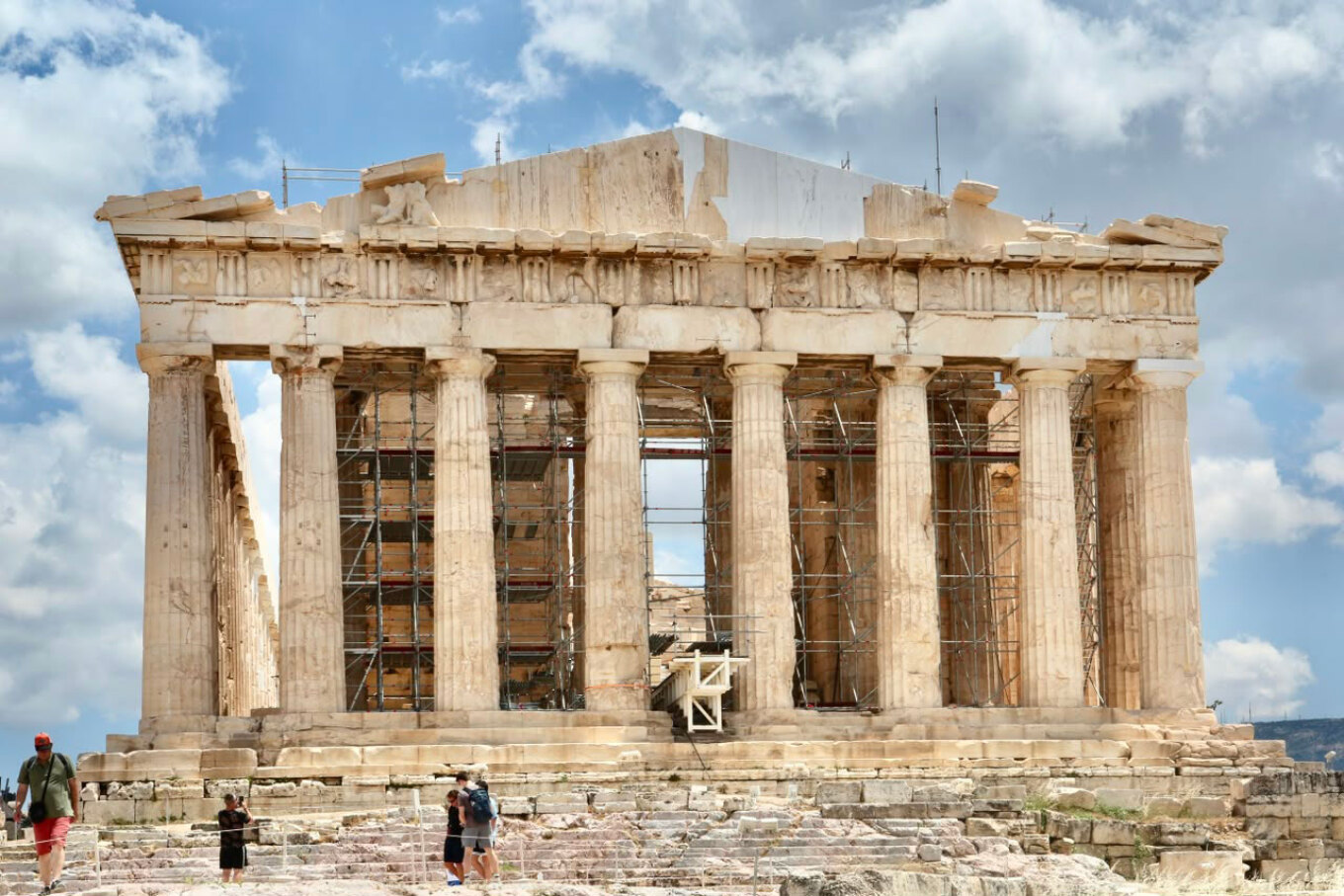
Culture Minister Lina Mendoni said: "A few months ago, we spoke of the first unobstructed view of the Parthenon in decades, without the external scaffolding covering its western side. Today, we speak of the completion of an extremely demanding restoration project, thanks to which the west pediment of the Parthenon is presented in its fullest form after around 220 years. The sight is truly breathtaking.
"The pediment, which generations of Greek citizens and visitors from around the world had grown used to seeing incomplete, regains its architectural unity. The two new orthostates placed in its empty spaces do not just fill a formal gap. They allow the unique proportions and geometric perfection of the Parthenon's west face to be appreciated once again.
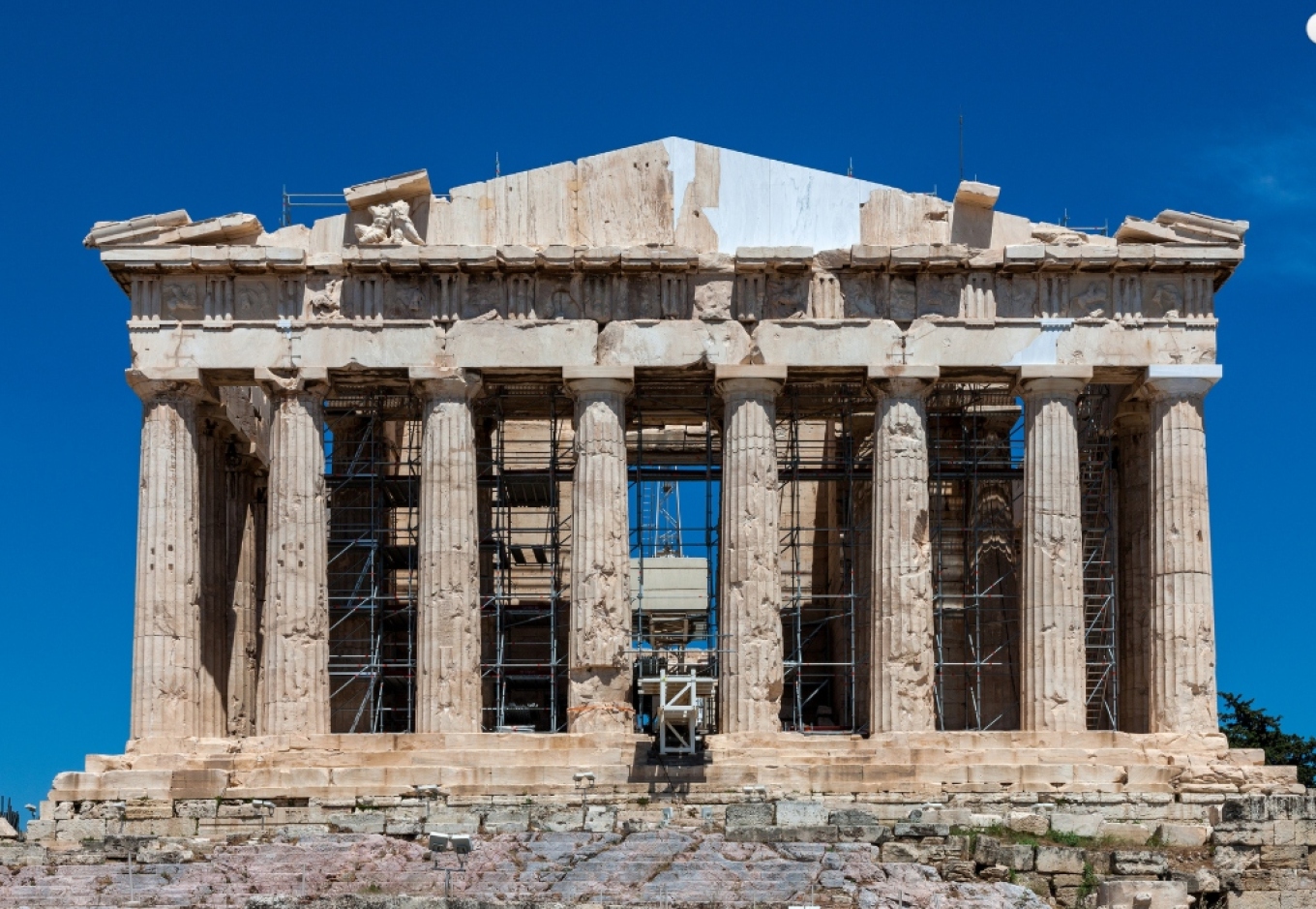
"This is a project of exceptional difficulty, carried out by the scientists, engineers, technicians and staff of the Acropolis Restoration Service with exemplary precision and dedication. Its successful completion proves once again that Greece, the Ministry of Culture and its staff have ensured that the Greek restoration school leads the field and ranks among the best in the world. Today, we see the west pediment of the Parthenon as we have not seen it for two centuries. This is a moment of historic significance for the monument, for the Acropolis and for world civilisation, a moment that fills us with pride, but also with the responsibility to continue, with the same consistency, the great task of protecting and promoting the foremost symbol of Western civilisation."
According to an announcement by the Ministry of Culture, restoring the orthostates was one of the most complex interventions of recent years for the Acropolis Restoration Service. The project required specialised technical solutions and absolute precision at every stage, from working the new marble to lifting and placing it on the monument.
The larger orthostate of the west pediment was restored to its original geometry by joining surviving ancient fragments and filling the gaps with new marble, while the second was built entirely from new marble. A new scaffolding system was installed for the final placement of the stones, meeting the strictest modern safety standards while being designed to fit the monument aesthetically.
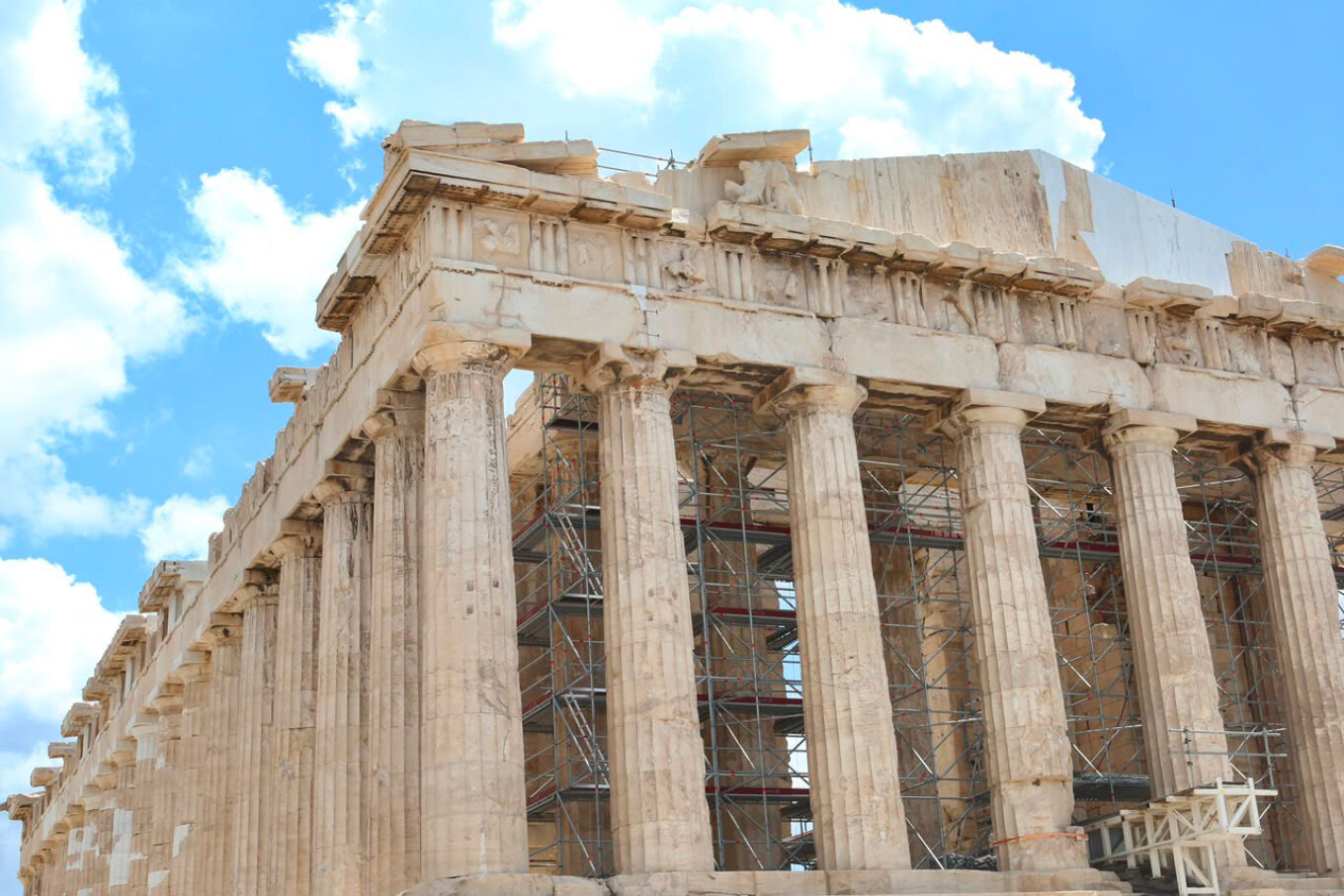
The completion of the west face restoration programme was carried out as part of a project funded by the Recovery and Resilience Fund. The work was carried out by specialised Acropolis Restoration Service staff under the supervision of the Committee for the Conservation of the Acropolis Monuments, the ministry said, underlining the high level of expertise of the Greek school of restoration.