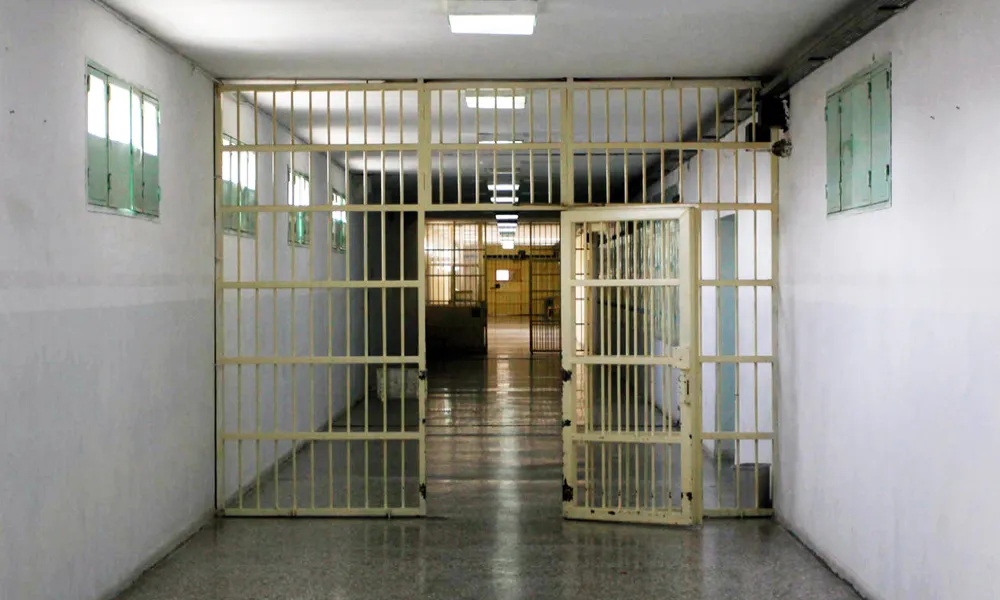

Recent findings by the Audit Office and statements by the Justice Minister have brought Cyprus’ Central Prisons back into sharp focus, highlighting long-standing structural problems and the urgent need for a new correctional facility.
Across discussions at multiple levels, there is broad consensus that modern infrastructure is essential to address the system’s most serious issues, particularly chronic overcrowding. The current facility, built in 1894 during British rule, is widely considered no longer fit for purpose.
Why Mathiatis was selected
Justice Minister Costas Fytiris confirmed that the new prison will be built in Mathiatis, following a decision based on specific criteria.
Three key factors guided the selection:
-
A central location within Cyprus
-
Easy access to and from the motorway network
-
Availability of state-owned land to avoid delays linked to expropriations
All three criteria are met in Mathiatis. The project’s master plan is expected to be presented to the local community council in the coming days.
At this stage, the plan is for the facility to be constructed by a private contractor, who will also be responsible for its maintenance for a period defined in the contract.
Overcrowding at the core
The cost of the new facility is estimated at €300 to €350 million. It is expected to have a capacity of around 1,500 inmates.
Additional relief to overcrowding is expected from a proposed reform concerning pre-trial detainees. Under the plan, two to three wings of the existing prison will be retained exclusively for remand prisoners awaiting trial.
Currently, approximately one-third of inmates in Cyprus are pre-trial detainees.
The scale of the overcrowding problem is highlighted in the Audit Office report, which notes that the number of prisoners continues to rise without a corresponding increase in capacity. Recidivism rates of 15 to 20 per cent further strain the system.
The report also points to underutilised tools that could ease pressure, such as home detention with electronic monitoring, which remains limited due to a lack of functioning equipment.
Record overcrowding levels
In a submission to the House of Representatives, the prison guards’ branch of the Isotita trade union cited data from Eurostat showing that Cyprus recorded the highest prison overcrowding rate in the European Union in 2023, with occupancy reaching 226.2 per cent.
The Ombudswoman’s report in February 2025 found that 276 detainees were held in facilities designed for just 57 remand prisoners. A subsequent visit by the Council of Europe’s Committee for the Prevention of Torture (CPT) in April 2025 documented cases of up to four inmates held in cells smaller than 6 square metres, with some forced to sleep on mattresses on the floor.
Prison officers argue that overcrowding is not merely a numerical issue but the root cause of wider dysfunction, including violence, poor hygiene, inability to separate categories of prisoners, weakened rehabilitation programmes and staff burnout.
Security gaps and operational weaknesses
The Audit Office also identified significant shortcomings in infrastructure management, stock control and security procedures.
Serious gaps remain in fire safety systems, raising concerns about emergency evacuation scenarios. Despite a high-profile escape in September 2024, known as the “Hairdresser” case, key operational protocols have not been fully addressed.
According to the report, there are no clearly defined procedures outlining how prison staff should respond to incidents such as escapes, violent altercations, suicide attempts, large-scale unrest or external threats. Even routine operational procedures, such as inmate catering and staff scheduling, lack structured guidelines.
In some cases, internal directives are issued by prison management, but their implementation weakens over time, particularly when staff turnover leads to inadequate training of new officers.
Staff conditions under strain
The Audit Office also raised concerns about patterns in sick leave among prison staff. An investigation is under way by the Justice and Health ministries to assess whether such absences are justified.
The Justice Ministry links the issue to the psychological and physical strain faced by staff due to current prison conditions. Officials argue that ongoing recruitment, training of new guards and broader reforms are expected to improve working conditions and morale, reducing reliance on sick leave.
The construction of a new prison is widely seen as a necessary step towards addressing systemic failures. However, the findings underline that infrastructure alone will not resolve deeper issues related to management, security protocols and rehabilitation capacity.
The debate now centres not only on where and how the new facility will be built, but whether broader reforms will follow to fundamentally reshape the prison system.