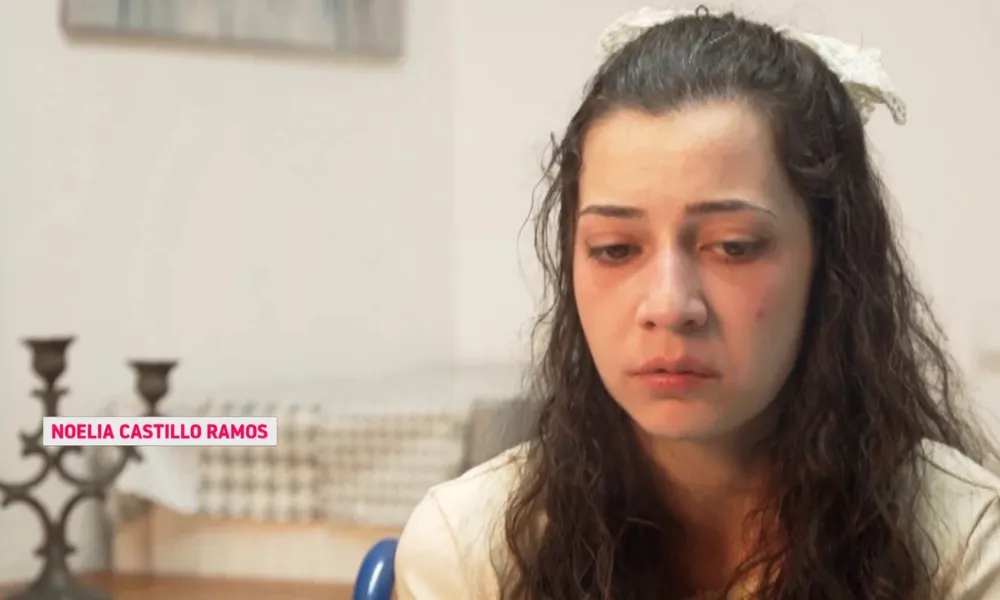

Twenty-five-year-old Noelia Castillo Ramos died by euthanasia on Wednesday in Spain, following a long legal and medical process that culminated after years of physical suffering and a complex court battle with members of her family.
The young woman, who had requested assisted death after becoming paralysed in 2022, died early in the evening at a hospital in Sant Pere de Ribes, about 40 kilometres from Barcelona, according to Spanish media reports.
The Case Of Noelia Castillo Ramos
In 2022, Noelia Castillo Ramos was living in a state facility for vulnerable young people in Barcelona when she was violently attacked and gang raped by three men. Following the assault, she attempted to take her own life by jumping from a building.
She survived the fall but was left paralysed from the waist down. According to Reuters, she had since lived with chronic pain, severe disability and deteriorating mental health.
Two years after the attack, Noelia formally submitted a request for assisted death. In July 2024, a specialised medical committee unanimously approved her request.
Spain legalised both euthanasia and assisted dying in March 2021, allowing adults with serious and incurable conditions that cause unbearable suffering to request medical assistance to end their lives, provided they can give informed consent.
Legal Battle With Her Father
The case sparked a lengthy legal dispute after Noelia’s father opposed the decision and filed multiple appeals in an attempt to stop the procedure.
Courts rejected the final appeals in the hours before her death. Earlier rulings had already upheld the medical committee’s decision, concluding that the request met the conditions established by Spanish law.
The Catalonia Evaluation and Guarantee Commission had ruled that Noelia fulfilled the legal criteria, which allow individuals suffering from a “serious and incurable illness” or a “chronic condition causing severe disability” to request assistance in dying under strict safeguards.
In March 2025, during a closed-door hearing, Noelia reaffirmed her wish to proceed with euthanasia. Earlier this year, Spain’s Supreme Court rejected another appeal filed by her father.
Her Final Interview
In her final televised interview, broadcast on Wednesday by the Spanish channel Antena 3, Noelia described a life marked by suffering, abuse and a childhood spent under the guardianship of social services.
“I want to leave peacefully now, to stop suffering,” she said.
In the same interview, she added: “I cannot take it anymore. I cannot endure this family anymore, I cannot endure the pain anymore,” arguing that “the happiness of a father, a mother or a sister cannot matter more than the happiness of a daughter.”
She also said that no one in her family supported her decision and stressed that she did not want to become a public symbol of the debate surrounding euthanasia.
Debate Over Euthanasia In Spain
The case has reignited public debate in Spain about euthanasia and assisted dying.
José María Fernández, a lawyer representing the ultra-conservative association Christian Lawyers, which supported her father’s appeals, argued that the case was “not one of euthanasia but of assisted suicide.”
On the other side of the debate, Cristina Vallès, president of the association Right To Die With Dignity, criticised the repeated legal challenges.
“Bypassing the law to try to overturn it through legal loopholes, as the Christian Lawyers are doing, angers and concerns us,” she said, calling for legal reforms that would prevent third parties from intervening once a request has already been approved.
Spain’s Conference of Bishops also condemned the decision, stating that “the truly humanitarian response to suffering is not to cause death but to offer closeness, proper care and full support.”
Spain Legalised Euthanasia In 2021
The case has reignited public debate in Spain about euthanasia and assisted dying.
José María Fernández, a lawyer representing the ultra-conservative association Christian Lawyers, which supported her father’s appeals, argued that the case was “not one of euthanasia but of assisted suicide.”
On the other side of the debate, Cristina Vallès, president of the association Right To Die With Dignity, criticised the repeated legal challenges.
“Bypassing the law to try to overturn it through legal loopholes, as the Christian Lawyers are doing, angers and concerns us,” she said, calling for legal reforms that would prevent third parties from intervening once a request has already been approved.
Spain’s Conference of Bishops also condemned the decision, stating that “the truly humanitarian response to suffering is not to cause death but to offer closeness, proper care and full support.”
Spain Legalised Euthanasia In 2021
Spain’s parliament approved legislation decriminalising euthanasia in 2021.
According to data from the country’s Health Ministry, 1,123 people had undergone euthanasia by the end of 2024.