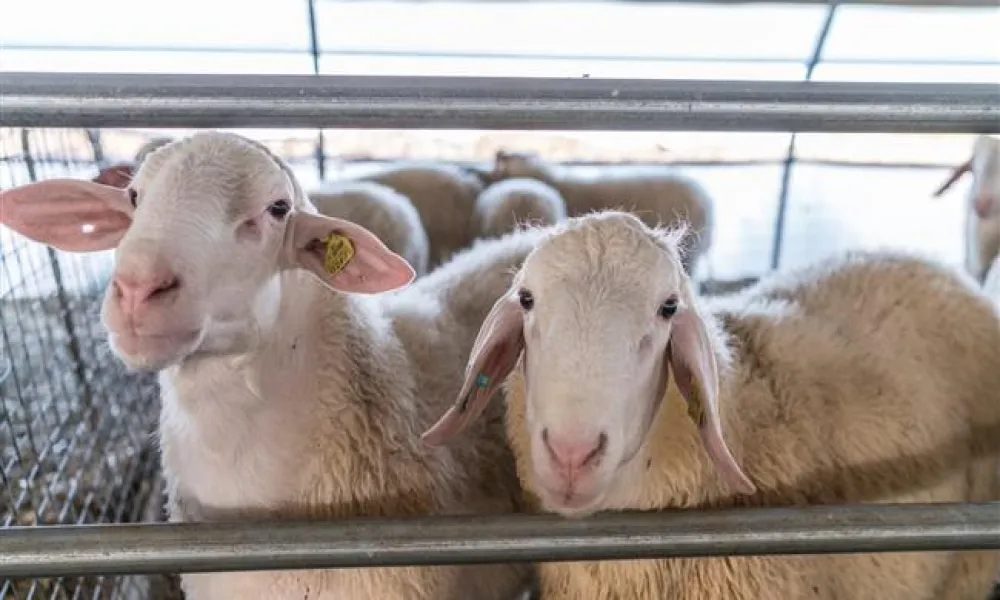

Animal culling operations to contain the spread of foot-and-mouth disease are continuing across Cyprus, while the veterinary services have filed complaints with police regarding the publication of a video showing the procedures and attempts by some livestock farmers to obstruct them.
Senior veterinary officer Sotiria Georgiadou said the complaints concern both the circulation of footage criticising veterinarians for the way the euthanasia procedures are carried out and incidents in which farmers tried to block the operations.
Speaking about the video, Georgiadou said it was inappropriate for such material to be publicly circulated.
“We are effectively in a state of war with the virus. This is not a calm or normal situation,” she said. “The virus is highly infectious and highly transmissible, and we must contain it. Culling is one of the containment measures, alongside all the other restrictions that have been imposed, such as movement controls and disinfection procedures.”
Efforts to seek EU flexibility
At the same time, Cyprus is seeking to persuade the European Commission to take into account the island’s particular circumstances.
The initiative involves efforts by President Nikos Christodoulides to request at the highest level that the Commission, including its president Ursula von der Leyen, consider allowing Cyprus to bypass the mass culling approach required under European legislation and instead prioritise mass vaccination.
The request follows strong reactions from agricultural organisations and producers.
For now, however, the culling operations are continuing.
“The EU protocols and procedures continue to be applied and respected,” Georgiadou said.
She added that culling operations were currently underway at a cattle farm in Dromolaxia, while operations have already been completed at nine farms, involving 269 cows and approximately 13,890 sheep and goats.
Legally prescribed euthanasia methods
Following the circulation of videos showing the euthanasia procedures, Georgiadou sought to clarify that the methods used are those prescribed by veterinary legislation for emergency situations.
“I want to stress that the methods used, namely the captive bolt device and euthanasia medication, are the legally prescribed methods for such cases,” she said.
Addressing questions about the availability of euthanasia drugs, she said veterinary services had purchased all available quantities on the Cypriot market, collected existing stocks from emergency units across all districts and from private veterinarians, and placed a large additional order following the detection of the first case on February 19, 2026.
According to Georgiadou, veterinary services currently have sufficient quantities of the medication available.
Concern over accusations against veterinarians
Responding to criticism of the use of the euthanasia device, Georgiadou said the reaction was likely linked to the disturbing nature of the images.
“It is obviously the sight of it, because it is not pleasant for anyone to carry out such an action,” she said.
She expressed concern and disappointment over accusations directed at veterinarians, both public and private, who have been working on the front line since the outbreak began.
“It is not pleasant to euthanise an animal,” she said, stressing that the work being carried out by veterinarians is both difficult and necessary.
Complaints filed with police
Georgiadou also confirmed that complaints had been filed with police after some livestock farmers attempted to prevent the culling operations.
“This is why the situation was somewhat tense yesterday. We had to reorganise our teams, complaints were filed with the police, and we are continuing our work,” she said.
Complaints were also filed regarding the circulation of the video showing the procedures.
“We are in a battle with the virus,” she reiterated. “This is not a quiet or normal phase.”
Outbreak figures
Epidemiological investigations and sampling continue nationwide and have so far produced negative results outside the affected zone.
At present, 34 livestock farms are confirmed infected, all located within the designated infected area. There was also one case at an illegal farm in Livadia, within the three-kilometre infected zone, where the cattle have already been culled.
The number of cases rose over the weekend. Until Friday there had been 32 confirmed outbreaks, but two additional cases were recorded: one cattle farm in Dromolaxia and one sheep and goat farm in Aradippou.
Vaccination campaigns are also continuing nationwide.
So far, 159,100 vaccine doses for sheep and goats and 79,100 doses for cattle have been distributed to private veterinarians. Arrangements have also been made for the pig vaccine to be delivered from Germany.