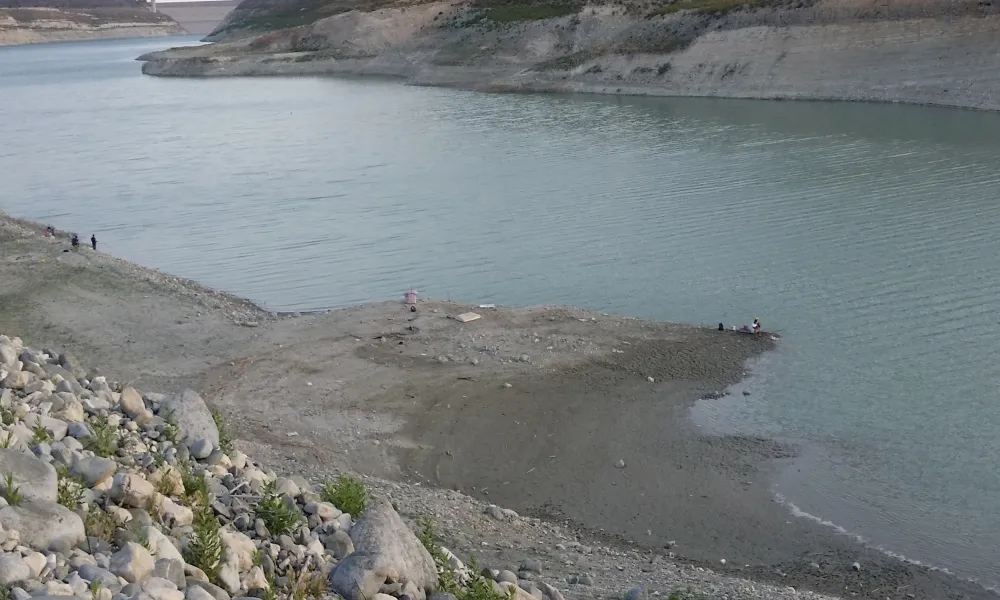



The overall capacity of Cyprus’s dams currently stands at 21 percent, according to Marios Hadjikostis, senior technical engineer at the Water Development Department.
Speaking to the Cyprus News Agency (CNA), Hadjikostis said that during the same period last year dam levels stood at 25.4 percent, with 73.8 million cubic metres of water stored.
This year, stored water amounts to 61.15 million cubic metres, reflecting a significant decrease.
Inflows slowing due to lack of rain
Water inflows into dams have declined noticeably in recent days, mainly because early March has brought little rainfall.
Hadjikostis explained that the replenishment of water reserves depends not only on the total amount of rainfall but also on where the rain falls geographically.
“Rainfall must occur in specific areas. Rainfall is not simply a number. Dam inflows also depend on how precipitation is distributed across regions,” he said.
Key role of rainfall in southwestern Troodos
According to Hadjikostis, rainfall in the southwestern slopes of the Troodos mountains plays a particularly important role, as runoff from that area feeds into several of the island’s largest reservoirs.
Despite relatively satisfactory water inflows during February, the overall situation remains difficult because total reserves remain low, he said.
“We are now relying on the last two weeks of March. We need rainfall in the southwestern Troodos area so that water can flow into the major dams,” he added.
Hopes for rainfall in coming weeks
Hadjikostis expressed hope that the coming weeks will bring sufficient rainfall to increase dam inflows.
“March still owes us rain. We hope a low-pressure system will arrive so we can see satisfactory inflows into the dams,” he said.
Desalination key to water supply
He also emphasised the importance of desalination plants in securing the island’s water supply.
For the districts of Limassol, Nicosia and Larnaca, desalination units currently provide around 70 percent of drinking water needs, he said.
Source: CNA