
In many European countries, the issue of heavy school bags has been addressed through a combination of recommendations and practical solutions. Overloaded school bags have long been one of the most persistent problems in daily school life. Numerous experts, both in Cyprus and abroad, have repeatedly warned that the excessive weight pupils carry each day can affect posture, cause musculoskeletal discomfort and generally burden a child’s school experience. Despite these warnings, the situation remains unchanged for thousands of pupils. Books, notebooks and supplementary materials are packed into school bags every day, regardless of whether they will all be used.
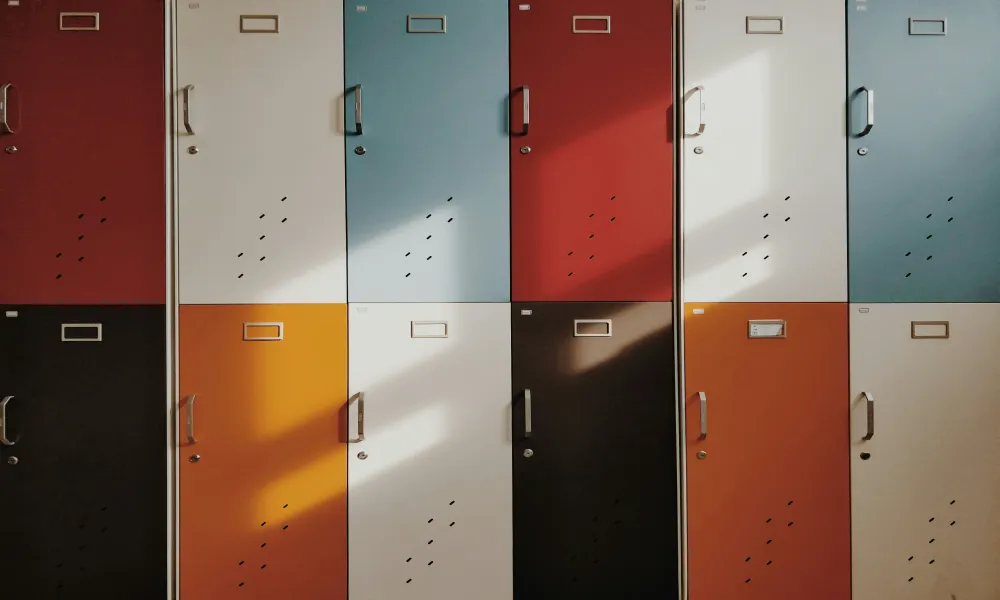
At the same time, in many European countries, the school day is organised differently. Pupils do not carry all their books daily because schools provide storage spaces, lockers or other organisational solutions that reduce the need to transport large amounts of material. The difference lies not only in recommendations but in the way the school functions as a learning environment rather than simply a teaching space.
Best practices
In several European countries, the issue of school bag weight has been tackled through a mix of guidelines and practical measures. In France, there is a national recommendation that a school bag should not exceed roughly 10 per cent of a pupil’s body weight. This recommendation is supported by measures that reduce the need to carry books every day, such as keeping books in classrooms and providing lockers in many schools, particularly in secondary education.
In Germany, there is a strong focus on ergonomics and school organisation. Heavy books often remain at school, while the timetable and curriculum are designed so that pupils do not need to carry all their textbooks daily. There are also specific standards for school bags to ensure proper weight distribution.
In Italy, the guidelines address both weight and daily use. The recommendation that bags should weigh around 10 to 15 per cent of a pupil’s body weight is accompanied by changes in the way textbooks are published, dividing them into smaller booklets instead of large volumes. In some regions, lockers or in‑school book storage are also used.
In the United Kingdom, lockers are considered basic school infrastructure, especially in secondary schools. Pupils do not carry all their books every day, and there are clear instructions on the proper use of school bags and avoiding excessive loads. The extensive use of digital material further reduces the need to carry printed books.
A similar picture is seen in countries such as the Netherlands, where lockers are part of everyday school life, and Finland, where widespread use of digital learning platforms has significantly reduced the volume of books pupils need to carry. The common thread in all these examples is that the weight of the school bag is not treated as an individual responsibility but as an issue of school organisation.
The issue of excessive school bag weight was the central topic of a scientific conference held in Greece a few months ago by the Hellenic Paediatric Society and the Hellenic Society of Physical Medicine and Rehabilitation. Doctors and specialists from paediatrics, physical medicine and rehabilitation presented data and studies on the effects of excessive load during school age.
According to the findings presented, a significant percentage of children carry a school bag that exceeds 20 per cent of their body weight, and in some cases the percentage is even higher. Experts noted that prolonged carrying of such weight may be linked to musculoskeletal pain, poor posture, increased fatigue and difficulty concentrating.
Recommendations in Greece focused on three main areas. First, the need for clear limits on school bag weight, based on international guidelines that set the maximum at 10 to 15 per cent of a child’s body weight. Second, the reduction of portable school material through modernisation of textbooks and the use of digital resources. Third, the importance of informing and raising awareness among parents, pupils and teachers so that daily school equipment is chosen more consciously.
“It does not affect only pupils”
In Cyprus, the issue of school bag weight periodically returns to public debate, either through expert interventions or concerns raised by parents and teachers. Despite these discussions, daily school life remains largely unchanged, with pupils continuing to carry large amounts of material each day.
The matter was recently raised again by MP Charalambos Theopemptou of the Movement of Ecologists. Addressing the Minister of Education, Athena Michaelidou, he noted that the weight of the school bag affects not only pupils but also their families, and pointed out that at European level the problem is approached with a different philosophy. According to Theopemptou, many countries do not limit themselves to weight recommendations but adopt organisational solutions within schools that reduce the need for daily book transport.
He also questioned why practices already implemented in other European countries are not adopted in Cyprus, emphasising that these solutions are tried and tested and do not require theoretical reinvention. He suggested examining pilot programmes to assess whether such measures could improve daily school life.
The Ministry Circular
On this issue, the Ministry of Education has issued a circular to schools with specific instructions aimed at reducing pupils’ daily load. The guidelines focus on school organisation and everyday classroom practice, with the goal of reducing the number of books and notebooks carried each day. According to the circular, schools are asked to organise the timetable in a way that avoids the need to bring all textbooks on the same day, while teachers are asked to clarify which books and notebooks are necessary for each lesson.
The circular also recommends using only one notebook per subject where possible and avoiding additional materials when textbooks already include integrated worksheets. The ministry further notes that certain books and supplementary materials, such as anthologies, grammar books and dictionaries, should remain in classrooms to avoid daily transport. Schools are also allowed to organise simple, low‑cost storage solutions within classrooms, adapted to their needs. The ministry stresses that these guidelines are addressed to teachers, pupils and parents as part of a collective effort to manage school equipment more rationally and lighten the school bag.