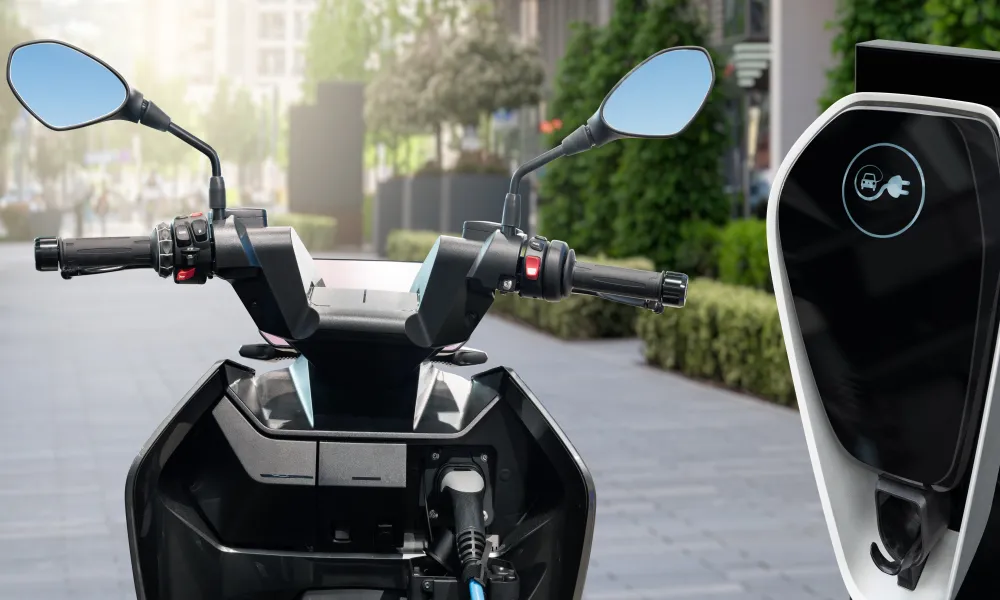
Modified electric two-wheelers that appear to meet legal requirements but can reach significantly higher speeds are increasingly circulating on Cyprus roads. According to information available to Politis, police authorities have stepped up checks after reports that such vehicles pose serious risks to riders, other drivers and pedestrians.
Electric bicycles exceeding legal limits
Under the relevant legislation, an electric bicycle is defined as a bicycle equipped with an auxiliary electric motor with a maximum continuous rated power of 0.25 kilowatts (kW), whose assistance is progressively reduced and finally cut off when the vehicle reaches or exceeds a speed of 25 kilometres per hour, or earlier if pedalling stops.
Despite this framework, electric bicycles have been detected travelling at much higher speeds and, in some cases, on motorways, where other vehicles are moving at substantially higher speeds. These practices increase the risk of serious road collisions and injuries.
Post-purchase modifications raise safety concerns
According to complaints submitted to the Police and the Department of Road Transport, a number of electric bicycles circulating on public roads are modified after purchase and effectively converted into electric motorcycles.
Indicatively, vehicles are reported to be sold as electric bicycles but, in practice, function as electric motorcycles, featuring throttle control, power outputs ranging from 800 to 2,000 watts and top speeds of 45 to 60 kilometres per hour. These vehicles lack EN 15194 certification and exceed legal limits on power and speed.
Such two-wheelers reportedly circulate without registration, insurance or technical inspection, creating immediate risks for road users while also distorting competition to the detriment of businesses that trade in products compliant with the law.
Importers report widespread circumvention of speed limiters
Companies involved in the import and sale of personal mobility devices state that most electric bicycles are initially imported into Cyprus with specifications that comply with legal technical requirements. At the point of sale, they are delivered with speed limiters set at 25 kilometres per hour.
However, according to these companies, users can easily bypass the limiter through simple methods such as disconnecting a cable, activating a hidden switch or applying software modifications via the display or controller. This service is often provided for an additional fee.
Importers also raise questions regarding the legal classification of these modified vehicles. If they are no longer considered electric bicycles, it is unclear whether they fall under the categories of electric scooters, mopeds or high-power vehicles. This uncertainty is reported to undermine enforcement and create regulatory gaps that allow non-compliant vehicles to enter the market without appropriate checks.
Concerns have also been expressed that, if such vehicles are treated as electric bicycles despite exceeding power limits, there may be breaches of EU anti-dumping duties on imports of Chinese electric bicycles, potentially amounting to unfair commercial practices and economic fraud.
Police response and enforcement actions
Responding to the complaints, the Cyprus Police stated that it has recently observed vehicles circulating on the road network whose use is not permitted under existing legislation.
“Beyond the illegality, the presence of such vehicles on the road dramatically increases the risk of traffic collisions, resulting in fatal or serious injuries. These vehicles concern electric bicycles,” the Police said.
The Police further noted that checks are being carried out to address the circulation of electric bicycles that are not approved under the law, where maximum speed exceeds 25 kilometres per hour or maximum continuous rated power exceeds 0.25 kilowatts.
Vehicle seizures and legal basis
Regarding vehicle seizures, the Police stated that in every case involving an unregistered vehicle without registration plates, the vehicle is detained in accordance with Regulation 6 of KDP 66/1984.
Detention is also carried out under Article 3, subsection 9(a), of the Motor Vehicles (Third Party Insurance) Law, Law 96(I)/2000, as amended.
According to information cited by Politis, during checks carried out in mid-December on electric bicycles circulating on the road network in Nicosia, a total of 29 electric bicycles were inspected, of which 21 were detained for further examination.
Source: Politis newspaper