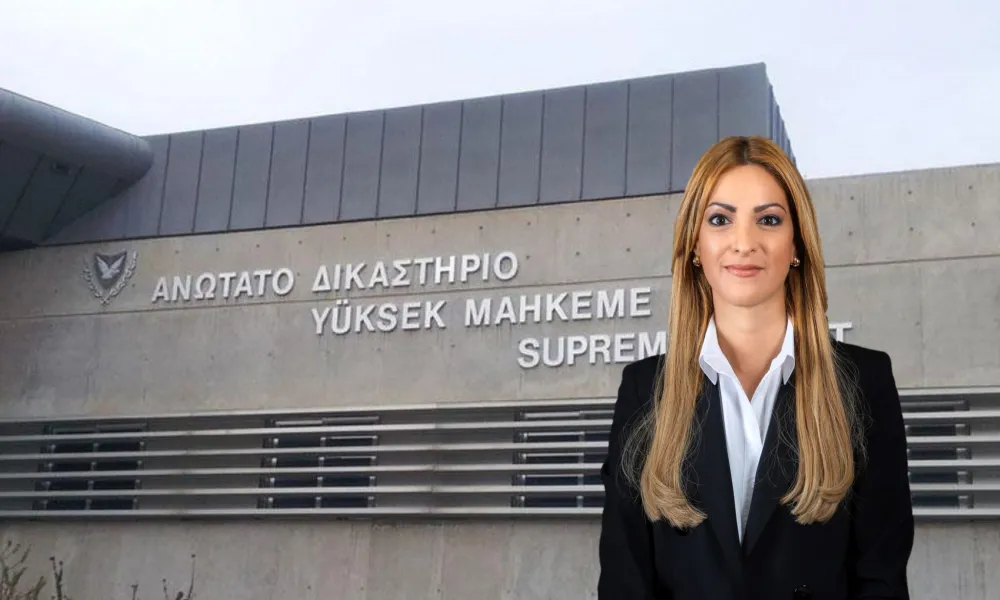

Former district court judge Doria Varosiotou has filed an application with the European Court of Human Rights (ECHR), arguing that her dismissal from the judiciary amounted to interference with judicial independence and was directly linked to her handling of the death of Thanasis Nicolaou.
In a public statement released on Tuesday, Varosiotou said she had lodged the case through her lawyer, Achilleas Demetriades, following the confirmation of her dismissal by the Supreme Constitutional Court. She maintained that the decision to terminate her service stemmed from her refusal to amend a finding she issued in 2024 in the Nicolaou case.
“I refused to change my finding,” Varosiotou said, adding that she stood by her conclusions despite what she described as suggestions to modify them. She linked her removal to that stance, noting that the finding later aligned with the conclusions reached by criminal investigators regarding the cause of death.
Varosiotou further claimed that after declining to alter the Nicolaou finding, she received instructions to change findings in other death inquests as well. She described such actions as “interference in judicial decision-making”.
Referring to the Supreme Constitutional Court’s ruling, adopted by a 5–3 majority, Varosiotou said the decision confirmed a connection between her dismissal and her handling of the Nicolaou case. She also pointed out that judges who had earlier validated her finding later took part in proceedings that led to the termination of her service, a development she said raised concerns about conflicting roles.
Addressing specific points of controversy, Varosiotou referred to the exclusion of testimony from forensic pathologist Panikos Stavrianou. She argued that the determination of death was based on findings by pathologists following exhumation, rather than earlier forensic reports.
She also alleged violations of core principles of judicial independence, stressing that “judges are not dismissed for their decisions” and arguing that authorities failed to follow the prescribed disciplinary process prior to ending her service.
Varosiotou rejected claims that she had used “fabricated procedures”, saying she acted in line with the principle of hearing all involved parties. She also referred to correspondence she sent to the Supreme Court which, she said, was later cited as grounds for her dismissal.
In her statement, Varosiotou made extensive reference to European reports, citing the Council of Europe’s anti-corruption body Greco on the importance of judicial permanence and independence. She noted that the minority opinion of the Supreme Constitutional Court held that the court should have referred a question to the Court of Justice of the European Union before issuing its ruling.
In conclusion, Varosiotou said the case goes beyond her personal situation and touches “the foundations of the administration of justice”. She added that she will continue to serve justice in a different capacity and will refrain from making further public statements while proceedings before the ECHR are pending.