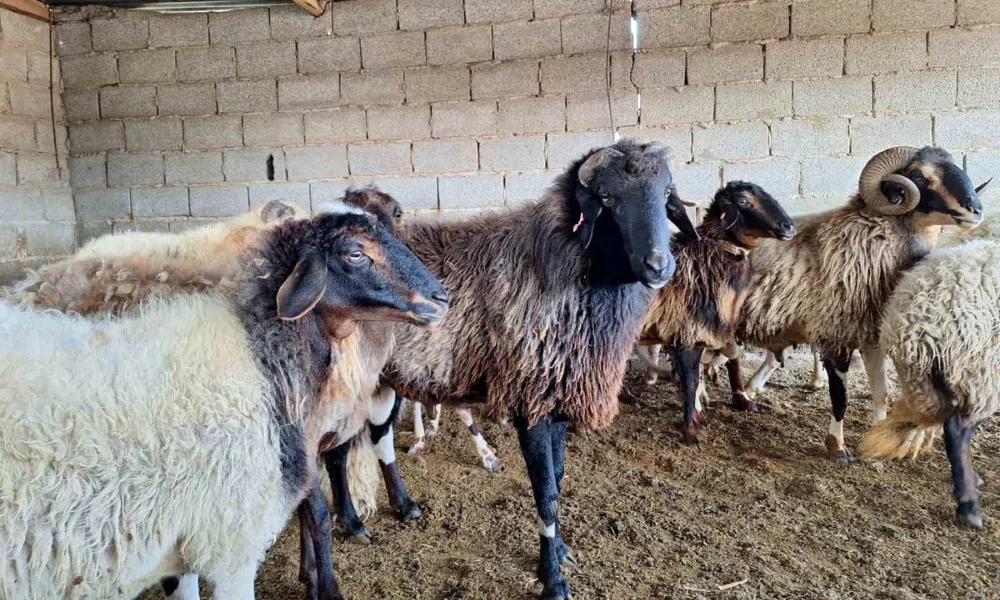
A sheep farm breeding a rare native Cypriot breed has been added to the list of foot-and-mouth disease cases, raising concerns over the possible loss of a significant part of the island’s agricultural heritage.
The farm, located in the second livestock area of Dromolaxia, keeps around 50% of the remaining sheep of the breed, known as fat-tailed Cypriot sheep.
According to the owner, Costas Mouskos, the breed now numbers only about 1,100 animals, with 500 kept at his farm. He told the Cyprus News Agency that, after being informed of the test results, he appealed to President Nikos Christodoulides, the Veterinary Services and the Agriculture Ministry, seeking an exemption from slaughter.
Mouskos said the breed accounts for just 0.44% of Cyprus’ total sheep population and warned that culling the flock would deal a severe blow to efforts to preserve it.
‘This Is Cyprus’ Heritage’
The farmer said his unit is part of a European programme for the preservation of rare agricultural breeds and is monitored scientifically in cooperation with the Cyprus University of Technology.
“It is the only unit with genetically verified Cypriot dairy sheep and it does not correspond to any other breed in the world. If slaughter goes ahead, the breed is essentially destroyed,” he said.
Mouskos said his family has kept the animals since 1870, with the same flock passing from generation to generation.
“This is not only our property. It is Cyprus’ heritage,” he said. “We kept these animals with great effort so they would remain in our country. I do not want us to be the ones who end a breed that has existed for centuries.”
Owner Questions Testing Timeline
Mouskos also questioned the testing process, saying samples were taken 15 days after the second vaccination rather than after 28 days, which he said is required under the relevant protocol.
He said the first vaccination took place on March 3, the second on March 27, and sampling on April 14. He was informed on April 16 that the farm had tested positive.
He added that he has not yet received official confirmation on whether the flock will be culled.
The president of the sheep and goat farmers’ group, Sotiris Kadis, also highlighted the rarity of the breed, saying only a very limited number of farms keep such animals. He warned that if the sheep are slaughtered, the damage to native breeds would be “incalculable”.
Source: CNA