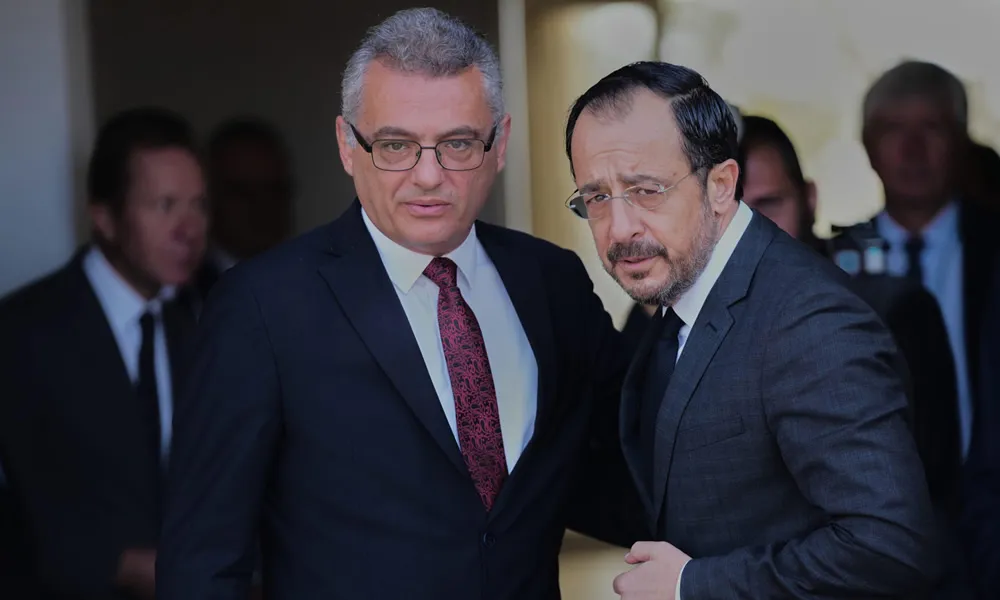
The two leaders are meeting tomorrow, Monday, for the fifth time since Tufan Erhürman replaced Ersin Tatar on October 24, 2025, with little sign that either side is ready to break the deadlock in the dialogue on CBMs or the political process.
President Nikos Christodoulides and the Turkish Cypriot leader will meet for another tete-a-tete at the old Nicosia airport following their last bilateral on February 24, 2026 – with the UN merely playing the role of host once again.
The leaders have not been in a position to announce tangible progress for some time now, leading to the conclusion that there is no need for the media to be present outside the UN Special Representative’s residence where they will meet tomorrow afternoon.
This does not rule out a joint statement either on some trust-building initiatives – such as the provision of road tax services at more checkpoints, halloumi inspections or other matters – or on issues of substance, but the odds weigh heavily on the two leaders simply continuing their “open and frank” exchange.
Who jumps first or can they jump together?
Speaking to sources on both sides, it seems each is waiting for the other to show the necessary “political will” to move forward on any of the issues pending between them – whether that be on confidence-building measures (CBMs) or on how to resume formal negotiations for a Cyprus solution.
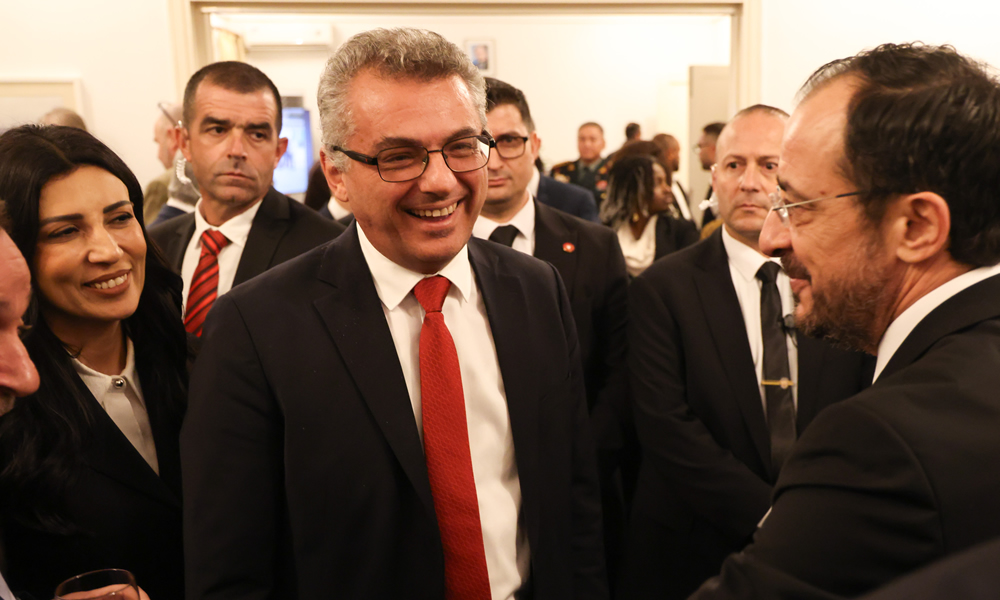
The Turkish Cypriot leadership has repeatedly stated its position that the sides need to achieve progress on the island before they can move towards an enlarged ‘5+1’ meeting with the guarantor powers under UN auspices.
Following his lengthy meeting in New York with UN Secretary-General António Guterres on February 11, 2026, Erhürman said he conveyed the view that “leaders who cannot open two crossing points on the island cannot negotiate a comprehensive solution.” He added that he favours a gradual process, beginning with CBMs, which would ease daily life for citizens and serve as a sign of willingness to make progress. According to sources, this position has not changed.
Nothing new on ‘big’ CBMs
However, the sides seem no closer to agreeing on CBMs. Especially on the most high-profile effort to open new crossing points, there remains no change in positions at the technical level.
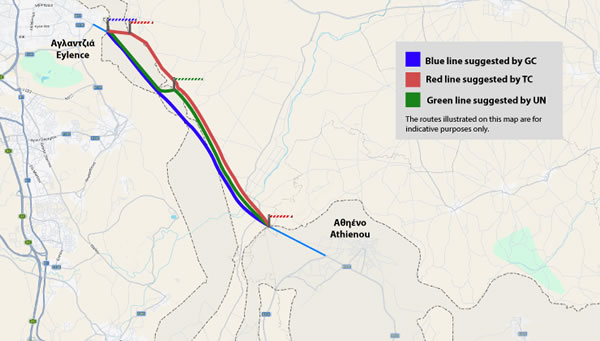
The Turkish Cypriot side is not against opening a new pedestrian crossing in old Nicosia, but wants to focus on relieving vehicular traffic at the Ayios Dhometios checkpoint. Hence, their push for a crossing point at Mia Milia. They are also prepared to open crossings at Athienou-Pyroi, and Louroudjina-Lymbia. The sticking point for Erhürman is the Pyroi-Aglandja crossing – mainly on how to reach it.
First, there’s a numbers divergence. The Greek Cypriot side does not see Pyroi-Aglandja as a fourth crossing point but as part of the Athienou crossing which stretches to Aglandja. Christodoulides considers Kokkina, on the other hand, as a fourth crossing option. For Turkish Cypriots, it’s not even on the table.
Second, there’s a route divergence. The Greek Cypriots wanted motorists to be able to take the old road to Nicosia – which mostly straddles the buffer zone – when travelling between Athienou and Aglandja. Their fallback position is a UN compromise proposal that sees only part of the Athienou-Pyroi-Aglandja route sit in the buffer zone, with the rest lying in the north. The Turkish Cypriot side insists that the route should either lie north of the buffer zone – on a parallel new road they will finance – or south of the buffer zone on a new road the EU is apparently willing to pay for.
Unlocking the crossing points
Turkish Cypriot sources suggest if “the insistence on having a road going through the buffer zone is dropped” then there is a way to open four crossing points simultaneously, by which they mean: Mia Milia, Athienou-Pyroi, Pyroi-Aglandja, Louroudjina-Lymbia.
Greek Cypriot sources, meanwhile, speak of the need for reciprocity in the opening of crossing points, so that measures taken benefit both communities. This implies packaging the measures so there’s something for both sides. The whole point of CBMs is to help create a climate conducive to a resumption of talks, they said.
“If we only offer options that don’t serve them, they wouldn’t like it either,” they added.
Regarding the current impasse, the UN’s compromise proposal on the Athienou-Pyroi-Aglandja route is a way out of the quagmire, they argued.
However, given the divergence in the way each side counts crossing points, given the Greek Cypriot call for reciprocity, and given Turkish Cypriot unwillingness to discuss Kokkina – even if the ‘buffer zone road’ issue is resolved, it’s unclear how many new crossing points that would unlock for opening... 2, 3 or 4?
Question of substance
According to the Greek Cypriot side, if the best case scenario plays out and all crossing points are opened, this still will not answer the main question that needs to be tackled.
“What solution do the Turkish Cypriots want? Is it a bicommunal, bizonal federation? How do they see us getting there? This requires negotiation.”
On the matter of substance, and how to get back to the negotiating table, nine long years after the collapse of talks at Crans-Montana, the leaders so far appear to be no closer either.
Erhürman has his four-point methodology on resuming talks which involves acceptance of: political equality, all past convergences, a timeframe, and the principle of no return to the status quo should the talks fail.
The aim is to ensure that “it’s going to be different this time,” said the Turkish Cypriot source, noting that if the sides embark on a new process, it should have a realistic prospect of achieving a settlement.
Christodoulides has his five-point proposal, which includes recording the input of both sides – and the guarantor powers where relevant – on past convergences, followed by the announcement of a resumption of talks at an expanded ‘5+1’ meeting.
From Guterres’ mouth…
After Erhürman met with Guterres in February, the Turkish Cypriot source said the Turkish Cypriot leader and Guterres were “on the same page” when it came to the need for “the two sides to build trust first and foremost and show their commitment to the entire international community” before launching a new process.
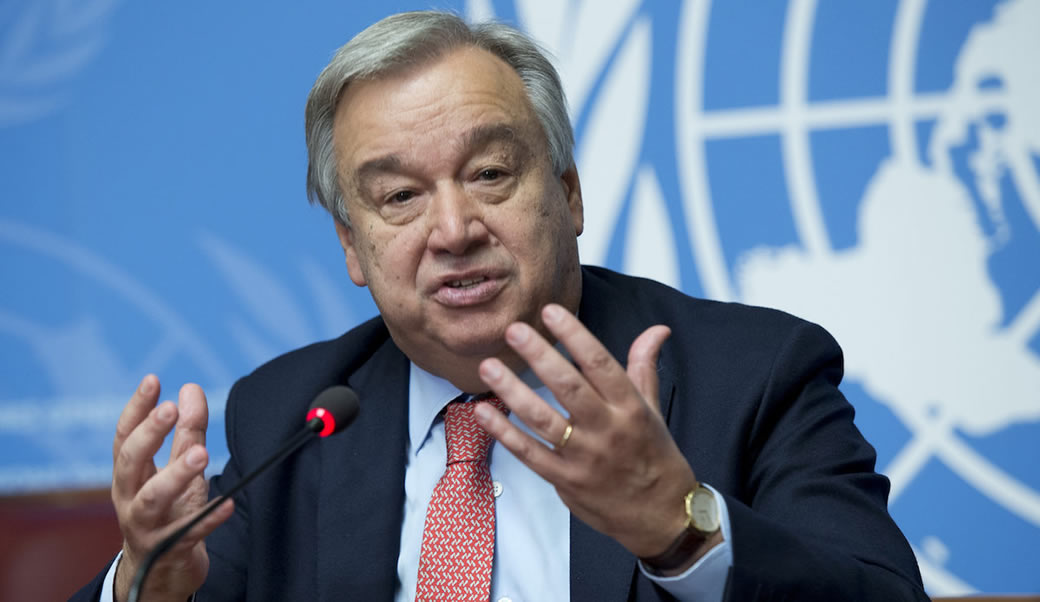
Christodoulides also requested a meeting with Guterres, which he had in Brussels on March 18, 2026. According to the Greek Cypriot source, the UNSG conveyed to the President an approach to the talks that the UN chief believes will help the two sides achieve substantial progress towards a resumption of talks.
This approach is something different than anything discussed since Crans-Montana, said the source, without divulging further details.
Christodoulides said publicly that he requested this meeting with Erhürman to exchange views on what he had discussed with Guterres in Brussels, without ruling out exploring any other issues the Turkish Cypriot leader wishes to raise.
The Greek Cypriot source noted, however, that for there to be progress, there must be the necessary political will.
It remains to be seen what Guterres’ proposal to break the deadlock is exactly and whether it finds fertile ground.
Τὰ πάντα ρέει (Nothing stays the same)
Meanwhile, since the last leaders’ meeting, time has not stood still. A regional war broke out, a drone landed on the British bases, foreign military assets increased across and around the island, the President announced his intention to renegotiate the bases, foot-and-mouth disease spread across the island, the EU Special Envoy on Cyprus resigned, the Turkish Cypriots did not make their annual Eid al-Fitr trip to the Hala Sultan Tekke, a video surfaced showing a masked individual throwing firecrackers at park goers on the Roccas bastion, and the Cyprus Republic took baby steps towards monetising its hydrocarbon resources.
All issues – big and small – serve as a stark reminder, if it was ever needed, that the island remains deeply divided.