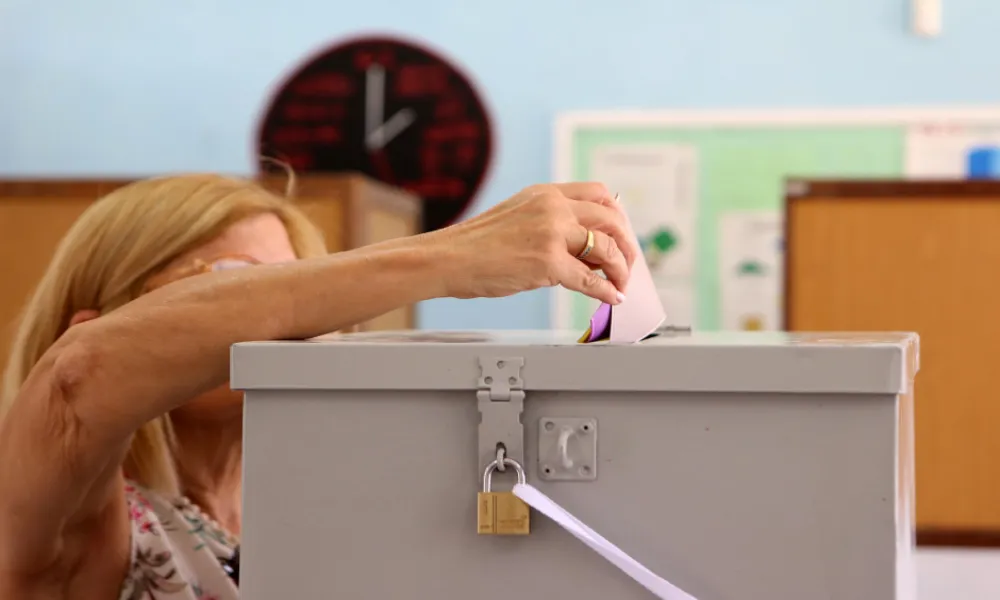

This week, the interior ministry announced that newly registered voters may collect their electoral booklets from mayors and community leaders starting 21 May. The announcement was routine and procedural, which is precisely what makes it worth examining. The booklet must be collected in person, presented at a polling station on election day, and exchanged for a paper ballot which is colour-coded by constituency, marked by hand, folded and placed in a box. For a country that processes tax returns and planning applications online, the contrast is difficult to ignore.
The registration process that precedes all of this is no smoother. For voters over 25, registration requires physical presence at multiple administrative points, with applicants required to obtain and complete a paper form from a citizen service centre or district administration office. When the cumbersome process came under scrutiny earlier this month, chief returning officer Dr Elikkos Elia offered little sympathy: "Why haven't they registered earlier in life?" That the same government which has digitised a wide range of public services has not extended the same logic to voter registration.
International experience
Elsewhere, it is being answered. Estonia has deployed electronic voting for national elections since 2005, allowing citizens to cast ballots from home via government-issued smart card on their personal devices. Brazil and India have used electronic voting machines nationwide for decades. The US uses a combination of direct-recording electronic voting machines and machines that produce a voter-verified paper audit trail. Switzerland has been running remote e-voting pilots since the early 2000s.
But the international experience with electoral digitalisation offers as many warnings as it does models. The academic literature is unambiguous on one central point: according to clear scientific consensus, no known technology can make internet voting secure. According to scholars at the University of New Hampshire, a 2025 systematic review of 46 peer-reviewed studies on digital technologies in democratic processes concluded that security concerns about digital voting systems and a widening digital divide that disproportionately affects marginalised populations remain the field's two most persistent unresolved challenges.
Electoral digitalisation and risks
The Estonia case is instructive precisely because it is so often cited as a success story. An independent security review of its system found staggering gaps in procedural and operational security, concluding it was open to cyberattacks from foreign powers capable of altering votes or leaving election outcomes in dispute. The operational lapses researchers documented included election results being transferred on personal thumb drives and network credentials posted on walls in public view. The US experience points in a similar direction: security concerns regarding electronic voting machines came to a head during the 2016 presidential election, with cases of machines making unpredictable, inconsistent errors, and a subsequent expert consensus that any digital system must produce a verifiable paper record that can be audited against the electronic count.
Experts widely recognise paper ballots as one of the most important security measures available, facilitating post-election audits that can verify electronic vote totals against a physical record, something internet voting systems structurally cannot offer. The Brookings Institution has argued that paper remains state-of-the-art voting technology for exactly this reason, and that while stuffing ballot boxes on a large scale is hard work and easy to detect, electronic voting allows the same crime to be committed with a stroke of a key, without detection.
Reform in Cyprus means stripping away the bureaucratic scaffolding. Digital registration, automatic roll updates, and accessible online verification would bring Cyprus into line with most of its EU partners without the security risks that full electoral digitalisation carries.