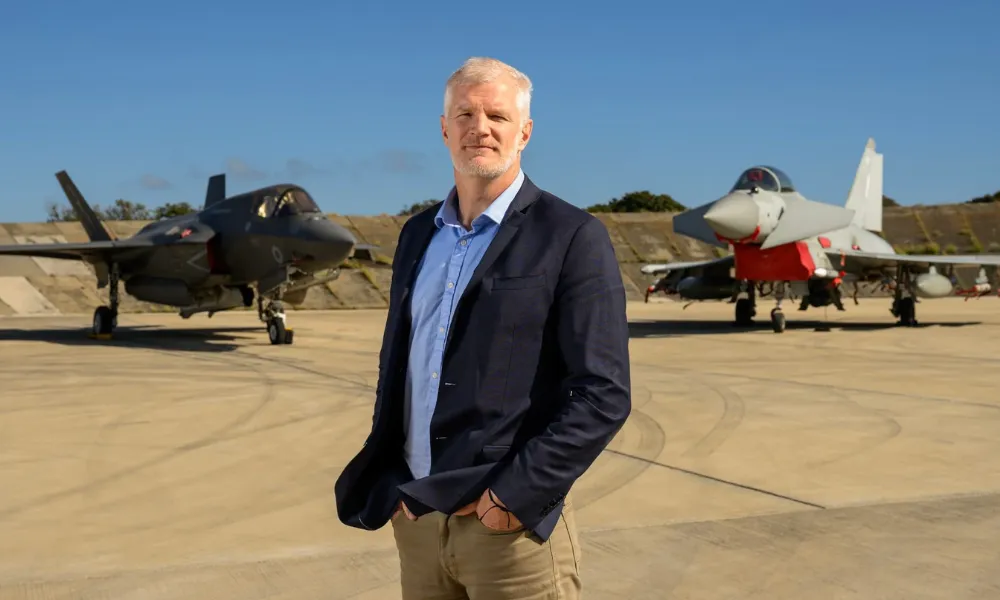

The status of the UK’s sovereign bases in Cyprus is not open to negotiation, the UK Defence Secretary Alistair Carns has told The Telegraph, saying that transferring sovereignty over Akrotiri and Dhekelia “is not even an option” ahead of upcoming talks with the Cypriot government.
Carns, a former senior Royal Marines officer, said the legal status of the bases was “rock solid” and not up for discussion.
His comments come after Cypriot President Nikos Christodoulides raised the possibility of revisiting the future of the British colonial bases following the outbreak of conflict in the Middle East.
The Telegraph also reported concerns about regional escalation, noting claims that hundreds of ballistic missiles and drones were launched towards Cyprus by Iran and its allies in retaliation for US military action. The island hosts both British and American forces.
Leasing the bases
According to the report, concerns increased after a drone struck a hangar housing two US U2 spy planes at the Akrotiri base. Allies of Christodoulides are said to have considered options similar to the UK’s Chagos Islands arrangement, potentially involving Cypriot sovereignty over the bases followed by a long-term lease back to Britain.
Under such a proposal, the two military bases would return to Cypriot sovereignty but remain in use by the UK under lease terms, the report said.
Akrotiri and Dhekelia remained under British control following Cyprus’ independence agreement in 1960.
Speaking from RAF Akrotiri, Carns rejected any suggestion that the government would consider returning control of the bases. Instead, he said cooperation with Cyprus was the priority to ensure the island’s security.
“What we are seeing, because of the threat that has emerged, is for the first time in a long time Cypriots, British and other allies working together on a unified defence plan,” he said.
'Understandable tensions'
He added that while tensions were understood, the legal foundation of the sovereign base areas “is not negotiable”.
Since the first reported drone strike at the start of the conflict with Iran, British forces have established a layered air defence network, according to The Telegraph.
Radar systems and anti-submarine helicopters are being used to detect incoming drones and missiles, while F-35 and Typhoon jets are deployed to intercept threats. When interception is not possible, aircraft track targets and relay real-time information to Wildcat helicopters or Stormer air defence systems.
The report also said the Type 45 destroyer HMS Dragon was deployed to provide ballistic missile defence but has since been moved to Crete for repairs. Around 500 additional air defence personnel have also been deployed.
A joint Cyprus Defence Co-ordination Centre has been operating for the past five weeks in cooperation with Cypriot, US and French forces.