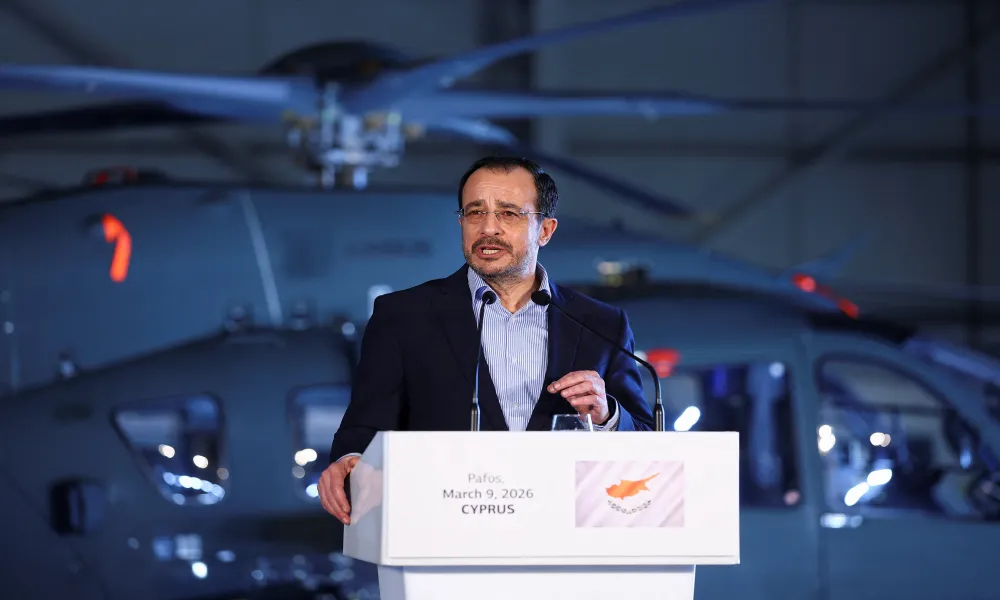

It has been noted repeatedly during the three years of Nikos Christodoulides’ presidency that a peculiar contradiction lies at the centre of his political rhetoric. The president accuses the opposition of raising issues about his government because the country is approaching parliamentary elections, while at the same time insisting that he himself is not involved in the pre-election period. In reality, however, a president is by definition operating in a permanent political arena that resembles a campaign environment.
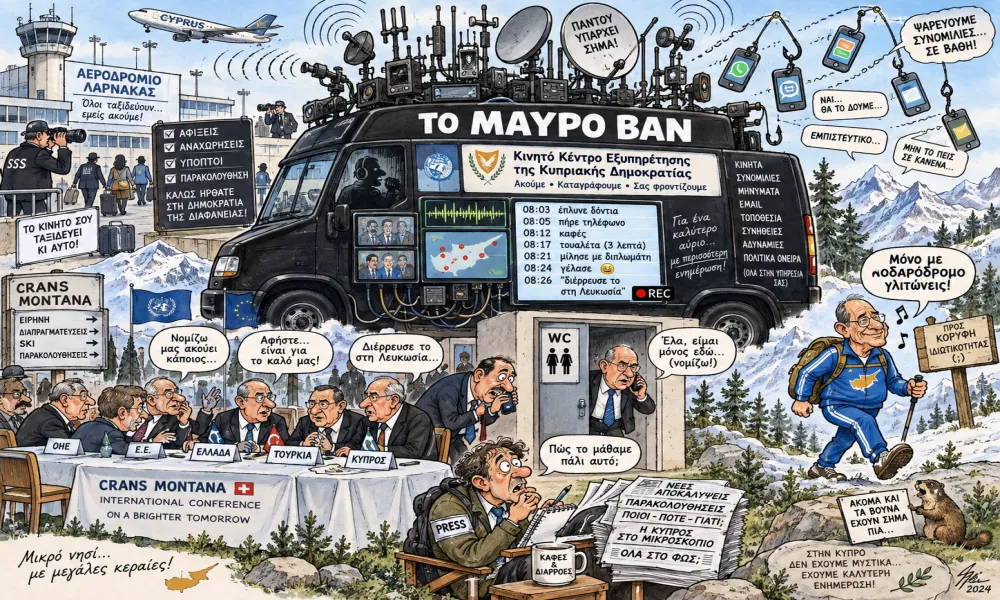
Christodoulides’ emphasis on communication rather than substance has become a defining feature of his administration. Over the past days this tendency culminated in what could be described as yet another presidential performance, marked by political exaggeration and rhetorical excess. The tone and content of the government’s response have contributed to an atmosphere of crisis that has affected both Cyprus’ geopolitical standing and its tourism industry. Yet the president continues to accuse others of populism.
A mechanical response to criticism
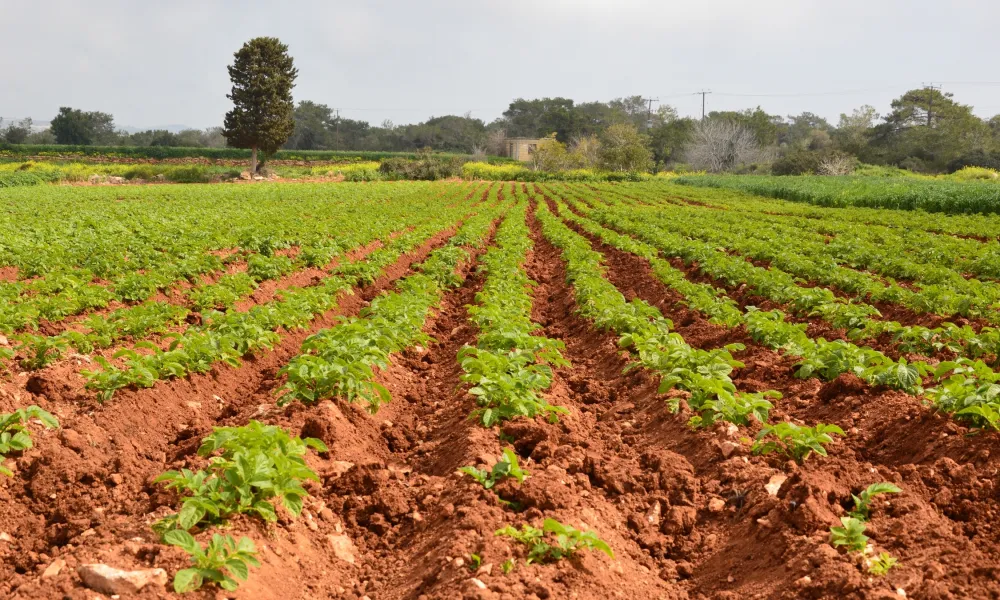
Amid the serious crisis caused by the outbreak of foot-and-mouth disease, Christodoulides spent recent days defending the government’s handling of the situation and the actions of Agriculture Minister Maria Panayiotou.
Instead of acting as a national leader who assumes political responsibility for the management of such crises, the president effectively shielded the minister from criticism. Opposition calls for Panayiotou’s resignation were dismissed as attempts to exploit the approaching parliamentary elections.
The same line of argument was repeated on Friday evening when Christodoulides defended the government’s actions by drawing a comparison between the positions of the two largest parties. The comparison appeared mechanical and simplistic, given that the differences between the parties are well known, substantial and often irreconcilable on many policy issues.
These distinctions hardly need to be explained by the parties themselves. Anyone who follows public affairs, even casually, can recognise the clear political divide between DISY and AKEL.
The presidency’s political focus
What the president ultimately achieves through this approach is the complete political cover of his minister’s missteps, accompanied by a striking lack of empathy for the confusion that has characterised the government’s overall handling of the crisis.
The debate of recent days around the foot-and-mouth outbreak and the actions that should have been taken before it escalated reveals something striking about how the presidency understands political competition. In this view, political parties may criticise one another as part of election campaigning, but government practice itself appears to remain beyond the scope of scrutiny.
Accountability and democratic responsibility
Such an approach effectively attempts to place government decisions outside the framework of legitimate criticism. The presidency either fails to recognise or refuses to accept that in a democracy political responsibility cannot be used as a tool to sustain a permanent confrontation with parties that challenge government policy.
Institutionally, a president may indeed choose to remain above direct party conflict. Yet that position cannot serve as a substitute response when questions of governmental responsibility arise.
Political responsibility is one of the fundamental pillars of democratic governance. It is neither an abstract concept nor a rhetorical formula that appears only when politically convenient. It is the essence of accountability and the recognition that political power carries obligations toward society.
Responsibility avoided
Instead of treating responsibility as the culmination of political action, the government has once again approached it as something secondary or symbolic. Rather than focusing the public discussion on the substance of the problems at hand, the government has adopted a familiar defensive strategy in which every criticism is framed either as populism or as a product of electoral calculations.
Such arguments may function as a political shield, but they do not address the substantive issues that have been raised in public debate.
This attitude reflects a broader political culture that has existed for years in Cyprus. Accepting political responsibility is often interpreted as a sign of weakness. The removal or resignation of a minister is viewed as a political defeat for the president who appointed them.
A paradoxical political logic
The result is a paradoxical logic in which the more severe a crisis becomes, the stronger the effort to avoid any step that might be perceived as acknowledging a mistake.
Yet this mentality undermines the functioning of democracy itself. Political responsibility is not a punitive act or a symbolic gesture aimed at appeasing public opinion. It is a necessary institutional process that allows the state to correct mistakes and restore citizens’ trust.
The broader context
In the case of the agriculture ministry, the accumulated criticism extends beyond the current outbreak. Questions have also been raised about the management of several other issues including water policy, the handling of natural resources, the protection of environmentally sensitive areas, the large wildfire in Limassol district and now the response to the foot-and-mouth disease crisis with its serious economic consequences.
When so many issues accumulate within the same policy area, it is reasonable to ask whether the necessary level of political leadership is in place or whether responsibility should be assumed.
The role of the president
Ultimately, the president of the republic must recognise that he is not a neutral observer of the political scene. He is the head of the executive branch and bears the final responsibility for the functioning of the government.
When serious crises emerge, dismissing criticism as a product of election-season motives, particularly when it comes from major parties with long political experience, cannot replace the need for genuine political accountability.