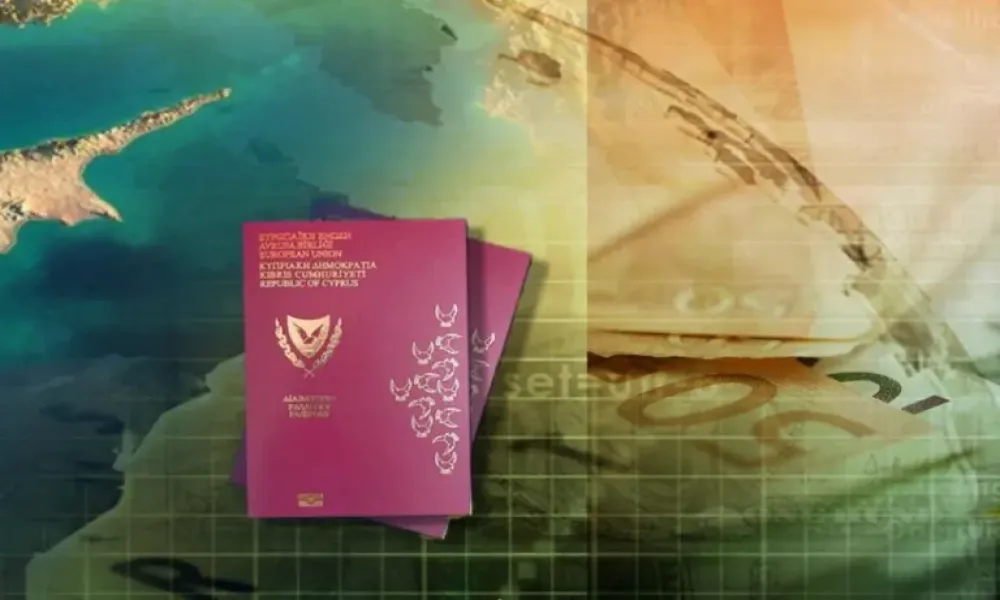



The Legal Service of the Republic intends to file an appeal against Tuesday’s decision of the Nicosia Criminal Court acquitting former House President Demetris Syllouris and former AKEL MP Christakis Tziovanis in the case linked to the Al Jazeera investigation into Cyprus’ citizenship-by-investment programme.
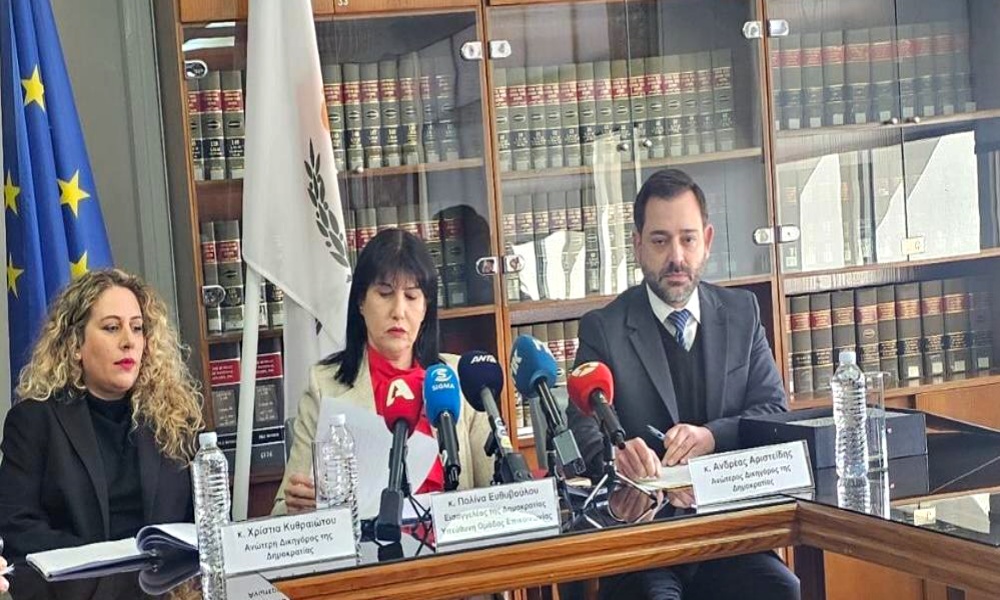
The decision to appeal was announced by the Legal Service’s communications officer and state prosecutor, Polina Efthivoulou, during a press conference on Wednesday.
Why the video was not presented as evidence
Addressing public questions regarding the non-submission of the Al Jazeera footage as evidence, Efthivoulou said that for material to be admissible in court it must be lawfully obtained.
She explained that recordings made without the consent of the interlocutor cannot be presented as evidence if they are the product of an unlawful act. Audio or video material obtained without consent, she said, does not meet the legal threshold for admissibility.
Efthivoulou also read from the court record a statement made by counsel for the Republic explaining why two key witnesses were ultimately not called to testify.
According to the Legal Service, one of the two witnesses does not reside in the Republic, while the second left Cyprus abruptly in October 2024, travelling to the United Kingdom for health reasons. In January 2025, the same witness provided responses that diverged from previously stated positions. On 9 January 2025, he sent an email alleging threats to his life.
The Legal Service stated that repeated efforts were made to secure his testimony. However, he declined to appear in court, citing health concerns, and at one point reportedly indicated he would switch off his mobile phone to avoid further communication.
The appeal is expected to challenge the Criminal Court’s acquittal in relation to the charges brought in connection with the controversial citizenship programme.
Threats against Law Office officials
She stressed that “we handle criminal cases, and heaven help us if society does not stand by us.” She said that officials of the Law Office have received threats and, as a result, check underneath their cars, noting that several have been targeted by criminal acts in the past.
Officials of the Law Office, she added, operate within the criminal justice system. Some cases are won, others are not, and after weighing the evidence they decide whether a prosecution should proceed. Convictions, she underlined, are not an end in themselves. “What we seek,” she said, “is the proper administration of justice.”
Responding to a related question, Ms. Efthivoulou said this was not the first time a witness had received threats. A witness protection system exists, she noted, and anyone who feels threatened may request protection. Mechanisms are in place, she said, though it depends on the witness whether they are willing to provide further information.
Elsewhere, she stated that “as officials, we feel that journalists and political parties have come out and are undermining public servants,” describing this as dangerous. “If we do not stand up, the criminal justice system will collapse,” she added. “They cannot, through speculation, reduce our work to zero,” Ms. Efthivoulou said, calling on the public to assess matters objectively and judge the work of officials fairly.
She also noted that there have been major and complex cases that resulted in convictions. She clarified that investigative work is not carried out by the Law Office but by the competent investigative authorities. She added that financial crimes are particularly difficult to establish.
For his part, Andreas Aristeides, Senior Counsel of the Republic, said in an intervention that the Law Office has achieved an overwhelming conviction rate.
Taking the floor again, Ms. Efthivoulou said, “It is our mistake that we do not present statistics on cases that end in convictions.” Returning to the Al Jazeera case, she stated that “our position is that there were no gaps in the evidence.”
Emilianides On Al Jazeera Verdict: “A Negative Outcome For The Prosecution”
Legal scholar Achilleas Emilianides has described the acquittal of former House President Demetris Syllouris and former MP Christakis Tziovanis in the Al Jazeera citizenship case as “a negative outcome for the prosecution,” pointing to explicit references in the court’s majority reasoning to investigative shortcomings.
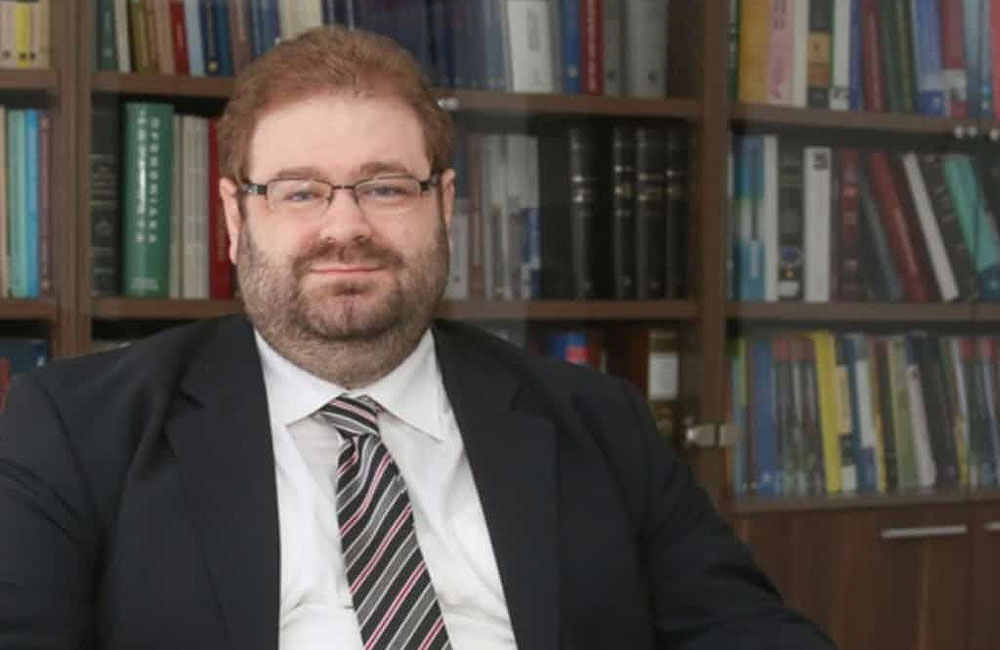
Speaking on Politis Radio 107.6 & 97.6 on Wednesday, Emilianides said the ruling went beyond a simple finding that the charges had not been proven. Instead, he noted, the majority judgment referred to witnesses who were not called, weaknesses in the evidence presented and errors or omissions during the investigative process.
“This is not merely a decision stating that the offences were not proven for specific reasons,” he said. “It is a judgment that touches on the overall handling of the investigation and prosecution.”
He added that in a case of such public prominence and significant public interest, an acquittal accompanied by this type of reasoning constitutes an unfavourable development for the prosecuting authorities, particularly given that criminal charges had already been filed.
Witnesses not called and duty of accountability
Asked about the absence of key witnesses, Emilianides said there are “many possible reasons” why prosecutors may choose not to summon a particular individual.
“You may expect their testimony to undermine the case you are trying to prove. You may consider the quality of the testimony weak and likely to backfire. There may also be a refusal by the witness to testify,” he said.
However, he stressed that only the Legal Service can explain the specific decisions taken in this case. “Why those particular witnesses were not called is something no third party can answer. The Legal Service must provide that explanation,” he said, referring to what he described as a duty of accountability following the ruling.
Regarding one individual who was ultimately not summoned, he said the prosecution’s assessment appeared to be that the person would not provide testimony incriminating the two defendants.
Appeal prospects
On the possibility of an appeal, Emilianides acknowledged that “it is not simple to appeal an acquittal,” but noted that there have been instances where first-instance acquittals were overturned on appeal.
He said the Legal Service must carefully examine both the majority and minority decisions in order to determine whether grounds exist to justify an appeal.
“The video raised suspicions but did not prove a crime”
Addressing the issue of the money trail and digital evidence, Emilianides said that in corruption cases “you do not proceed without examining financial flows.” In this instance, however, he noted that no evidence was presented demonstrating the tracing of funds that could substantiate the alleged offences.
He clarified that he could not assess the overall quality of the investigation without full access to the case file.
As for the Al Jazeera video itself, he said it could potentially have been admitted into evidence either through testimony by its creators or through expert certification of its authenticity.
“The video on its own did not prove criminal offences. It raised suspicions and provided material to trigger an investigation,” he said, adding that it consisted of excerpts from a broader recording rather than a continuous, unedited sequence.
Legal versus ethical assessment
Emilianides also referred to testimony indicating that a certificate had been issued by the former President of the Republic authorising the then House President to play a role in relation to the investment programme.
He said the defence position was that any interventions were made not in Syllouris’ institutional capacity as Speaker of the House, but in his capacity as a person promoting the investment scheme, with communications relating to the progress of applications.
The minority judge, he noted, questioned whether interventions on behalf of “specific clients of a specific individual” could easily be framed as general policy promotion.
Emilianides underlined that the court examined exclusively whether a criminal offence had been established, not whether the conduct was ethically appropriate. The majority concluded that it had not been proven that pressure was exerted on the administration to act unlawfully, but rather that communications concerned the speed of processing applications.
“In a normal state, it would obviously not be necessary for the Speaker of the House or any third party to call on behalf of someone to ask about the progress of applications,” he said, reiterating the distinction between political or ethical evaluation and proof of criminal liability.
Anti-corruption authority probe
Referring to the ongoing investigation by the Anti-Corruption Authority concerning the former President of the Republic, Emilianides said he was not aware of when its findings would be issued.
He emphasised, however, that the conclusion of the Syllouris–Tziovanis trial “did not terminate the broader investigative process” and that the public is still awaiting the Authority’s report.