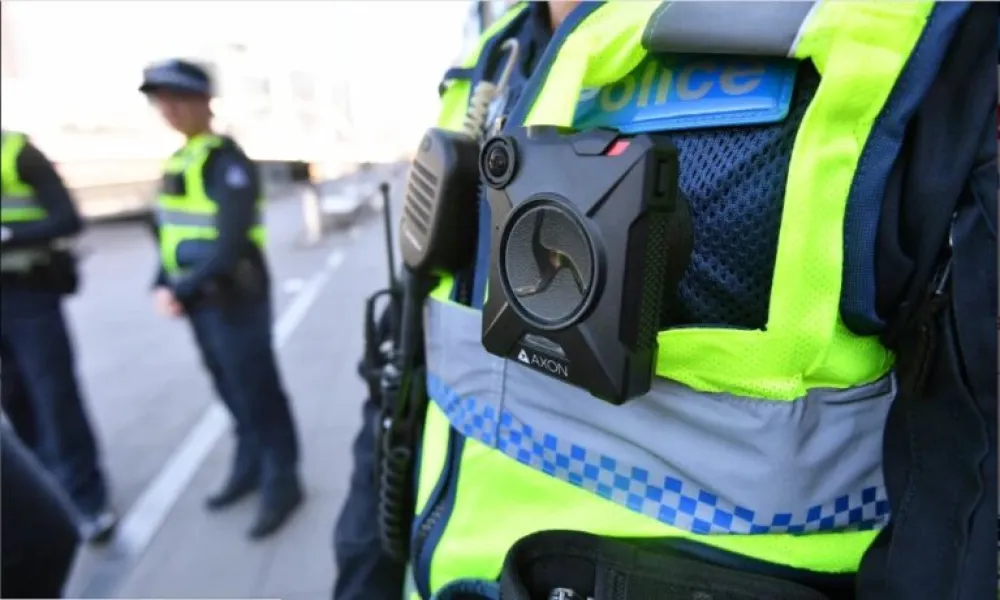



A revised bill regulating the use of body-worn cameras by police officers is set to be examined on Wednesday by the House Legal Affairs Committee. Submitted by the Ministry of Justice, the legislation outlines when and how cameras may be activated on uniforms and police vehicles, as well as safeguards governing the handling and destruction of recorded material.
Revised bill returns to parliament
The updated legislation allows for the installation and use of portable cameras on police uniforms, equipment, plain-clothes attire and service vehicles, with or without police markings. The bill was first submitted in early 2023 but faced objections from police associations, which called for exemptions for specific categories of officers and clearer rules on data management and responsibility.
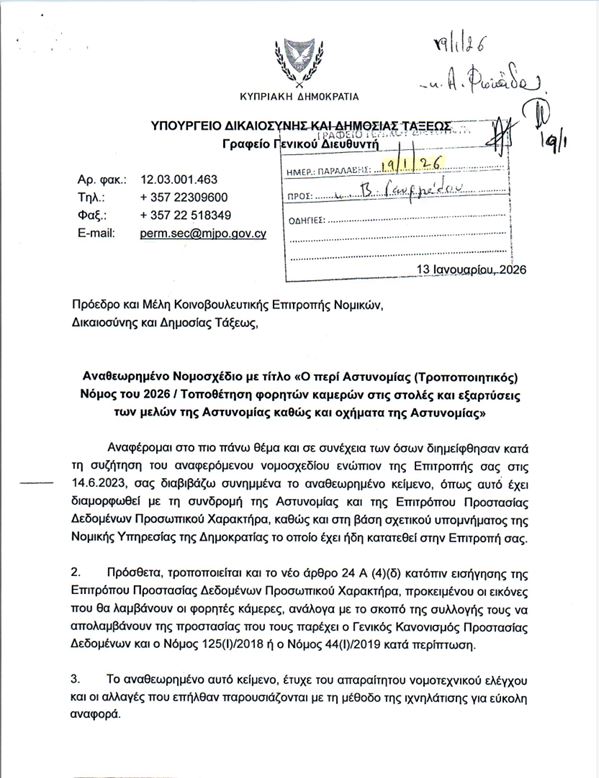
In response, the ministry revised the text to address concerns, including the protection of undercover operations and the explicit designation of responsibility for audiovisual material.
What the bill provides
The main provisions of the revised bill include the following:
Authorised use and visibility
Portable cameras may record audio and video following approval by the Chief of Police. While operating, the devices must emit a visible light signal to indicate recording. Any audiovisual material produced may be used as evidence in criminal, disciplinary or civil proceedings.
Purpose of camera use
The cameras aim to protect police officers from false complaints, safeguard the public from potential police misconduct and improve the quality of evidence relating to criminal offences.
When cameras may be activated
Officers may activate body cameras only in specific situations, including:
- During the arrest or search of any person.
- When entering and searching premises.
- During the pursuit of a person or vehicle.
- When stopping a person or vehicle for investigative purposes.
- Upon arrival at the scene of a criminal offence.
- When an officer is attacked, faces resistance or is obstructed while on duty.
- During high-risk operations.
The bill defines a high-risk operation as a volatile or dangerous situation that may result in death, injury or property damage and requires immediate police action. Indicative examples include riot control, terrorist incidents, kidnappings, hostage situations, armed robberies, prison uprisings, exchanges of gunfire, suicide attempts and the execution of court orders under the Mental Health Law.
Unmarked police vehicles
Cameras in vehicles without police markings may be activated only once it is clearly and visibly communicated to the person being pursued or stopped that the vehicle belongs to the police, through sirens, lights or another clear method.
Conditions and limitations
Upon activation, the officer must clearly state the date, time and location for recording purposes.
Where feasible, individuals within the recording field must be informed that the camera is operating.
Recording must cease immediately once the purpose for activation has been fulfilled, with the officer again stating the date, time and location.
Retention and destruction of material
Audiovisual material that forms part of evidentiary records must be destroyed once court proceedings are concluded or an investigation is discontinued.
Penalties for unauthorised use
Any person who deliberately activates a body camera without authorisation, accesses recorded material without permission or allows unauthorised access commits an offence. Upon conviction, offenders face a prison sentence of up to three years.
The bill will be discussed by the parliamentary committee before moving forward in the legislative process.