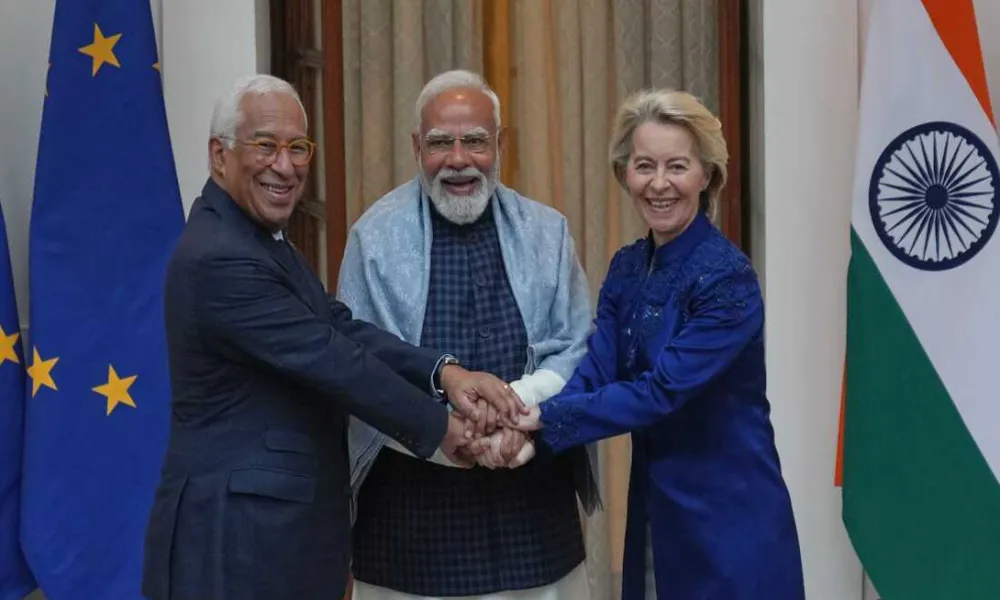
India and the European Union have announced a major free trade agreement, ending nearly two decades of intermittent negotiations. The deal aims to deepen economic cooperation at a time of global trade tensions and shifting geopolitical alliances.
European Commission President Ursula von der Leyen described the pact as the “mother of all trade deals”, while Indian Prime Minister Narendra Modi called it historic, saying it would “boost manufacturing and services sectors and strengthen innovative partnerships”. BBC reports that once implemented, the agreement will allow freer trade in goods and services between the 27-nation EU bloc and India, together representing about a quarter of global GDP and a combined market of roughly two billion people.
Under the agreement, the EU will eliminate or sharply reduce tariffs on a wide range of exports to India, including chemicals, machinery, electrical equipment, aircraft and spacecraft. Import duties on cars, currently as high as 110%, will be reduced to 10% within a quota system. India, in turn, will gain preferential access to EU markets for most of its exports, particularly textiles, leather goods, marine products, gems and jewellery.
Indian officials said sensitive sectors such as dairy, cereals and certain agricultural products have been protected, balancing export growth with domestic priorities. The deal also includes a mobility framework to ease short term travel for professionals between India and EU member states, which Modi said would make access to European markets “easier for India’s farmers and small businesses”.
Beyond trade, both sides are advancing cooperation on security, defence and climate action. The EU is already India’s largest trading partner in goods, with bilateral trade reaching 136 billion dollars in 2024 to 25, nearly double the level of a decade ago.
Formal signing of the agreement is expected later this year after approval by the European Parliament and EU member states. Analysts quoted by the BBC say the deal is likely to benefit labour intensive sectors in India but could also pose challenges due to strict EU regulatory and environmental standards.
The agreement comes as India and the EU both face economic pressure from the United States, underscoring the broader political message of choosing cooperation and trade agreements over tariffs. As von der Leyen put it, the pact is “a strong message that co-operation is the best answer to global challenges”, the BBC reported.