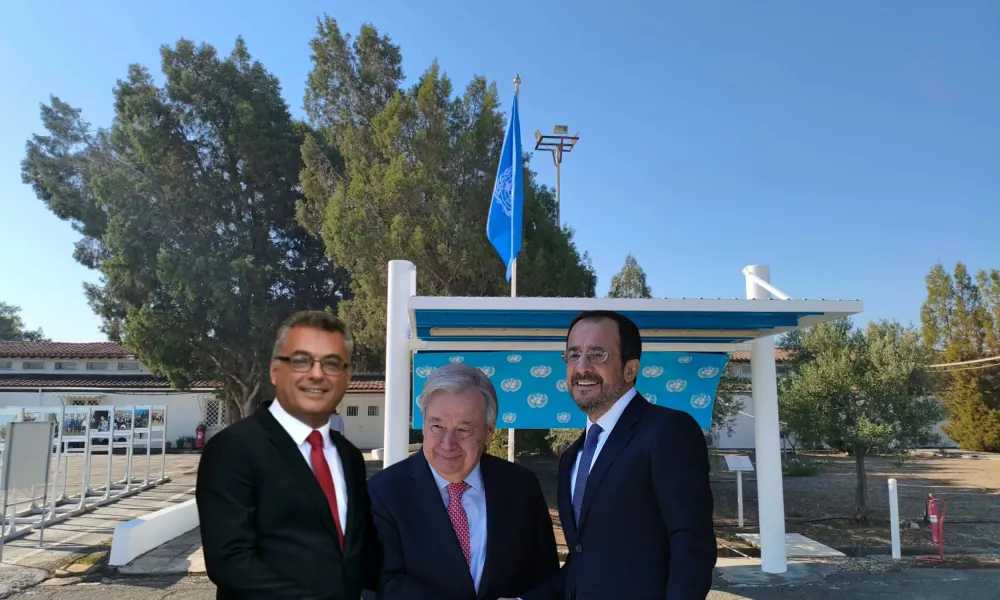

We are just two months away from the end of the term of António Guterres, the UN Secretary-General. A diplomat who, perhaps more than most, understands the Cyprus problem, its peculiarities, its details and its less visible dimensions.
In other words, we are at the eleventh hour before what may well be the final opportunity to resolve the Cyprus issue on the basis of United Nations resolutions slips away.
After that, the cementing of partition will be relentless and perhaps inevitable.
Faced with this looming and potentially decisive deadlock, Cyprus' political leadership appears preoccupied with other matters.
On the Greek Cypriot side, where we supposedly feel the urgency of a settlement because time is steadily uprooting every hope of reunification, the political establishment continues to place the country's future on autopilot.
Instead of focusing every day on how best to make use of the remaining period of Guterres' tenure through determined diplomatic mobilisation, the southern part of divided Cyprus is living under the shadow of the... 2028 presidential election.
Yet this situation is increasingly being treated as normal.
Fifteen months before the next vote, we are witnessing a recital of political absurdity.
On the one hand, the President of the Republic is consumed by the continuous management of the Cyprus issue and domestic governance through the lens of political communication, with re-election as his sole objective and concern.
On the other, opposition parties, led by DISY, the country's largest political force, continue to recycle internal disputes, personal agendas and premature candidacies.
In the face of these troubling realities, one glaring question arises:
When we ourselves treat the island's division as a secondary issue compared with the pursuit of political office, on what grounds do we expect the international community to persevere until the end?
Why, in short, are we frustrated with UN envoy María Ángela Holguín, who has warned that without a change of course by the two communities there is nothing to alter the current reality?
Why should the United Nations feel any particular pressure to continue, or why should Ankara feel discomfort, when it sees time working in its favour and permanent partition being delivered on a plate without any cost?
The political responsibilities are enormous and they belong to everyone.
If the political leadership continues to sacrifice the future of the homeland on the altar of premature electoral calculations, there may no longer be anything left to negotiate by 2028.
Those elected then will merely inherit the seal on Cyprus' permanent tombstone.
Some people need to come to their senses before it is too late.