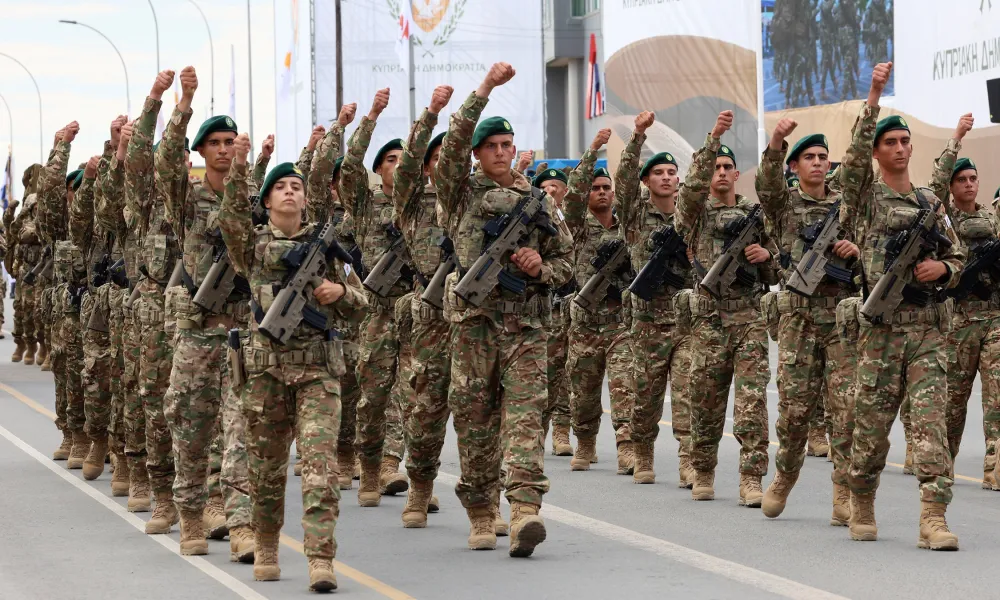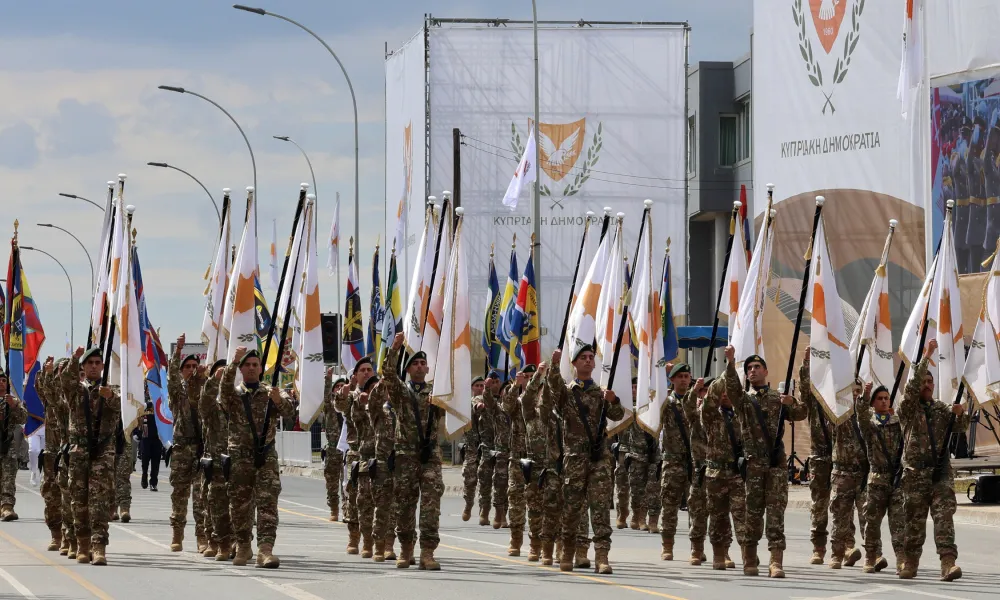

Celebrations marking the anniversary of the Republic of Cyprus highlight an obvious contradiction: the independence of a state whose territory remains divided.
What Cyprus has experienced in recent years, in the absence of any serious negotiations on the Cyprus problem, is both dangerous and deeply misleading for society and its collective consciousness.
Official policy often places emphasis on military procurement and commemorative displays, fostering the illusion that Cyprus can become a regional military power. Yet the real geopolitical achievement is not the acquisition of new weapons systems but the reunification of the country.
Fifty-two years after the tragedy of 1974, the greatest danger is no longer occupation alone but also inertia and growing acceptance of occupation and division. Society has become accustomed to crossing points, the buffer zone and geographical separation. De facto partition has become a "second nature" and a dangerous everyday reality. As generations pass, the loss of collective memory threatens to complete what began with weapons.
The international community repeatedly warns that the status quo cannot remain unchanged. In practice, however, it functions as a mechanism that continually creates new facts on the ground. Demographics change, economic structures evolve, ownership patterns shift and the relationship between Turkish Cypriots and Ankara is transformed. Time does not freeze the problem; it produces its own outcome, and that outcome is the consolidation of partition.
The European Union may legally regard the division as temporary, but in practice the situation has become normalised in the minds of both citizens and politicians. As a result, when Turkey reacts, governments often fall back on a familiar narrative, arguing that "any action by Ankara is not surprising because Turkish policy reflects a 'neo-Ottoman approach', is aggressive and contrary to international law and international norms".
Such reactions are not detached from reality. The larger question, however, is what can prevent this trajectory. What alternative exists other than persistence in dialogue, not for dialogue's sake, nor merely to assign responsibility to the other side, but to reverse the current course?
Turkey is using this vacuum of inaction to deepen its control over the northern part of the island, turning division into a permanent reality on the ground. In that context, ceremonial parades, new military procurements and excessive reliance on alliances that do not fully reflect realities on the ground do not threaten partitionist plans. Instead, they risk masking the failure to overcome division, allowing de facto partition to become a dangerous and increasingly familiar habit.