
The two leaders agreed on Tuesday to move forward on previous confidence-building measures (CBMs) announced earlier this month and expressed their readiness to meet with the UN chief the soonest possible.
No breakthrough was reached on any new measures, including the much-anticipated crossing points of Athienou-Pyroi-Aglandjia and Mia Milia.
According to sources, a trilateral will likely take place in December while Ankara’s stance and the sides’ respective positions on substance and methodology make a 5+1 less likely to take place before António Guterres leaves office.
Limited progress on already agreed measures
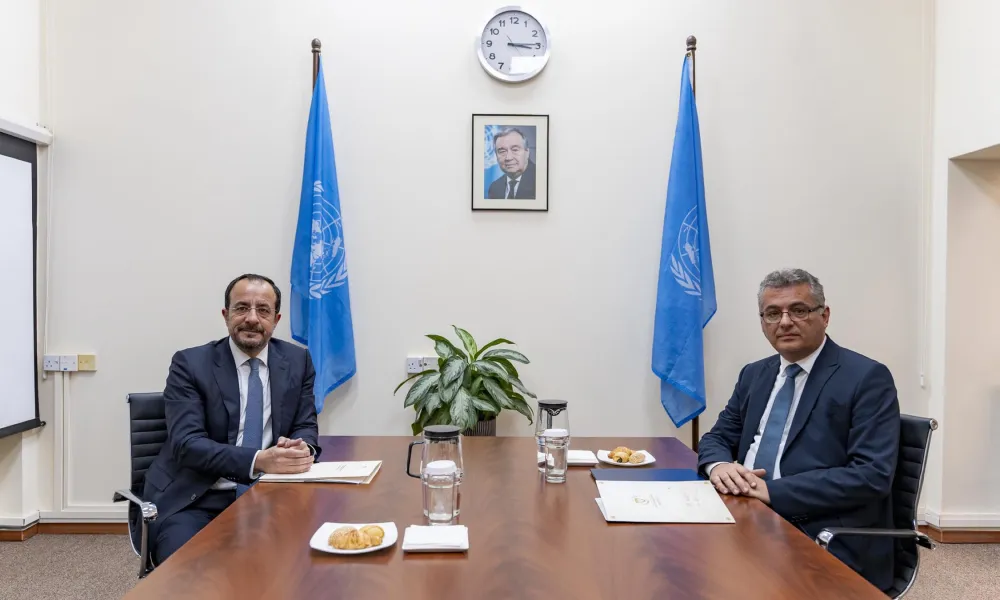
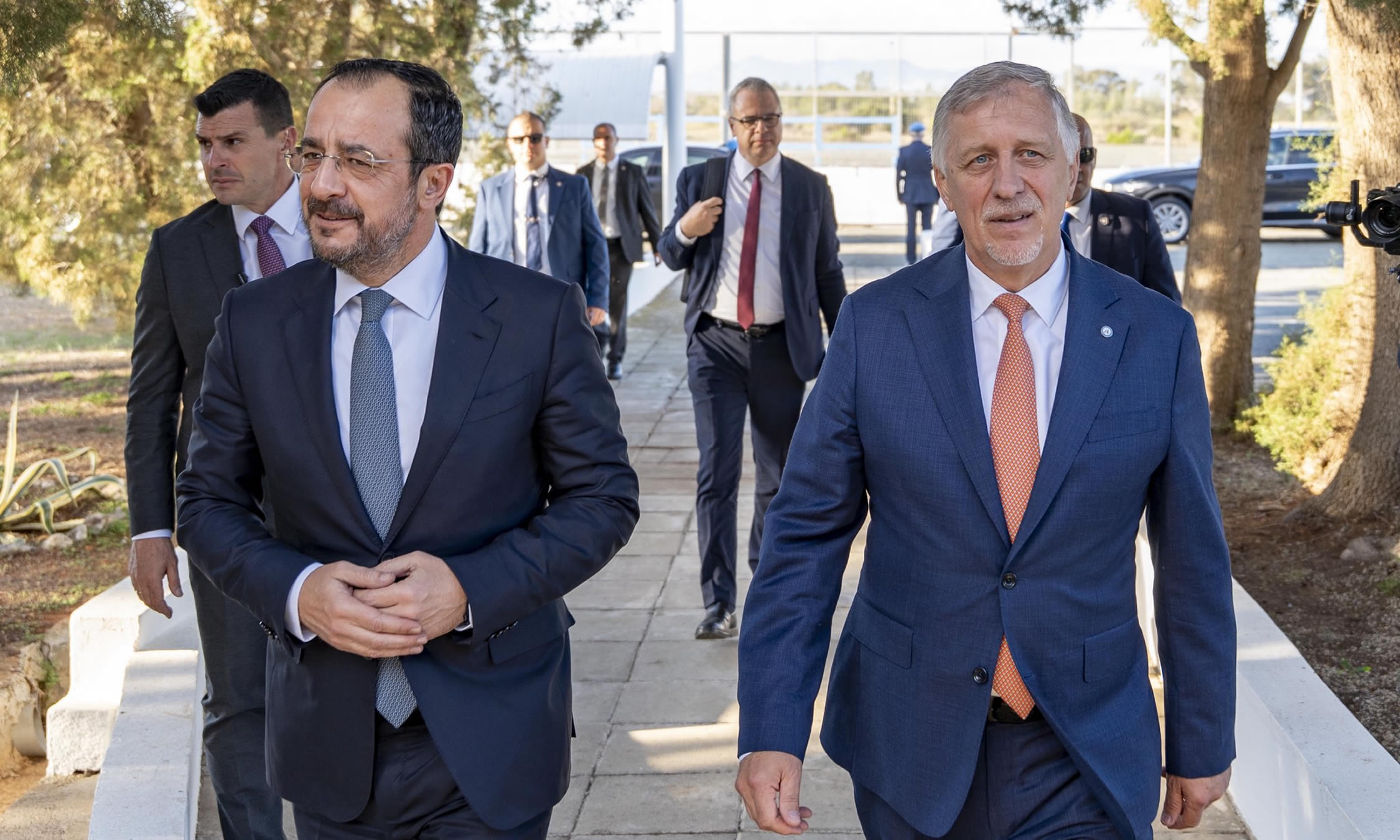
President Nikos Christodoulides and Turkish Cypriot leader Tufan Erhürman held a tête-à-tête for almost an hour and a half at the UN Good Offices.
According to the UN, the two leaders met in a “positive atmosphere” during which they “reaffirmed their readiness” to meet with UN Secretary-General António Guterres the soonest possible.
They continued discussions on CBMs, methodology and substance, reviewing progress on trust-building measures agreed at their last meeting on 9 November with UN Personal Envoy María Ángela Holguín. The two discussed expediting implementation of those CBMs, including the opening of Louroudjina-Lympia and Kampos-Karavostasi crossing points.
According to Politis sources, they also continued discussions on two more crossing points but without making headway, while the issue of demining was not discussed.
The UN statement said the leaders agreed on the text of the rapid response mechanism for emergencies and endorsed the technical committees’ projects “EduBites” and “Green Cyprus: Voices for a Sustainable Future”.
The two leaders also agreed to renew their 8 May 2026 agreement on preparing a six-month plan for the conduct of religious services throughout the island and “welcomed the recent expansion of the excavation areas” undertaken by the Committee on Missing Persons (CMP).
Despite both leaders having proposed the organisation of friendly football matches, no relevant announcement was made after their latest meeting.
‘Strong conviction’ to meet Guterres
Speaking after the bilateral, President Christodoulides said his main takeaway was “our joint call to the Secretary-General for a trilateral meeting as soon as possible”.
He added: “There was a strong conviction on both our parts regarding the need for this meeting to take place.”
The president said the sides will continue discussions on CBMs, methodology and substance at their meeting with Guterres, in the hope they will have something to announce afterwards.
He acknowledged that “differences remain” on the opening of two more crossing points.
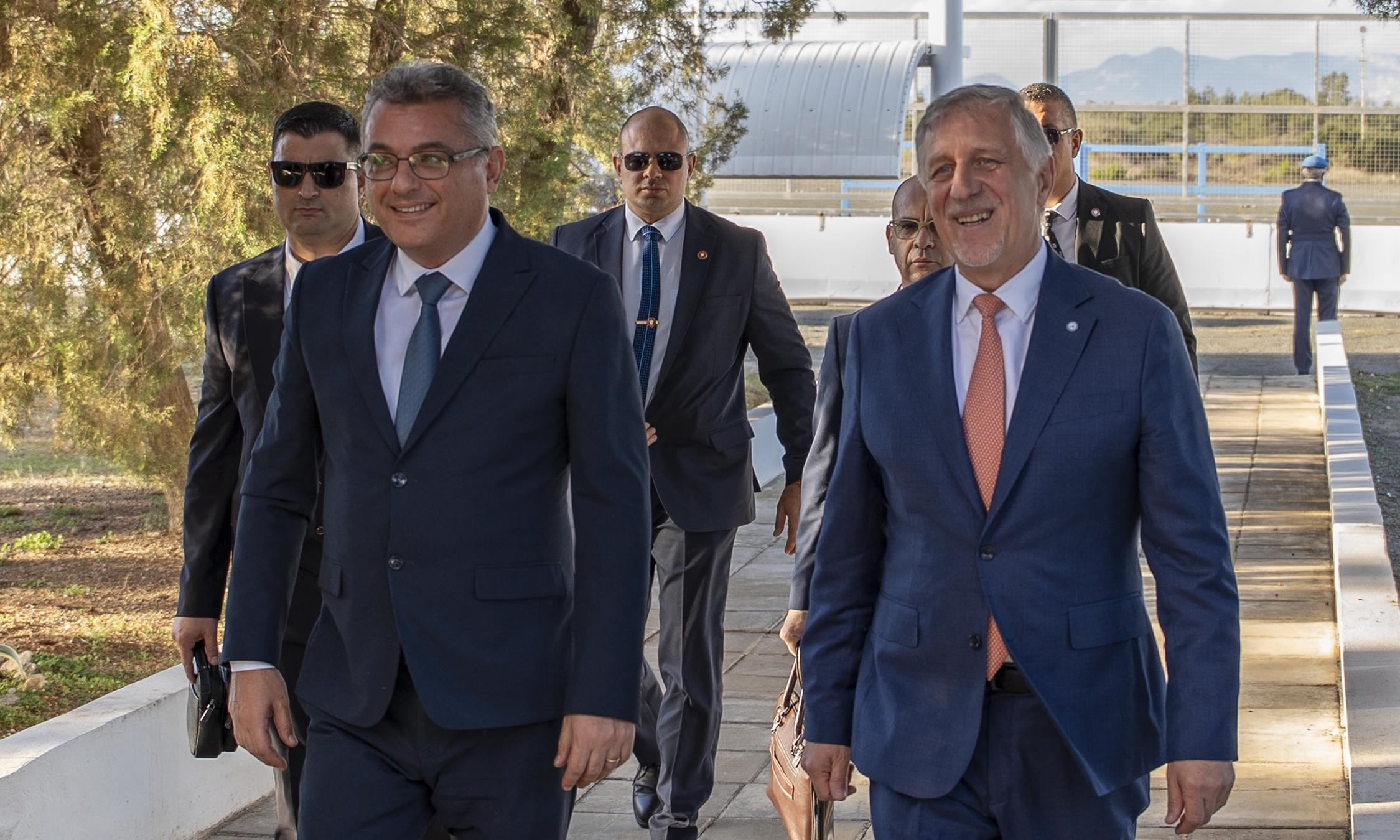
Asked if the prospect of a 5+1 meeting was fading, the president replied in the negative, saying “everything will depend on the meeting” with the UN chief. He noted that Guterres had reiterated his intention to hold a 5+1 at the Antalya climate change conference.
Varosha
On recent plans announced by Turkish Cypriot ‘prime minister’ Ünal Üstel to boost tourism to Varosha, Christodoulides noted the Turkish Cypriots were currently in an election period.
At the same time, the UN released a second statement on Tuesday evening on the fenced-off town, noting that Security Council resolutions 550 (1984) and 789 (1992), “make clear that any attempt to settle any part of Varosha by people other than its lawful inhabitants is inadmissible” while calling for the transfer of this area to the administration of the UN.
Expectations not met
Prior to the bilateral with Erhürman, Christodoulides said the aim was for the meeting to be as productive as the last one, suggesting Guterres would invite both for a trilateral after.
Christodoulides said he recently spoke with the Presidents of the European Council and European Commission, António Costa and Ursula von der Leyen, though he acknowledged this “mainly concerned” the intensive consultations on the EU’s Multiannual Financial Framework (MFF).
He also held a video conference with the European People’s Party (EPP) on the MMF, adding, “we also referred to the Cyprus issue and the decisive role that the European Union can play”.
Fitto’s account of the Fidan meeting
Regarding Raffaele Fitto’s meeting with Turkish Foreign Minister Hakan Fidan last Friday, Christodoulides conveyed what the EU Commissioner had told him.
First, the president highlighted that Fitto was accepted in Ankara as the EU’s Special Representative for the Cyprus issue, and not as a European Commissioner or Executive Vice-President.
Second, he confirmed that Turkey’s position is that it does not want any progress in EU-Turkey relations to be linked to progress on the Cyprus issue.
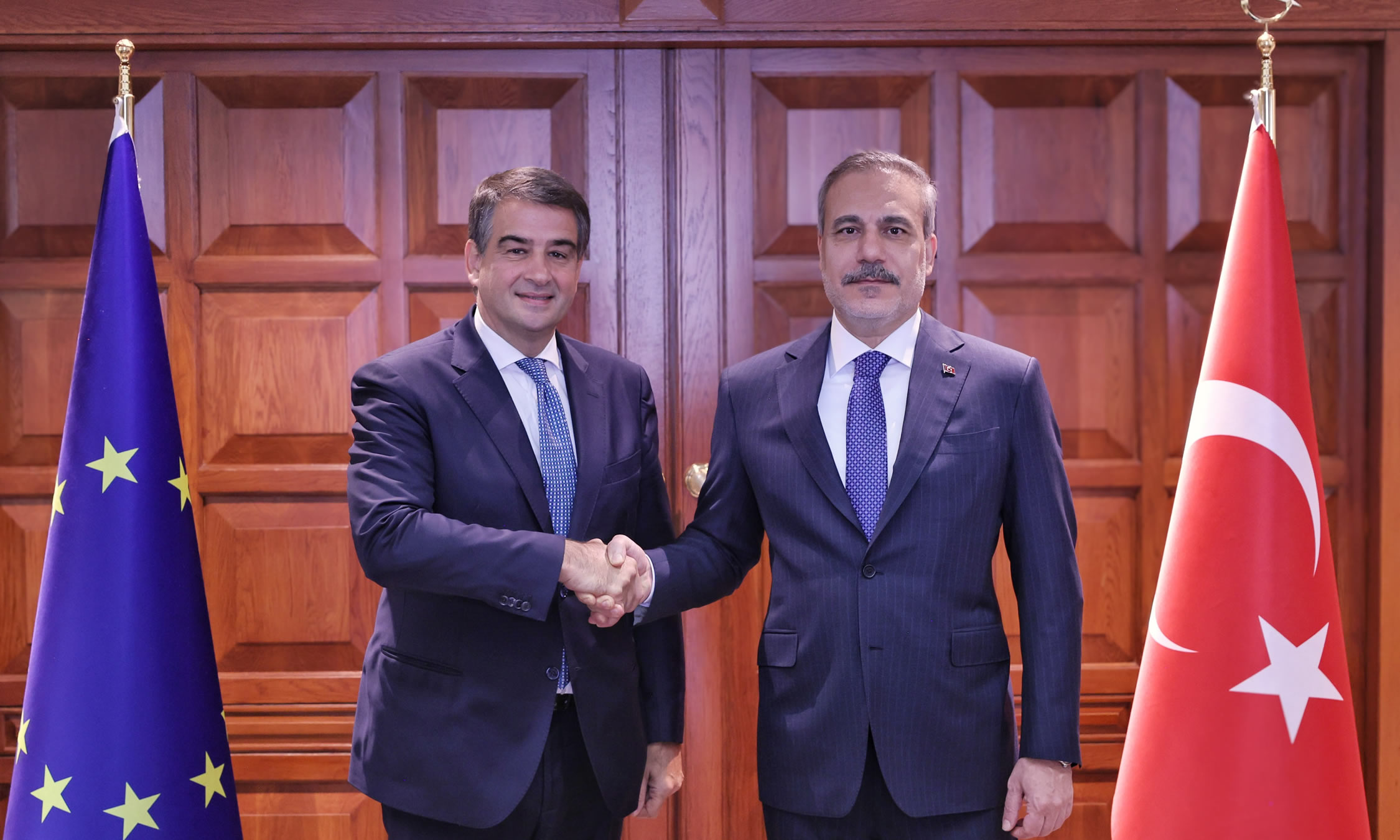
“Mr Fitto’s response was very clear: the two issues are already linked. There can be no progress in EU-Turkey relations without progress on the Cyprus issue,” said Christodoulides.
Within this framework, Fitto and Fidan discussed what Turkey would like to see happen vis-à-vis Brussels and what the EU expects on the Cyprus issue to pave the way for positive developments in EU-Turkey relations, he added.
Hopes shifting to new Secretary-General
According to well-informed sources, agreement on two new crossing points could be announced at the trilateral with Guterres, which will likely take place after elections in the north. This in turn could lead to a 5+1 meeting before Guterres leaves office.
However, in all likelihood, the convening of an expanded meeting will fall into the lap of the UN chief’s successor, whoever that may be.
Differences remain on methodology with Erhürman wanting clarity on a rotating presidency upfront and the Greek Cypriot side objecting to cherry-picking the fundamental elements of a solution prior to negotiations.
Meanwhile, one source noted that EU procedures, including consultations between 27 member states, can be lengthy. They argued Turkey might be playing the long game, delaying progress in peace talks as it waits to see what will come of its relations with the EU, regardless of what it says in public about refusing to link those relations with the Cyprus issue.
Another possibility is a conscious effort to avoid reconfirming the negotiating body of work, specifically the six fundamental issues in the so-called Guterres Framework.
The source noted that failure to accept that framework would significantly damage the prospects of a solution.