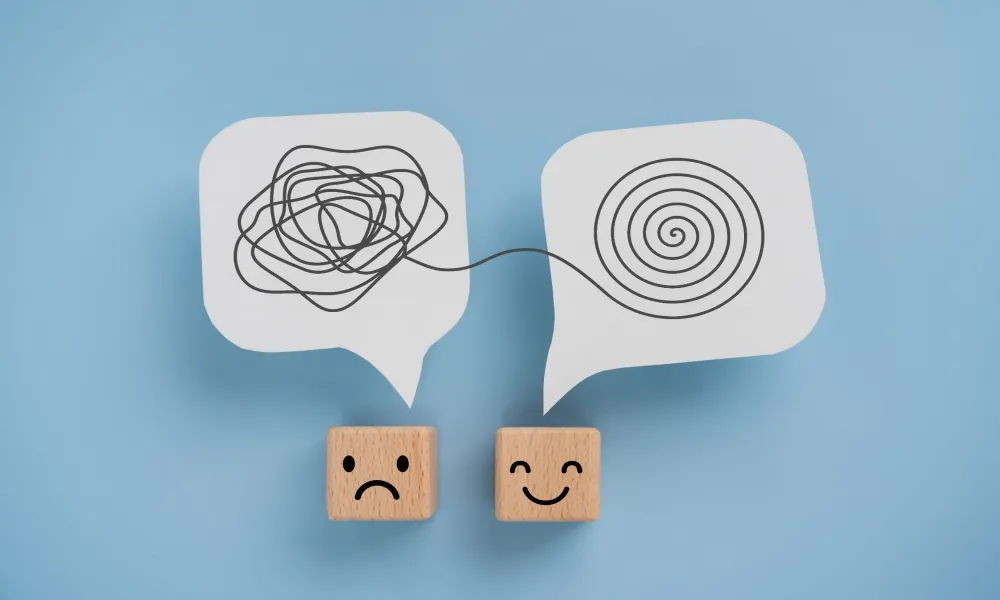

Cyprus is finally talking about mental health, and that is a positive development. Institutions are increasingly turning to public figures and ambassadors who speak openly about their experiences of mental-health conditions, including bipolar disorder.
Their stories matter. Their courage matters. Their visibility matters.
In a society where stigma remains deeply rooted, the willingness to speak publicly about mental illness can help others feel less alone and more willing to seek support.
The discussion has gained fresh relevance following the recent appointment of Cyprus' first Mental Health Ambassador, Poly Gregora, a move that reflects a growing recognition of the value of lived experience in public conversations about mental health. Her appointment is significant not only because it places lived experience at the centre of public mental-health advocacy, but also because it expands the range of voices represented in Cyprus's public life.
But as mental-health awareness grows, so too does an important question: what kinds of knowledge are we putting forward as public authority? This question extends far beyond any one appointment. It touches on how societies decide who speaks with authority about mental health, what forms of knowledge are valued, and how public understanding is shaped.
This is not about discrediting anyone. It is not about questioning anybody's sincerity or contribution. It is about recognising that lived experience and professional expertise are both valuable, but they serve different purposes.
The value and limits of lived experience
There is a growing international movement to give greater visibility to people with lived experience of mental-health conditions. This development has brought important benefits. People who have lived through bipolar disorder, depression, anxiety or trauma can offer something that no textbook or training can provide: authenticity, embodied insight and hope through visibility.
Someone who has lived with bipolar disorder can describe the reality of mania, the weight of depression, the effects of medication and the impact of stigma in ways that professionals cannot fully replicate. Their voices matter because they help humanise mental illness. They remind us that diagnoses are not abstractions but experiences lived by real people. At the same time, personal experience, however valuable, is not the same as professional expertise. The two complement one another, but they are not interchangeable.
What a therapist offers that lived experience cannot
Therapists carry responsibilities that extend far beyond personal narrative. They are trained to:
- Conduct clinical assessments.
- Recognise suicide risk, psychosis, trauma and safeguarding concerns.
- Understand differential diagnoses.
- Deliver evidence based interventions.
- Work within ethical and legal frameworks.
- Manage complexity, uncertainty and risk.
- Maintain professional boundaries.
A therapist's authority is not built on personal experience. It is built on years of training, supervision, regulation and accountability. It comes from the capacity to hold another person's distress safely, consistently and ethically. Many of the most important skills in therapy are not about having experienced a condition oneself. They are about understanding how mental-health difficulties manifest differently across different people, relationships, family systems and cultural contexts.
The distinction becomes especially important when discussing issues such as medication adherence, suicide risk, psychosis, involuntary treatment, safeguarding, or the difference between ordinary emotional distress and symptoms that require professional intervention.
Personal experience can provide valuable insight into these realities, but public guidance requires clinical knowledge, ethical responsibility and professional accountability.
Why institutions choose ambassadors with lived experience
In Cyprus, mental-health stigma remains high. Institutions often believe that a relatable face or personal story will resonate more deeply with the public than a clinician speaking in structured professional language. In many ways, they are right. Stories reach people in ways statistics and terminology rarely can. But a personal story and professional expertise are not the same thing.
When institutions place people with lived experience at the centre of mental-health awareness campaigns, it is important to be clear about the role they are being asked to play. Their value lies in visibility, testimony and the reduction of stigma. Clinical guidance is a different responsibility altogether.
The issue is not whether lived experience belongs in public conversations about mental health. It absolutely does. The issue is whether institutions are sufficiently recognising the difference between personal insight and professional expertise.
The missing category: therapists with lived experience
There is also a third group that rarely enters public discussion in Cyprus. Therapists who have their own lived experience of mental-health difficulties.
Many clinicians have personal histories involving anxiety, depression, trauma, bipolar disorder or other conditions. Like everyone else, they are human beings with their own vulnerabilities and life experiences. The difference is that they have undergone extensive training and supervision to integrate those experiences into professional practice.
Yet Cyprus often divides people into two simplistic categories: the expert and the patient. This distinction no longer reflects reality. Many professionals carry both clinical knowledge and personal experience. Their lived experience may deepen empathy, strengthen attunement and enrich their understanding of suffering. But even then, their professional knowledge does not come from their story. It comes from their training.
Why this debate is different in Cyprus
This debate is particularly complex in Cyprus because of the way mental health is understood socially and culturally. Several realities shape the conversation:
- Stigma remains strong, particularly around conditions such as bipolar disorder.
- Family attitudes often influence whether someone seeks help.
- Authority tends to be accepted more easily when it feels familiar and approachable.
- Public discourse frequently gravitates toward personal testimony rather than clinical nuance.
As a result, people with lived experience may sometimes be received more warmly than mental-health professionals. That is understandable. Stories feel safe. Stories feel human. Stories feel accessible. But mental health is also complex. Public understanding requires more than emotional connection. It requires accuracy, context and careful communication.
We also need to acknowledge something else. Clinical expertise is not sufficient on its own. Mental-health professionals can sometimes become detached from the realities of living with a condition. Diagnostic language can create distance. Professional knowledge, if not balanced by genuine understanding and empathy, can risk overlooking the everyday realities faced by those who live with mental illness. This is precisely why lived experience matters. It keeps the conversation grounded in human reality. It reminds services, professionals and institutions that mental health is not merely a clinical issue but a lived one.
People who speak publicly about their mental-health journeys often do so at considerable personal cost. Their openness can reduce shame, challenge stigma and encourage others to seek support. That contribution deserves respect. Ambassadors can open doors that professionals sometimes cannot. They can reach people who may never attend a workshop, read a clinical article or walk into a therapist's office.
But the public also deserves accurate, safe and clinically informed guidance, especially when public conversations concern conditions as complex and potentially life-altering as bipolar disorder. Lived experience is invaluable. Clinical expertise is indispensable. Neither replaces the other. The most responsible approach is not to choose one over the other, but to bring them together.
Institutions should not think in terms of ambassadors instead of experts. They should think in terms of ambassadors alongside experts.
A note from myself
I have worked in systems where lived experience and professional expertise are not viewed as competing forms of knowledge. It is common to see therapists with lived experience, peer support workers, clinicians, researchers and advocates. All contributing from different perspectives within the same ecosystem. Each brings something valuable. Each has a distinct role. Cyprus is still evolving in this direction.
We need more collaboration, more nuance and a greater willingness to recognise different forms of knowledge without confusing one for the other. People with lived experience help us understand what suffering feels like. Professionals help us understand how to respond to it. Neither voice is complete on its own. A mature mental-health culture does not force a choice between personal experience and expertise. It creates space for both.
The public deserves ambassadors who inspire, professionals who guide and institutions wise enough to know the difference.
All three matter.