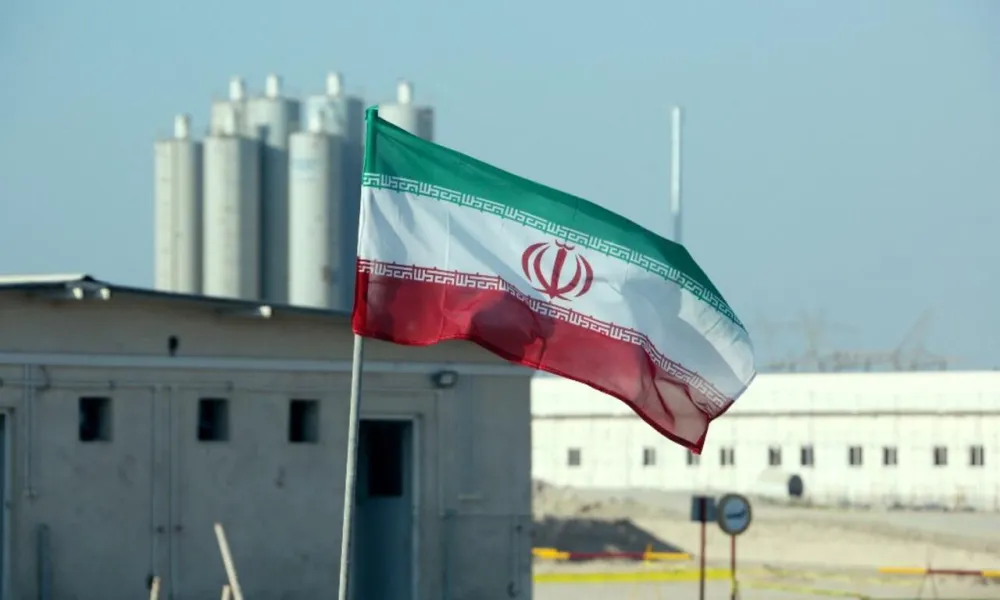
I wonder how many Cypriots have fully grasped the mortal danger Cyprus would face if Iran succeeds in its ambition to acquire nuclear weapons. Since the Islamic Revolution of 1979, Iran has regarded Israel as an illegal entity, a "cancerous tumour" in its official rhetoric, and has made the elimination of Israel a national objective. If the theocratic regime in Tehran is not stopped from advancing its nuclear programme, it could within five or ten years possess not only nuclear bombs but long-range missiles with nuclear warheads capable of reaching not just Israel but the United States itself.
Consider what a nuclear war between Israel and Iran would mean for Cyprus, just 350 kilometres from Israeli soil. It is a nightmare scenario, an uncomfortable truth we cannot afford to ignore. Cyprus would face severe long-term risks, above all from radioactive fallout and serious disruption to infrastructure. While the most lethal radiation remains closest to the point of detonation, radioactive particles can travel hundreds of kilometres, particularly if carried by winds toward Cyprus. Fallout can arrive within hours or days and remain dangerous long after. Radioactive residue would contaminate food, water and soil, posing lasting environmental and public health consequences, including a dramatic rise in cancer rates. The bitter reality is that survival under such conditions would be deeply uncertain.
Does that mean Trump is right to attack Iran? I am critical of Trump when he invokes Iranian human rights as justification for military strikes. The theocratic regime's record in that area, including the killing of thousands of protesters, is abysmal. But war against Iran will bring neither peace nor human rights to Iranian citizens. I am critical of Trump when he claims moral authority while holding people in detention without due process, pursuing targeted killing operations in Latin America, and spending two years backing Israel through what amounted to a genocide in Gaza. He has no credibility on human rights. What I cannot criticise him for is his fear that a nuclear-armed Iran would not hesitate to use those weapons, or to transfer them to one of its proxy militias.
To assess this honestly, we need to look at what Iran has actually done since 1979. For 47 years, Tehran has worked to export a project built on revolution, violence and armed destabilisation rather than regional stability or partnership. The regime has invested hundreds of billions of dollars building a transnational network of proxy militias, supplying them with missiles, drones, training and funding. In Lebanon, the state cannot disarm Hezbollah. In Iraq, armed Iran-backed militias have hollowed out national sovereignty. In Syria, Iran-backed forces helped turn the country into a regional battlefield at the cost of hundreds of thousands of lives. In Yemen, Iranian support for the Houthi rebellion produced a prolonged war, a humanitarian catastrophe and a base from which international shipping lanes have been systematically targeted. This is not a record of miscalculation or limited intervention. It is a fully developed strategy built on a clear principle: expand Iranian influence through proxies and the chaos they generate.
The nuclear threat is made far more dangerous by the ideological character of the regime. Tehran's official discourse is saturated with death slogans and open declarations of enmity, and presents conflict as an expression of political identity. Its strategic behaviour cannot be assessed using the standard frameworks of nuclear deterrence, which assume that states, however deep their disagreements, ultimately wish to avoid catastrophe. Iran has instead built its strategy around the pursuit of weapons of mass destruction alongside ballistic missile systems, drone capabilities and armed proxies operating across multiple countries. With each cycle of regional conflict, these capabilities have spread further. Imagine the Middle East under those conditions: a regime holding nuclear weapons and running a network of paramilitary organisations engaged in open conflicts across several states. In that scenario, nuclear weapons would cease to function as a traditional deterrent. They could become an active instrument in Tehran's proxy wars. That is the real problem.
The world today is not only facing the traditional challenge of nuclear proliferation. It is facing the possibility that these weapons could be dispersed into networks of armed non-state actors. That prospect alone should define how the international community approaches the Iranian regime, because if it becomes reality, entire countries across the Middle East face erasure from the map.
The writer is an economist and social scientist.