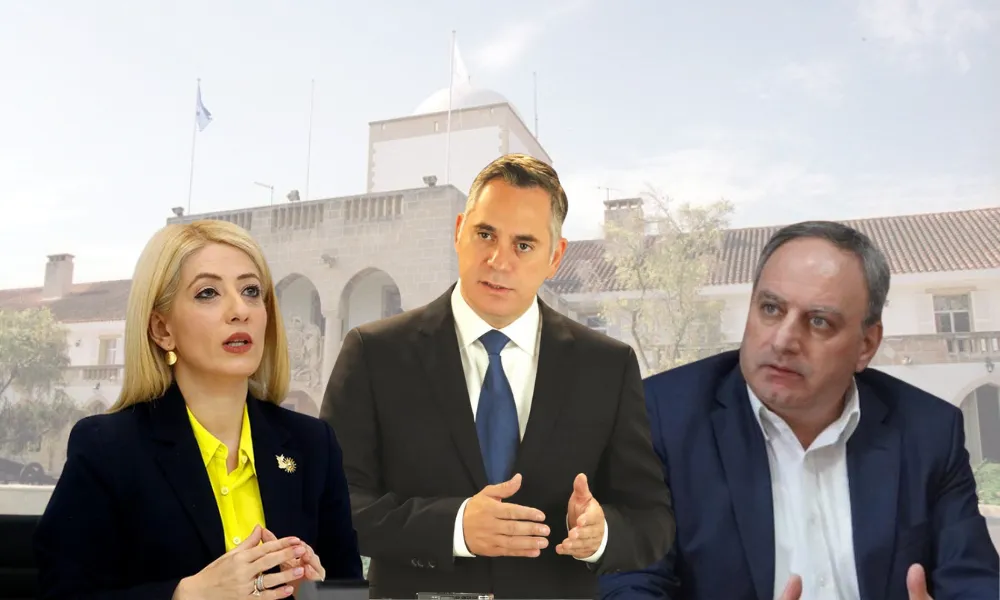
With candidacies now submitted, the final stretch of the parliamentary election campaign has begun, and the landscape it has produced is unlike anything Cyprus has seen before. Every poll points to the same conclusion: the parties that dominated political life after the Turkish invasion are heading for severe losses. For the first time since 1980, it is highly likely, to put it conservatively, that Disy, Akel and Diko combined will fail to hold a majority of seats in the House of Representatives. I had been sounding this warning for years, across dozens of articles. Those warnings were not meant as prophecy. They were grounded in a straightforward reading of what people across every social class were telling me in daily life, combined with a clear-eyed assessment of the nature of these three parties after decades in power.
Diko convinced itself that aligning with President Christodoulides would deliver a surge in support. Its traditional constituency, however, had modernised and no longer felt the obligation to go through political intermediaries. Akel persists in fighting shadow battles against the EU and the West, its arguments increasingly incoherent. Disy, rather than speaking to the broad moderate electorate that once formed its base, has reached for weapons from another era that alienate precisely the reasonable, centrist voters it needs. All three believed that experience and institutional weight would sustain them as natural parties of power indefinitely.
What their leaderships failed to reckon with was a double shift that had been building for years. First, all three were parties in profound decline, more dysfunctional than they had been even a few years earlier. The 2013 financial crisis did not reveal hidden reserves of strength; it exposed their weaknesses in full view. Only politicians of the worst kind could have rejected the proposal to apply a uniform 6% levy on all deposits rather than the catastrophic haircut that followed. It was a failure that bordered on recklessness. The fact that they survived the 2016 and 2021 elections without the kind of collapse that polls now project for 2026 was down to the absence of credible alternatives and to the innate conservatism of the Cypriot voter.
Second, the electorate itself had changed, and the parties had not noticed. For the past ten to fifteen years, a quiet transformation was under way, one that turned explosive with the European elections and the extraordinary phenomenon of Fidias. Rather than studying what that result meant, the established parties dismissed it as a moment of voter irrationality. It was anything but. The left-right polarisation had kept large portions of the electorate anchored to Akel and Disy, but with disappointment accumulating and causes unaddressed, those anchors were always going to snap. A significant part of the electorate has stopped choosing between the lesser of two evils among the major parties. Instead, they are asking themselves how best to punish all of the established parties at once. Elections have become, for many, an exercise in expressing anger. The election of Fidias announced clearly that the hour of reckoning had come. The traditional parties read it as a passing storm.
Speaking with senior figures across all three parties, and particularly within Disy, I find that even now they have little understanding of what awaits them. The disconnect from reality could not be more glaring. My assessment is this: if Disy, Akel and Diko cannot overcome their institutional pathologies right now, voters are more than ready to discard them. They have ceased to be natural parties of government. If they cannot remove the distorting lenses that decades of monopolising power have fixed over their eyes, they will find themselves in the graveyard of political history before long. That prospect troubles and alarms me, because on the horizon there are no political formations with the capacity to adequately fulfil the serious role of a legislative body. There are undoubtedly capable individuals within the newer parties and movements. But effective legislative work requires strong teams, not strong individuals.
The traditional parties, for all their failings, still have a role to play. I will vote for the three best candidates from my party, with the expectation that if elected, they will work inside and outside the House with humility, integrity, decency, honesty, team spirit, respect for people and for the environment, resilience, courage and persistence. I will judge the candidates I vote for not by their personal declarations or party manifestos, but by what their actual conduct, professional record and life choices demonstrate. Many people with no professional standing or record of achievement have plastered the country with banners and leaflets. I want nothing to do with them. I will not authorise anyone without a proven track record to represent me. Cyprus needs MPs who are willing to break eggs, who have the courage to confront and expose every kleptocrat and corrupt official, even when that person happens to be a senior figure in their own party.