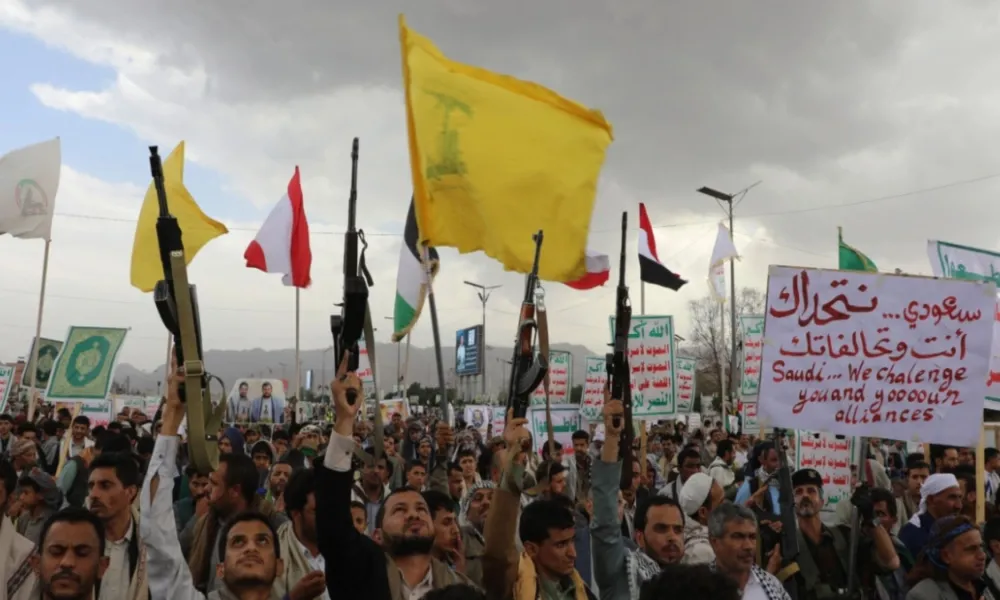

The Houthis have released footage they claim shows the downing of a Saudi F-15 fighter jet over Yemen's Marib province, as fighting intensifies between the Iran-aligned group and Saudi Arabia despite US President Donald Trump expressing optimism that the wider war with Iran may be approaching an end.
According to the Houthis, the aircraft was brought down by a domestically produced surface-to-air missile while conducting what the group described as "hostile operations".
The footage shows Houthi fighters examining wreckage, including a tail section bearing Saudi markings and identification number 5539.
CNN military analyst and former US Air Force Colonel Cedric Leighton said the markings on the tail appeared consistent with those of an F-15SA fighter.
If independently confirmed, the incident would mark only the second F-15 reportedly lost to hostile fire, following the downing of a US Strike Eagle by Iranian forces in April.
That earlier incident triggered a rescue operation for the crew and resulted in several additional US aircraft being destroyed after becoming immobilised at a desert landing site.
Three other American F-15s were destroyed during the early stages of the war by friendly fire involving Kuwaiti forces, highlighting the confusion and risks accompanying air operations in the region.
Escalation in Yemen
The reported loss of the Saudi fighter comes amid a broader escalation that is extending Tehran's influence beyond the original front of the conflict.
Houthi forces have advanced rapidly in recent weeks, capturing a Red Sea port city and an island close to an alternative maritime route used for Saudi exports when problems affect the Strait of Hormuz.
The group has also launched drone and missile attacks against Saudi cities, while strikes have damaged Saudi Arabia's East-West oil pipeline.
Houthi military spokesman Yahya Saree claimed further strikes on the Red Sea oil port of Yanbu and at King Khalid Air Base.
He also alleged that Saudi forces had carried out as many as 450 air strikes in Yemen over the course of one week.
The United States tightened its travel advisory for Saudi Arabia on Thursday, prohibiting US government personnel from travelling within 30 kilometres of the border with Yemen.
Trump optimistic over Iran
Trump's optimism relates specifically to the direct conflict between the United States and Iran, which he believes is moving towards an agreement.
"We hope that we're nearing the end of the war," Trump told reporters.
The parallel conflict between Saudi Arabia and the Houthis, however, continues to intensify, with the US president choosing not to become directly involved.
According to reports, Trump recently rejected a request from Saudi Crown Prince Mohammed bin Salman for US strikes against Houthi forces, leaving Riyadh to confront the group's advance without direct American military intervention.
The decision has reportedly caused considerable disappointment within the Saudi leadership.
Trump reiterated on Wednesday that Iran "wants to make a deal" and said he had been in "direct" contact with Tehran, without providing further details.
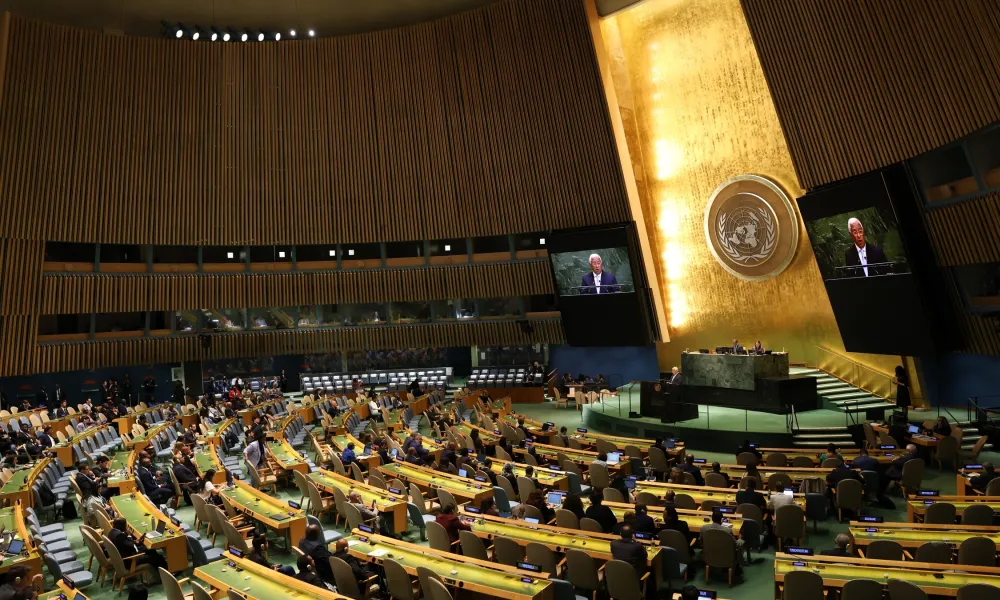
According to Axios, Trump is expected to meet leaders or foreign ministers from Gulf Cooperation Council countries on Tuesday on the sidelines of the UN General Assembly.
Energy markets watch Saudi pipeline
The expansion of the conflict into Yemen has already affected international energy markets.
Traders estimate that a prolonged shutdown of Saudi Arabia's East-West pipeline could remove as much as 4% of global oil supply from the market.
Brent crude nevertheless moved lower on Thursday to $104.59 per barrel, after announcements of additional Saudi shipments through Oman helped ease immediate concerns about supply disruption.
The contrasting developments underline the increasingly fragmented nature of the regional conflict: while Washington sees possible progress towards an agreement with Tehran, the military confrontation involving the Houthis and Saudi Arabia is expanding, bringing fresh risks to regional security and global energy supplies.