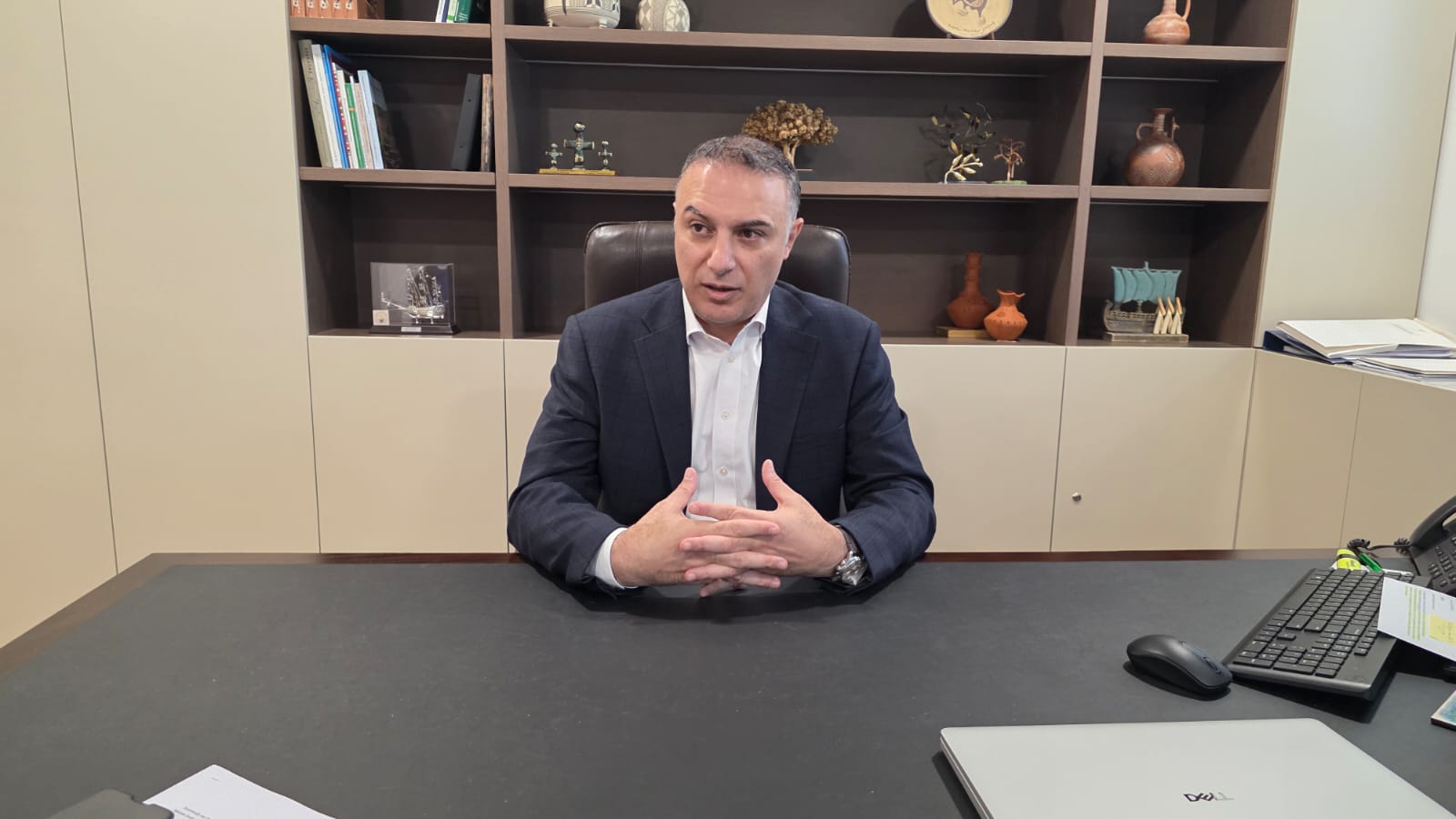
New desalination plants, greater use of reclaimed water and conservation measures are key pillars of the government's plan to strengthen water supplies for farmers without jeopardising Cyprus’ water security in the years ahead, Agriculture, Rural Development and Environment Minister Christos Senekis said in an interview with Politis.
One month after taking office and following an initial review of the numerous issues facing what he describes as a “multi-ministry”, as well as the demands of affected stakeholders and citizen groups, he summarised his experience with a simple conclusion:
“Water, agricultural production and the environment are different chapters, but links in the same chain. That is why we work on them simultaneously and with priorities.”
He also explains how trust between livestock farmers and the state can be rebuilt after the foot-and-mouth disease crisis and says the proposals submitted by the Malas team are “already being evaluated by the competent services to determine which will proceed, in what order of priority and on what timeline”.
He adds that any measures adopted will be gradually integrated into government planning and reflected in the budgets of the relevant authorities.
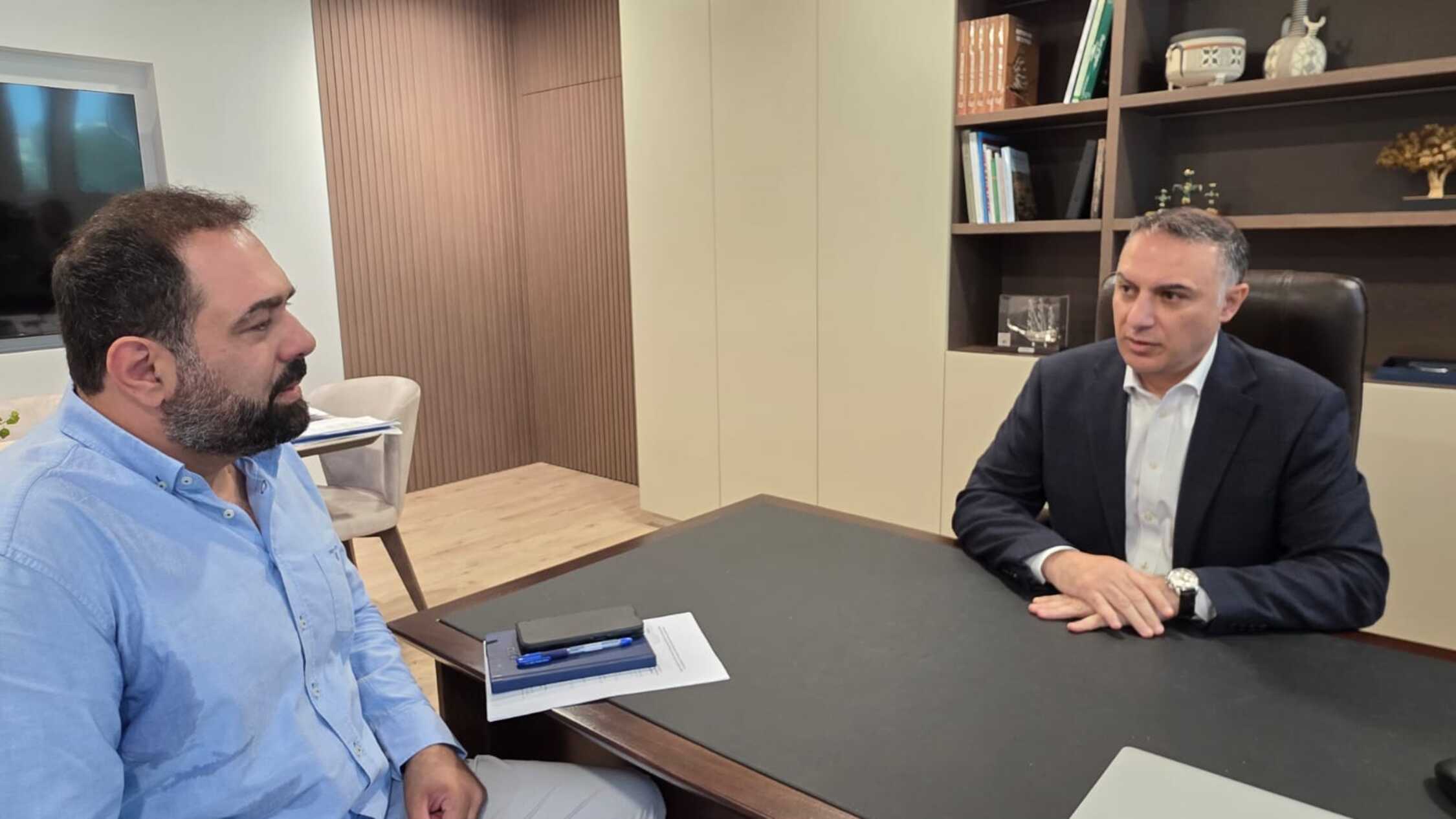
Senekis also discusses protecting PDO halloumi following the reduction in sheep and goat milk availability, Cyprus’ lobbying efforts in Brussels through alliances, and measures to address the wide gap between the prices received by producers and those paid by consumers on supermarket shelves.
Water security
You took over a ministry facing multiple challenges. One month into your tenure, after your first assessment of the situation, what are the issues that you realised require immediate action and solutions?
The first conclusion is that we face issues requiring both immediate decisions and long-term solutions. Water, agricultural production and the environment are different chapters, but links in the same chain. That is why we work on them simultaneously and with priorities.
On water, we are accelerating projects and infrastructure that strengthen the security of water supply and irrigation. Water scarcity is no longer an exceptional circumstance. It is a new reality around which we must plan.
In the primary sector, our priority is to provide solutions to issues related to liquidity, production costs and access to investment.
At the same time, following the foot-and-mouth disease crisis, we are moving ahead with the restructuring of livestock farming, with the goal of establishing a more resilient production model.
In the environmental sector, our objective is to close the gap between legislation and implementation through more effective inspections and faster responses.
Our job is not merely to identify problems. It is to provide solutions with planning, timetables and measurable results.
Farmers regularly request additional water allocations, particularly for seasonal crops. What is your response?
We listen to their needs and make use of every opportunity allowed by the actual data, without endangering the country’s water security. That is the balance we must maintain, while recognising that for farmers water is not simply a necessity but a fundamental condition for cultivation and maintaining their income.
The initial allocations were made during an exceptionally difficult hydrological period, with priority given to household water supply, the needs of livestock farming and the protection of permanent crops.
In June, an additional 3.5 million cubic metres of water for irrigation was approved. We then continued monitoring reserves, inflows and consumption closely. Additional inflows of around 4.5 million cubic metres into the Southern Conveyor Project, combined with lower-than-expected drinking water consumption, created a limited but safe margin.
As a result, for the second time within the same year, the Council of Ministers approved an additional 3.5 million cubic metres for irrigation.
This demonstrates in practice that we continuously assess the data and utilise every safe margin available to support the agricultural sector.
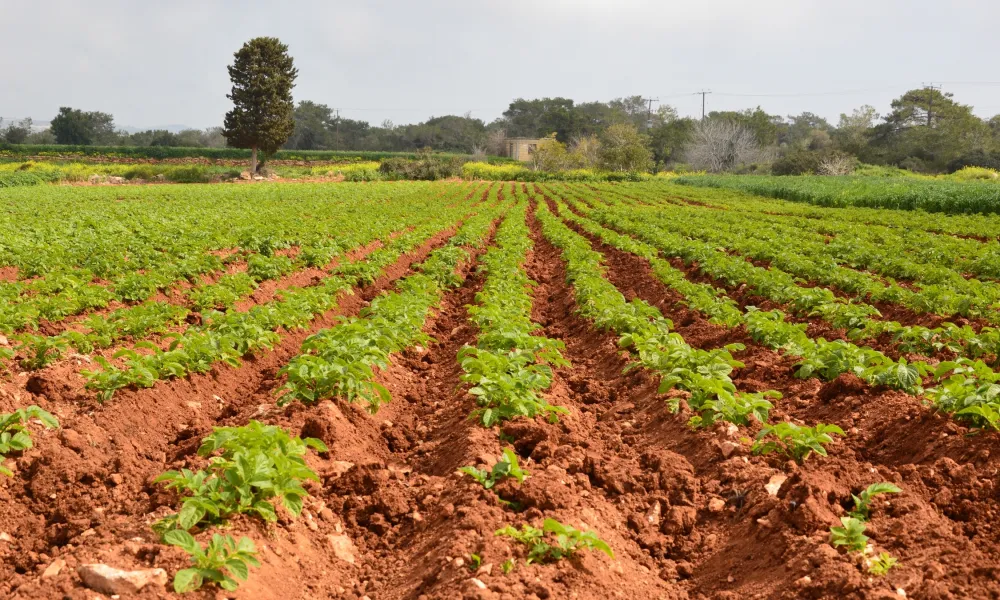
Of that amount, 3 million cubic metres will come from the Southern Conveyor Project, with 2 million allocated to autumn seasonal crops, including potatoes, which had not received an allocation under the previous scenario, and 1 million cubic metre allocated to tree crops.
Another 500,000 cubic metres will be supplied through the Paphos Irrigation Project.
We understand that these quantities do not cover all the needs of the farming community. They are, however, the margin permitted by the current data, and we are making full use of it.
I repeat that our goal is to support agricultural production as much as possible without jeopardising the country’s water security in the years ahead.
Not a drop wasted
What is your immediate plan for securing irrigation water without affecting household water supplies?
The security of drinking water supplies remains a constant priority. The challenge, however, is to create more options so that every difficult hydrological year does not automatically become a threat to agricultural production.
For that reason, we are increasing available water quantities, limiting losses and investing in conservation.
Desalination is an important part of this effort. The greater the share of drinking water supplied by stable sources, the less pressure there is on reservoirs and the greater the margin available for agriculture.
The four new permanent desalination plants recently approved by the Cabinet are expected to add a combined capacity of 180,000 cubic metres per day.
For irrigation, reclaimed water is a critical resource, and Cyprus is already among the leaders in the European Union in this area.
It is indicative that about 90% of the reclaimed water produced is reused for irrigation, one of the highest rates in the EU.
In 2025 alone, reclaimed water production reached approximately 32.6 million cubic metres, of which around 30.1 million cubic metres were utilised either directly or indirectly.
The next step is to increase storage and transfer capacity so that even larger quantities can be used and water can reach the areas where it is truly needed.
There is, however, another side to the issue: conservation.
We cannot tackle water scarcity simply by producing more water. We must also make better use of every cubic metre we already have.
That applies both to losses in distribution networks and to our water-use culture, through practical measures and tools such as water-saving nozzles and the “Drop Count” programme.
Restarting livestock farming
How will livestock farmers’ trust in the state be rebuilt after the foot-and-mouth disease crisis? Many are asking for guarantees that the same crisis will not occur again, either through the implementation of European legislation in the north or through stricter controls.
I understand why livestock farmers are asking for guarantees. When, within a matter of days, you see the work of a lifetime and your livestock threatened, it is natural to want certainty that this will not happen again.
No state, however, can responsibly promise zero risk in the face of an animal disease. What it can and must do is be better protected against that risk. That is our objective now.
The crisis showed us that it is not enough to be effective when an outbreak occurs. We need to invest more in prevention, biosecurity and preparedness before an outbreak emerges.
Epidemiological surveillance is continuing and, at the same time, we are making use of the recommendations of the Special Scientific Committee so that the rebuilding of affected farms can take place on more modern and safer foundations.
This is the direction we have already set for the future: stronger biosecurity and greater resilience in livestock farming.
As regards the occupied areas, Cyprus’ unique circumstances are a reality that we must take into account. An animal disease does not recognise dividing lines.
We are making use of every possibility provided by the European framework and strengthening controls in the areas where the Republic of Cyprus exercises jurisdiction. I have already discussed this issue with the Minister of Justice, Costas Fytiris, and we are coordinating on the matter.
What is important for me is that we do not simply return to where we were before the crisis. This experience should serve as an opportunity to correct weaknesses and move towards a livestock sector that is better organised, better protected and better prepared for the next threat.
They are not pieces on a chessboard
Looking at the future of livestock farming, which scientists say could begin before the end of the year when the first farms affected by foot-and-mouth disease start operating again, how feasible is it to implement clear zoning requirements for all livestock units in Cyprus, as recommended by the Malas team study?
Spatial planning is one of the substantive changes that we need to examine.
The study by the Special Scientific Committee sets out a broad framework for the spatial development of the sector, both in livestock and agricultural zones, combined with biosecurity measures and specifications regarding distances between units.
The study itself aims to establish clear, sustainable and scientifically documented zoning of livestock production.
Instructions have already been given to the competent services to evaluate the proposals and submit specific recommendations and implementation plans.
We want to move from a study to regulations that can genuinely work in practice.
Of course, we are talking about a sector that has developed over decades. We cannot move livestock units around like pieces on a chessboard. It requires planning, time and clear rules.
What we can do immediately is create a clearer framework for the expansion of existing units and the siting of new ones, so as to gradually reduce concentration and health risks.
Reconstruction is not simply about restoring what has been lost. It is an opportunity to organise the livestock sector more effectively for the years ahead.
Given that investments of €610 million are required, will the government adopt the Mala team’s findings in their entirety?
We must first put that figure into the proper context.
The committee proposes a comprehensive reconstruction plan for the period 2027-2038, with a total value of approximately €610 million.
In other words, this is not €610 million that must be found today. It is a 12-year investment plan for Cypriot livestock farming.
The proposals are already being evaluated by the competent services to determine which will proceed, in what order of priority and within what timeframe.
The measures that are adopted will be incorporated gradually into planning and reflected in the budgets of the relevant authorities.
The objective is not to adopt a number. It is to adopt the changes that the sector genuinely needs and to have the consistency to implement them over time.
Challenges facing PDO Halloumi
The proportion of sheep and goat milk in halloumi, which was reduced to 15% from 25% because of the culling of animals, remains one of the most contentious issues, causing friction among cattle farmers, sheep and goat farmers, and cheesemakers. How do you intend to bridge these differences without putting the protected status of our national product at risk?
There must be one starting point. Protecting PDO Halloumi must come before the individual differences between sectors.
Cattle farmers, sheep and goat farmers, and cheesemakers may have different approaches, but they all depend on the success of the same product.
The reduction of the quota to 15% was a necessary adjustment to an extraordinary situation caused by foot-and-mouth disease and the loss of livestock. It does not, however, change our direction.
Bridging these differences first requires a stable channel of communication.
This role is performed by the Halloumi Coordinating Committee, which brings all stakeholders to the same table and allows us to discuss issues on the basis of real production data and market needs.
But something even more fundamental is required. We must address the cause behind much of this discussion, namely the availability of sheep and goat milk.
For this reason, our policies are focused on increasing both production and productivity in the sheep and goat farming sector.
The stronger this foundation becomes, the greater the opportunities for a smooth transition towards the PDO specifications.
We do not want decisions that merely shift pressure from one sector to another. We want solutions that strengthen the entire production chain and, above all, protect PDO Halloumi.
Under the circumstances, do you believe the PDO Halloumi target of 51% sheep and goat milk by 2029 is achievable?
Halloumi is one of Cyprus’ most important export products and carries particular importance for our economy.
Our priority is to safeguard the character and value conferred by its PDO status while at the same time preserving the momentum it has developed in international markets.
These two objectives must be pursued in parallel.
The foot-and-mouth disease crisis has undoubtedly created new realities, particularly in relation to the availability of sheep and goat milk.
We can neither ignore these realities nor prejudge them. We must monitor them and act on the basis of the actual production picture.
Through the interim software system of the Department of Agriculture, we now have a reliable and documented picture of milk quantities and available raw materials.
This allows us to assess progress towards the target more accurately and take timely decisions when required.
At the same time, we have a responsibility to examine every possible scenario and every available policy tool seriously and objectively if it can help secure the future of PDO Halloumi.
Our direction is clear: protection of the PDO designation, strengthening of the production base and safeguarding the sustainability of halloumi, for the benefit of the entire production chain and the Cypriot economy.
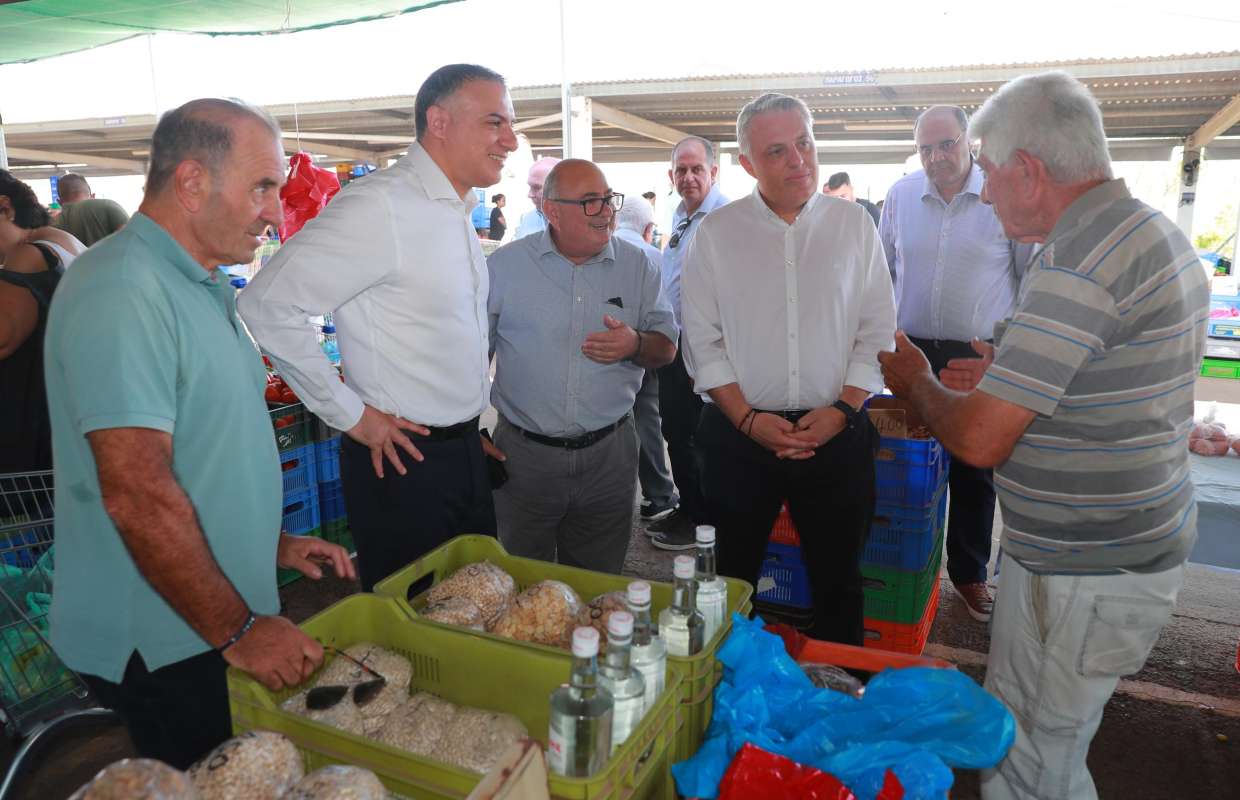
Price gap: “Producers must join forces”
How will you address the huge gap between what producers receive and what consumers pay on the shelf? Will institutions such as farmers’ markets be further strengthened?
Our objective is for a larger share of the value of a product to return to the person who produces it, without consumers having to pay unjustifiably high prices.
That is why we want to strengthen farmers’ markets and, more generally, the direct sale of products.
The new legislation creates a more organised framework so that producers can secure fairer compensation and consumers can access fresh Cypriot products at more competitive prices.
It is also important for producers to join forces. Through producer groups and organisations, they can market their products collectively and achieve a stronger position in the marketplace.
We also need greater transparency.
This is why we have proceeded with the implementation of e-Kofini, which allows us to monitor prices from the farm to the shelf.
It enables us to identify where major discrepancies are created.
The answer to the price gap is not lower prices at the expense of producers, but a fairer market for both producers and consumers.
In Brussels, being right is not enough
Agricultural organisations periodically argue that decisions are being taken in Brussels that work against farmers. What specific “tools” will you seek in Brussels that reflect the particular circumstances of Cyprus?
The concerns expressed by agricultural organisations are understandable.
I recognise the pressures facing the agricultural sector today, and many of the challenges confronting Cypriot producers are shared by farmers in many other member states.
I do not believe European policies are designed to work against farmers.
The real discussion is whether they can be applied in a way that takes into account the different circumstances of each member state. That is precisely where we need to intervene.
Cyprus has very specific characteristics: insularity, water scarcity and prolonged drought periods, high temperatures, small and fragmented farm holdings, and elevated production costs.
It is not enough for these characteristics simply to be recognised. They must also be reflected in policy tools.
That is why we are seeking greater flexibility and proportionality in the implementation of European rules, meaningful simplification for small farms, environmental targets accompanied by appropriate incentives, and a level playing field in relation to imports from third countries.
We are also building alliances with member states facing similar challenges, because in Brussels it is not enough to be right.
You must also be able to build alliances.
Read tomorrow
The second part of the interview will be published on Monday, 21 September. Mr Senekis discusses Akamas, the Pay As You Throw scheme, environmental inspections and whether pressure from vested interests exists.