


U.S. President Donald Trump said he hoped the war against Iran was nearing its end, even as the conflict, now in its seventh month, escalated with Saudi aircraft striking Yemen and Houthi fighters launching drones and missiles at Saudi cities.
The Iran-backed Houthis' rapid advance along Yemen's Red Sea coast, combined with their attacks on Saudi Arabia and strikes that damaged the kingdom's East-West oil pipeline, have extended Tehran's reach in the war and heightened fears over global oil supply.
As the conflict expands into a new front, the United States tightened its travel warning for Saudi Arabia, banning government employees from travelling within 20 miles (30km) of the Yemen border.
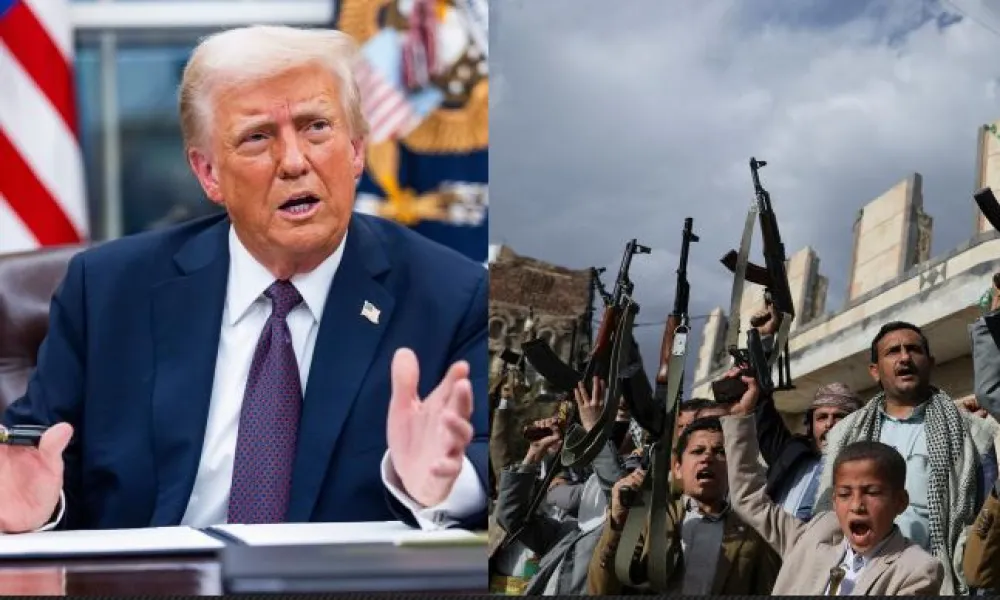
Hours after reports of fresh Houthi-Saudi fighting, Trump told reporters on Wednesday: "Well, hopefully we are towards the end of the war."
Iran signals interest in a deal
Trump said Iran "wants to make a deal," repeating earlier comments, and said he had heard from Tehran "directly," without giving further details. The war began on 28 February, when the U.S. and Israel attacked Iran and Tehran struck back at Israel and American bases in Gulf states.
Yemen conflict adds to global energy risk
The war's extension into Yemen threatens to deepen a global energy-supply shortage already caused by disruption to shipping through the Strait of Hormuz, which carried about 20% of global oil and LNG before the conflict began. Traders warn that a prolonged closure of Saudi Arabia's East-West pipeline could remove as much as 4% of global oil supply; Riyadh has not said when it expects to resume operations.
Brent crude hovered near $108 a barrel on Wednesday, close to its highest level since May, while the average U.S. retail price of diesel hit a fresh record above $6.30 a gallon. Prices eased in early Thursday trade after reports that Saudi Arabia was offering extra crude cargoes via Oman, easing fears of a wider supply disruption. Brent fell $1.24, or 1.2%, to $104.59 a barrel by 12.49am GMT, while U.S. West Texas Intermediate dropped $1.14, or 1.1%, to $101.29.
The rise in fuel prices tied to the U.S.-Israeli war on Iran has become a growing liability for Trump's Republican Party ahead of the November midterm elections.
Trump to meet Gulf leaders at UN, Axios reports
Axios reported that Trump was expected to meet Gulf leaders on the sidelines of the U.N. General Assembly on Tuesday to discuss next steps in the conflict. Citing unnamed sources, the outlet said Trump would meet leaders or foreign ministers from the Gulf Cooperation Council states: Saudi Arabia, the United Arab Emirates, Qatar, Bahrain, Kuwait and Oman. The State Department and the White House did not respond to requests for comment.
Battlefield developments
The Houthis released video on Wednesday showing fighters seizing armoured vehicles from Saudi-backed forces, along with footage of warplanes overhead and explosions over desert terrain. Houthi military spokesman Yahya Saree said the group had launched fresh drone and missile strikes on the Red Sea oil port of Yanbu and a Saudi airbase at Khamis Mushait, without specifying when the strikes took place.
Saree said Saudi forces had carried out as many as 450 air strikes on Yemen this week. Officials in the Saudi-backed government controlling southern Yemen confirmed their forces, alongside Saudi Arabia's, were striking Houthi positions, though Riyadh itself has not confirmed the strikes.
Saudi Arabia has led a coalition against the Houthis since 2015. The conflict had largely quietened under a ceasefire in recent years but reignited after the Houthis declared a naval blockade against Saudi Arabia in July and began firing at areas in the kingdom's south.
Source: Reuters