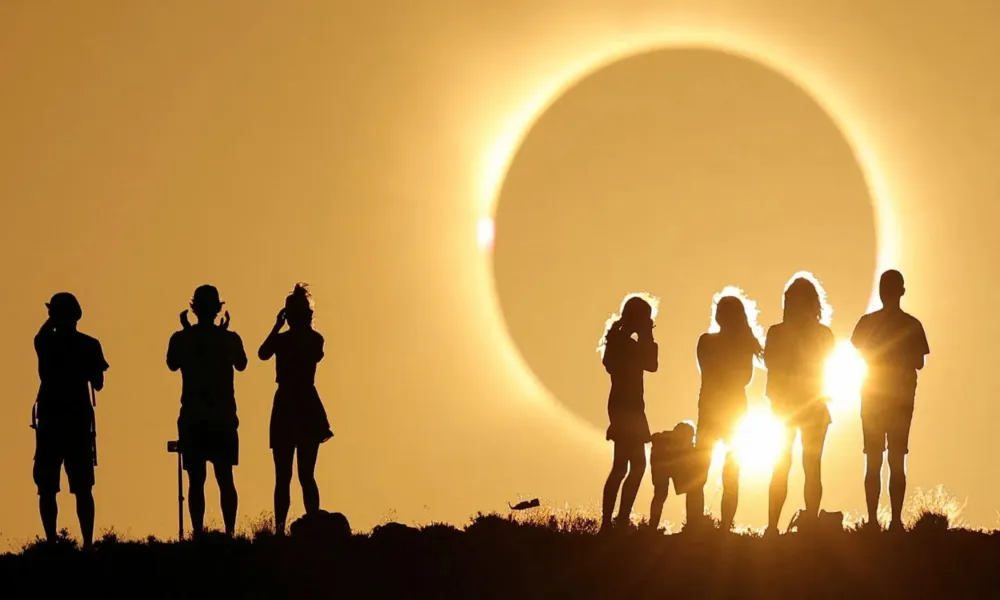

Millions of people across Europe turned their eyes to the sky to witness a rare solar eclipse, the most striking visible from the region in nearly 30 years.
While most of the UK experienced a deep partial eclipse, with the Moon covering more than 90% of the Sun in many areas, observers in parts of Spain, Iceland and Greenland were treated to the spectacle of a total eclipse, as daylight briefly gave way to darkness.
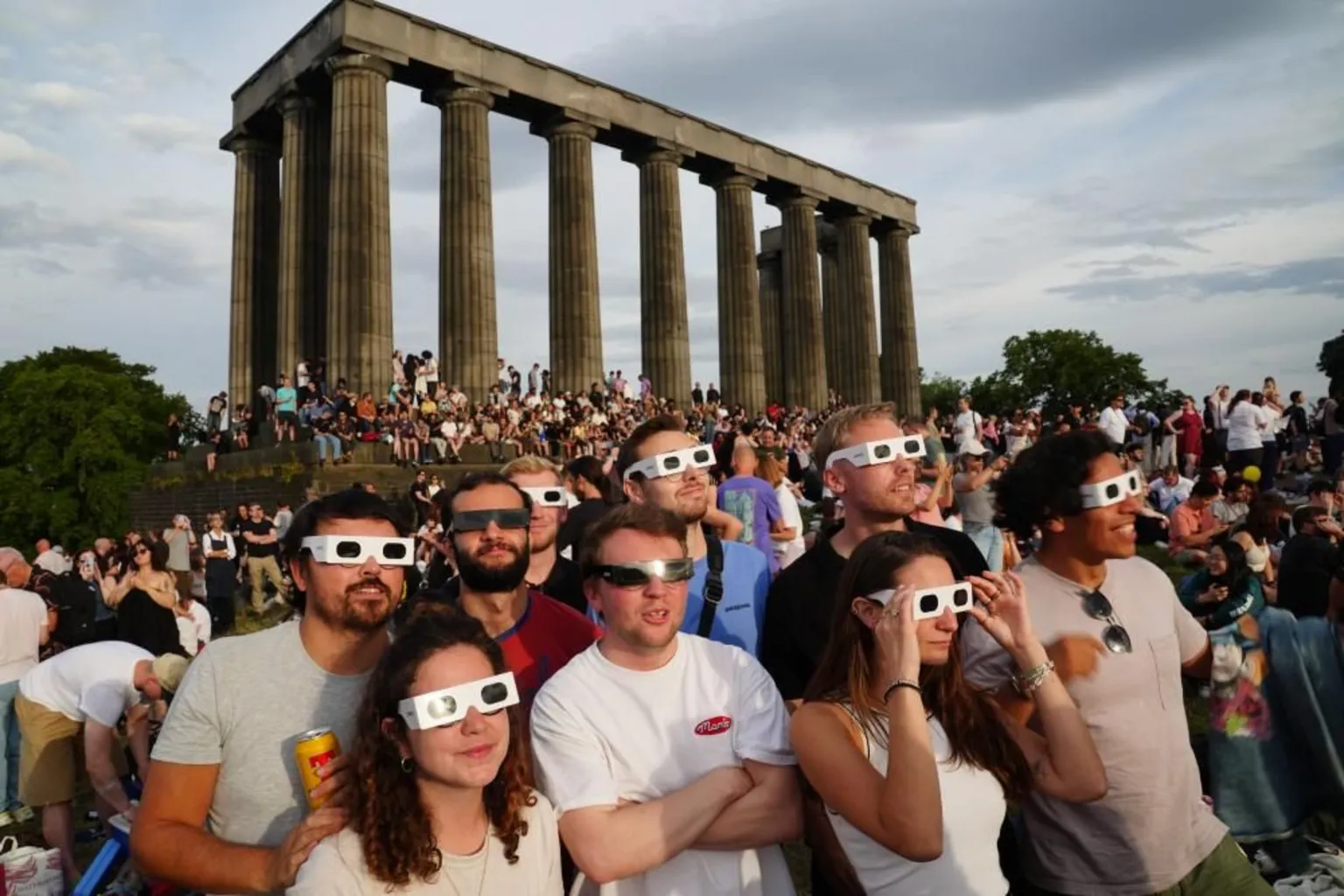
Large crowds gathered at viewing points across Europe, celebrating the event as the Moon steadily moved in front of the Sun. Favourable weather conditions across much of southern Britain and parts of continental Europe allowed many to enjoy clear views of the phenomenon.
The eclipse began over northern Siberia before sweeping across the Arctic and into Europe. In the UK, the event became visible during the early evening, gradually darkening the sky as the Moon obscured an increasing portion of the Sun.
A rare celestial alignment
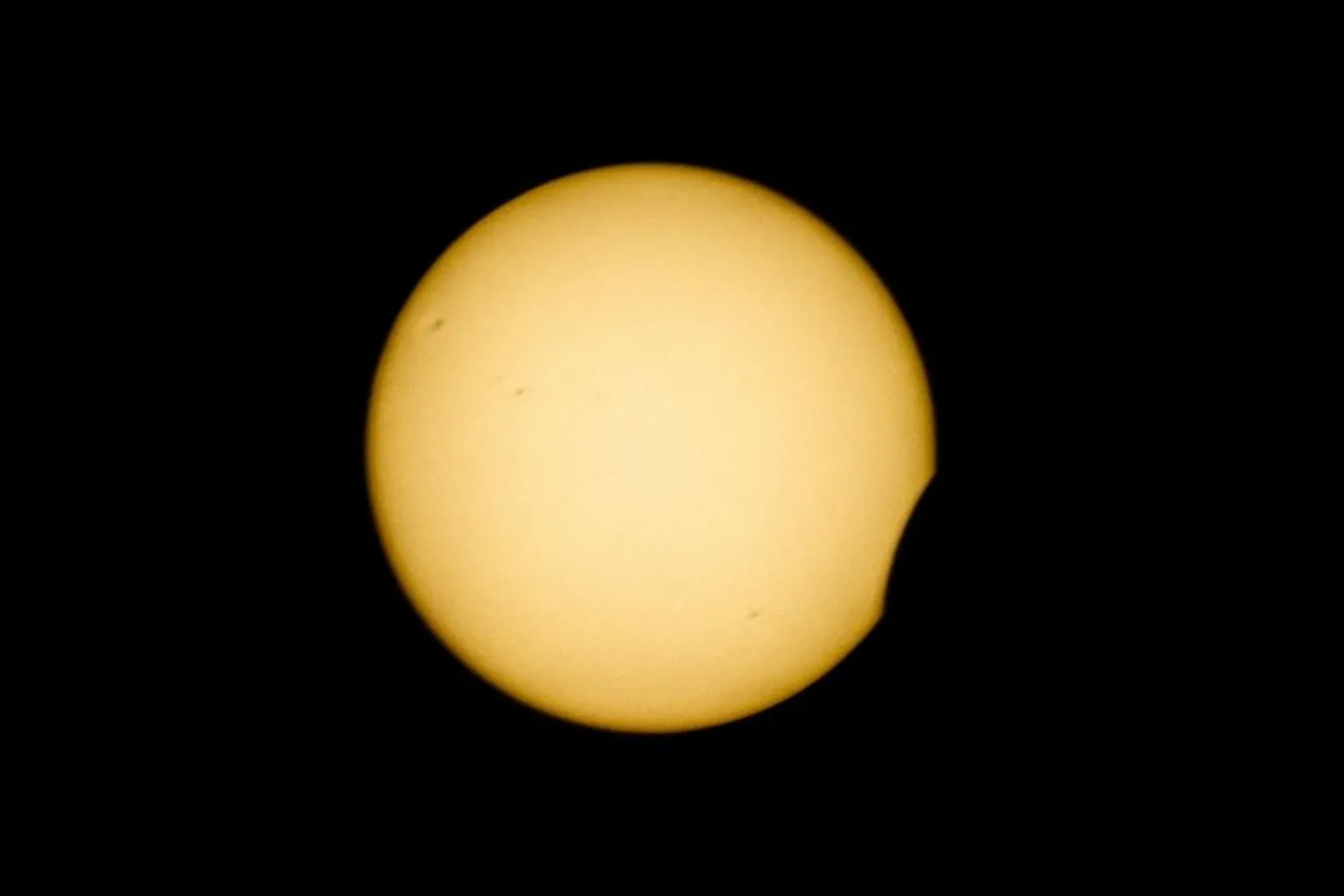
A solar eclipse occurs when the Moon passes directly between the Earth and the Sun, blocking some or all of the Sun's light.
From the UK, the alignment was not exact, resulting in a partial eclipse. However, in parts of Spain the three bodies aligned perfectly, producing a total eclipse and revealing the Sun's outer atmosphere, known as the corona.
Observers along the path of totality were also able to see glowing pink features called solar prominences, extending from the Sun's surface.
The period of complete darkness lasted less than two minutes, but many described it as an unforgettable experience.
A cosmic coincidence
Scientists note that total solar eclipses are possible because the Moon appears almost exactly the same size as the Sun when viewed from Earth.
Although the Sun is vastly larger, it is also much farther away, creating a remarkable visual coincidence that allows the Moon to cover it almost perfectly during total eclipses.
Long wait for the next one
Although total solar eclipses occur somewhere on Earth every few years, they are rare for any specific location.
The next major eclipse visible from the UK will be a partial event in 2027. A more complete eclipse is not expected until 2081, while the country's next total solar eclipse is forecast for 2090.
Source: BBC