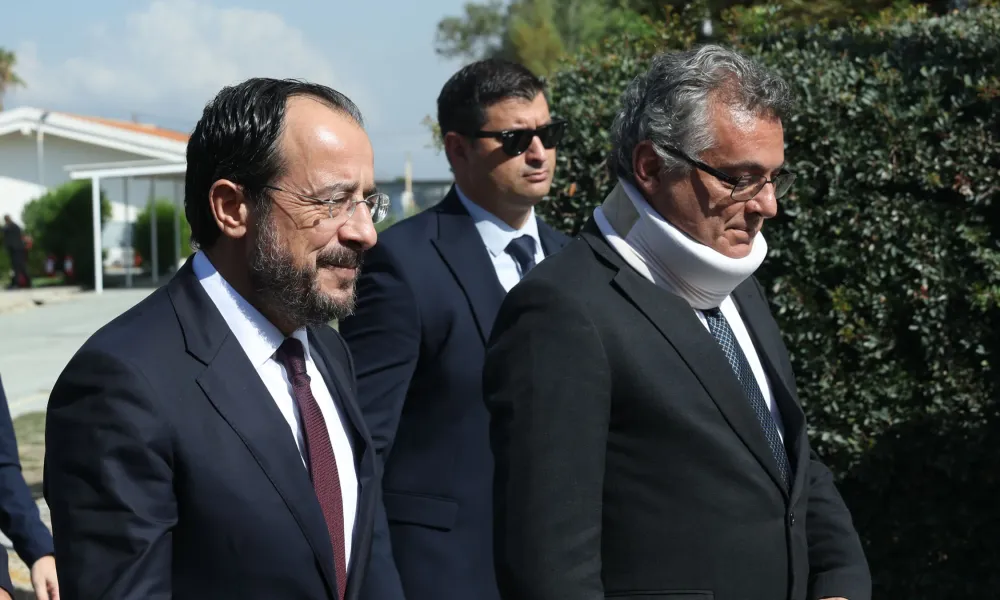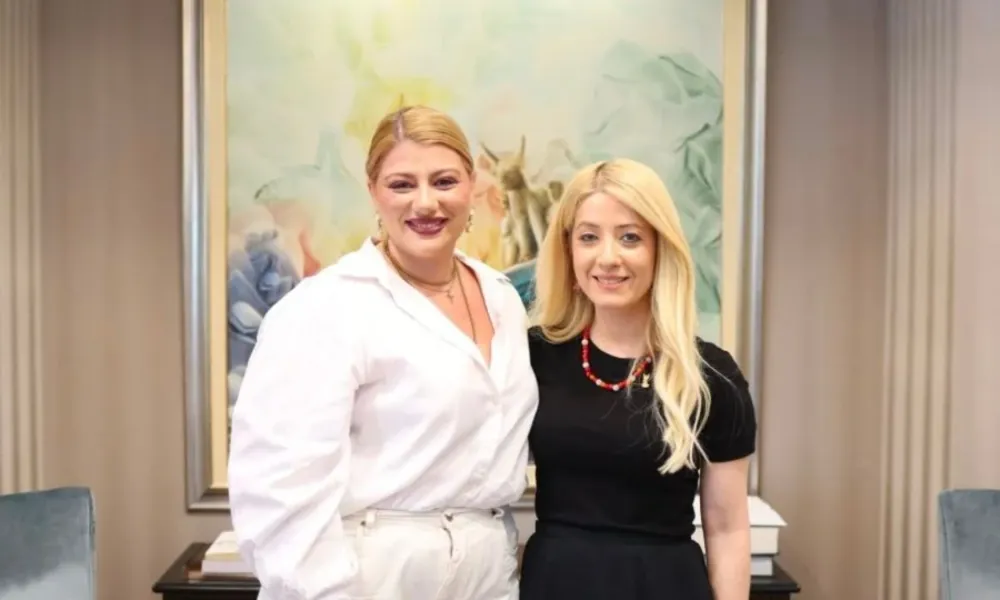

The press spokesperson of the Youth Organisation of the Democratic Rally (NEDISY), Dr Andria Theologou Manoli, has resigned from her position as special adviser to DISY president Annita Demetriou on rule of law issues, criticising Haris Georgiades over his public comments on recent developments within the party.
“I am not placing my resignation at anyone’s disposal. I am resigning,” she declared, publishing the letter she had sent to Demetriou explaining the reasons behind her decision.
Theologou Manoli described her resignation as “a decision of conscience and political consistency”, expressing sadness over the events unfolding within the Democratic Rally in recent days.
Accusations of political blackmail
Referring to Georgiades’ public statements, Theologou Manoli noted that Demetriou had repeatedly clarified that her decision not to seek the party’s endorsement was a personal political choice intended to preserve party unity, and that she had not been subjected to pressure or blackmail.
She argued that it was particularly troubling for a senior party figure to effectively challenge the president’s publicly stated position, describing the situation as “blatant political blackmail”.
Theologou Manoli acknowledged that every party member had the right to support their preferred candidate. However, she drew a distinction between expressing a political preference and announcing in advance that one would refuse to support a candidate chosen by the party’s members.
“Real political blackmail is not saying, ‘I will participate in the democratic process’. What is politically coercive is telling tens of thousands of members of a political party in advance: ‘If you choose this person, I will not support your choice’,” she said.
She argued that such statements did not promote unity but instead fuelled internal divisions and created the impression that members’ decisions were respected only when they aligned with the preferences of certain party figures.
‘Resigning is different from placing your resignation at someone’s disposal’
Theologou Manoli also addressed Georgiades’ decision to place his resignation as president of the Glafkos Clerides Institute at the disposal of the party leadership.
She said the position was a particularly prestigious one and required “even greater composure, institutional responsibility and respect for the democratic will of the members”.
“Resigning from a position is one thing; placing your resignation at someone else’s disposal is another,” she stressed.
Anyone who believed they could no longer fulfil an institutional role on grounds of principle, she added, had a duty to resign rather than transfer responsibility for the decision to someone else.
‘These practices are pushing people like me towards the door’
In her letter, Theologou Manoli also expressed disappointment with the state of affairs within DISY, pointing to personal political strategies, ultimatums, mutual undermining and inward-looking behaviour.
She said young people who had contributed to the party without expecting personal rewards were being driven away when they felt that the principles they had been called upon to uphold were being applied selectively.
“Today, I feel that these practices are pushing people like me towards the door,” she said.
She stressed, however, that her resignation was submitted with absolute respect for Demetriou, adding that she did not question the party leader’s intentions or her efforts to maintain unity.
“There are moments when silence ceases to be a sign of responsibility and becomes a form of tolerance,” she said.
Calls for respect for members’ democratic choices
Concluding her statement, Theologou Manoli said she would remain faithful to her political principles, insisting that whichever candidate DISY members chose through a transparent and democratic process, their decision must be respected.
“No individual is greater than the party, and no position is more important than the dignity with which one chooses to conduct oneself in politics,” she concluded.