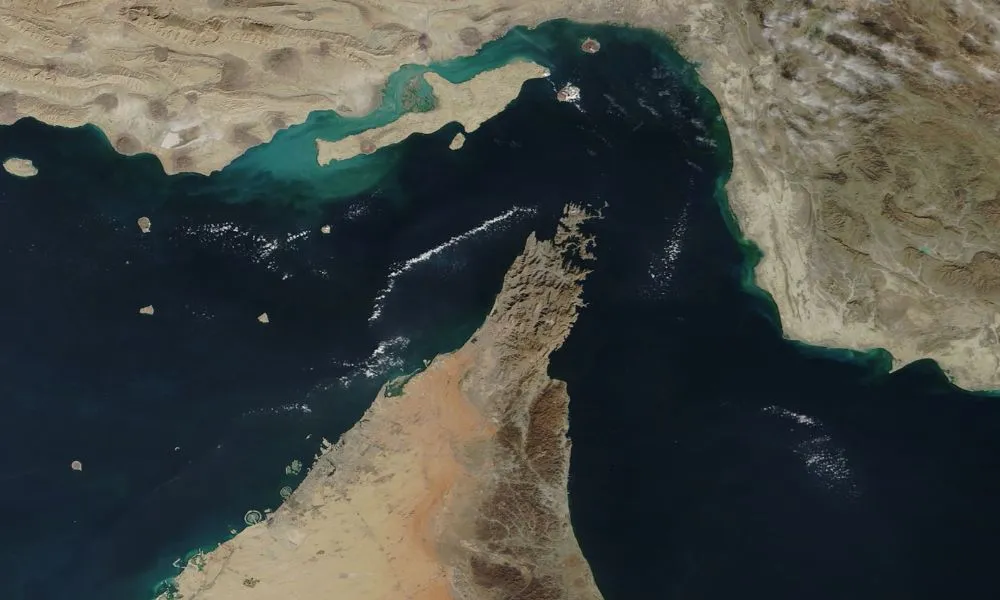
A new cycle of tension is unfolding in the Middle East, driven by a fierce confrontation over control of the strategic Strait of Hormuz, undermining the temporary and fragile agreement between the United States and Iran.
The United States carried out a second consecutive wave of airstrikes against targets in southern Iran, while Tehran responded with attacks on US military installations in Bahrain and Kuwait. The developments are raising serious concern about further escalation, despite ongoing negotiations in recent weeks.
According to the US Pentagon, the strikes targeted military sites in Sirik, on Qeshm Island and near Bandar-e Lengeh on Iran’s southern coastline, with the aim, according to CENTCOM, of hitting infrastructure linked to drone operations, surveillance and mine-laying activities in the Persian Gulf.
Washington says the operations are a response to recent attacks on commercial vessels in the Strait of Hormuz.
As stated in a CENTCOM announcement, following yesterday’s US strikes, carried out in retaliation for the Iranian attack on the cargo ship Ever Lovely, “Iran had the opportunity to honour the ceasefire agreement but chose not to do so”, adding that Iranian forces struck the Panama-flagged tanker Kiku with a kamikaze drone while it was sailing near the Strait of Hormuz carrying more than two million barrels of crude oil.
Retaliation
In the early hours of Sunday, Iran’s Revolutionary Guards announced that they had launched missiles and drones against US military installations in Kuwait and Bahrain in retaliation for the latest US attacks on Iran.
The Guards said the memorandum of understanding with Washington grants Tehran authority over passage through the Strait of Hormuz and that “ships that violate it will face increased severity.”
“The violation of the ceasefire runs counter to Article 1 of the Islamabad Memorandum of Understanding and will lead to the complete suspension of all diplomatic processes,” the statement said, according to Press TV.
The Revolutionary Guards claimed they had “destroyed eight key US military facilities at Ali Al Salem base in Kuwait and the US Fifth Fleet base at Salman Port in Bahrain.”
“Any hostile attack, regardless of pretext, even against minor targets, will be met with an unforgiving response,” the statement stressed.
In Kuwait, the armed forces confirmed the missile and drone attacks, according to ANA. In Bahrain, air raid sirens sounded and authorities urged residents to remain calm and seek safe shelter.
Negotiations and threats
The escalation comes as Washington and Tehran are negotiating a memorandum of understanding aimed at ending a war that has driven up global oil prices and caused thousands of civilian deaths. The exchanges of strikes highlight the fragility of the peace process mediated by Pakistan, with both sides accusing each other of violating a temporary agreement signed less than two weeks ago.
The text signed by the US and Iran states that both countries, along with their respective allies, “will not initiate any war or military operation against each other and will refrain from the threat or use of force against one another”.
In a post on Truth Social, US President Donald Trump threatened Iran with destruction:
“There may come a point when we are no longer able to be reasonable, and will be forced to militarily complete the job that we very successfully started,” he wrote. “If that happens, the Islamic Republic of Iran will no longer exist!”
The 14-point interim agreement between the US and Iran aimed to halt hostilities, which began with US and Israeli actions on February 28, and to reopen the Strait to navigation, while talks would begin on deeper issues such as Iran’s nuclear programme.
Israeli strikes in Lebanon
Israel, meanwhile, continues its attacks in Lebanon despite an agreement between the two governments mediated by the United States.
The Israeli military said it killed Hezbollah fighters carrying anti-tank rockets and struck a rocket launcher in the Nabatieh area of southern Lebanon in order to remove threats to its forces.
It also said its forces killed several armed fighters in the “security zone” imposed by Israel in southern Syria.