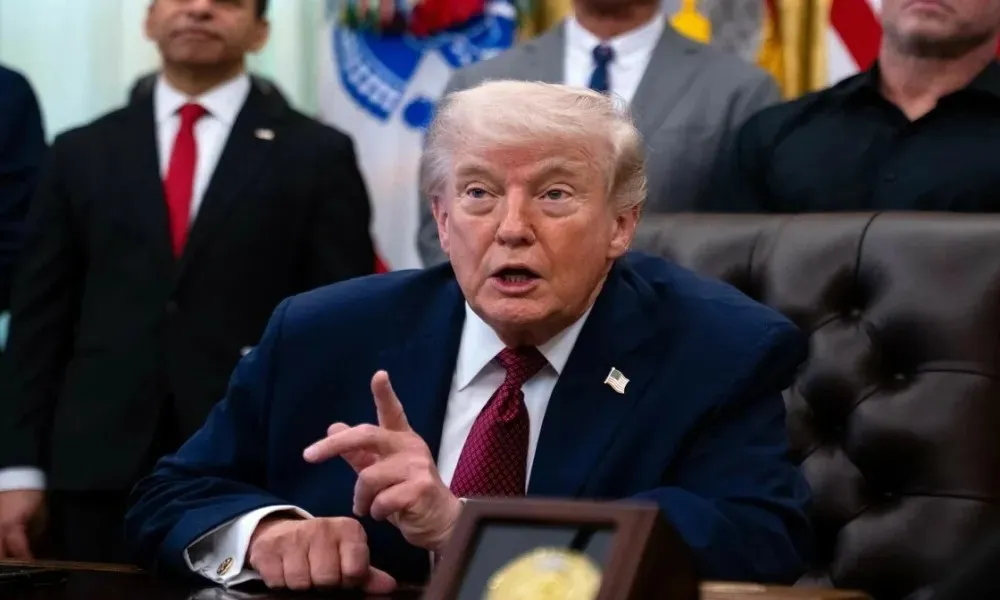
A new agreement between the United States and Iran appears to be nearing, with US President Donald Trump stating that both sides are ready to move forward with the signing of a memorandum of understanding (MoU).
The memorandum could form the basis for a broader diplomatic settlement in the Middle East.
According to Axios, citing diplomatic and US sources, the draft agreement provides for the immediate reopening of the Strait of Hormuz without tolls, a gradual easing of sanctions on Tehran and a 60-day extension of the ceasefire, during which negotiations will take place on the future of Iran’s nuclear programme.
The development is seen as significant, coming after months of tensions and military clashes that threatened to escalate into a wider conflict, although Tehran maintains that no final decision has been taken on a deal with Washington.
Ceasefire extension and nuclear talks
The draft outlines a two-month extension of the current ceasefire, including the Lebanon front. During this period, Washington and Tehran will seek to reach a more detailed and binding agreement focused exclusively on Iran’s nuclear programme.
While the memorandum includes broad guidelines on managing Iran’s stockpile of enriched uranium, key decisions on the nuclear issue are deferred to a later stage.
A US official said one option under consideration is reducing uranium enrichment levels within Iran under UN supervision to address concerns over potential military use.
A central demand from Washington remains Iran’s commitment never to acquire nuclear weapons.
Hormuz at the centre
One of the most critical elements of the agreement concerns the Strait of Hormuz, through which a significant share of global oil trade passes.
The draft provides for the immediate restoration of maritime traffic without restrictions or additional charges, with shipping expected to return to pre-conflict levels within 30 days.
In return, the United States would lift the naval blockade imposed in the area, paving the way for stabilising energy flows and global markets.
Sanctions relief mechanism
The plan also includes a mechanism for the gradual easing of US sanctions on Iran.
Initially, Tehran would receive temporary waivers allowing it to resume oil exports for 60 days, providing much-needed revenue.
Further sanctions relief would depend on Iran’s compliance with the agreement and its conduct in subsequent negotiations.
There is no fixed timeline for a full lifting of sanctions, with each step linked to progress in implementation.
Frozen assets
Despite progress, it remains unclear what the agreement предусматри regarding billions of dollars in frozen Iranian assets held abroad.
Iran has requested immediate access to part of these funds, while the US insists that any release should be gradual and tied to verified compliance.
Reports indicate a mechanism involving Qatar is under consideration, allowing limited use of funds for humanitarian imports.
Behind the talks
The preliminary agreement was reportedly reached after lengthy negotiations in Tehran, mediated by Qatar and Pakistan, with ongoing contacts between Iranian officials and White House envoys.
However, despite the optimism expressed by mediators, the agreement has yet to receive all necessary approvals from Iran’s leadership.
A spokesperson for Iran’s foreign ministry reiterated that no final decision has been made.
According to US sources, Israeli Prime Minister Benjamin Netanyahu was taken by surprise by Trump’s announcement and has since sought clarification through contacts with the US administration.
If approved, the agreement is expected to be named the “Islamabad Agreement,” potentially marking a new phase in US-Iran relations after decades of tension.
Source: iefimerida.gr