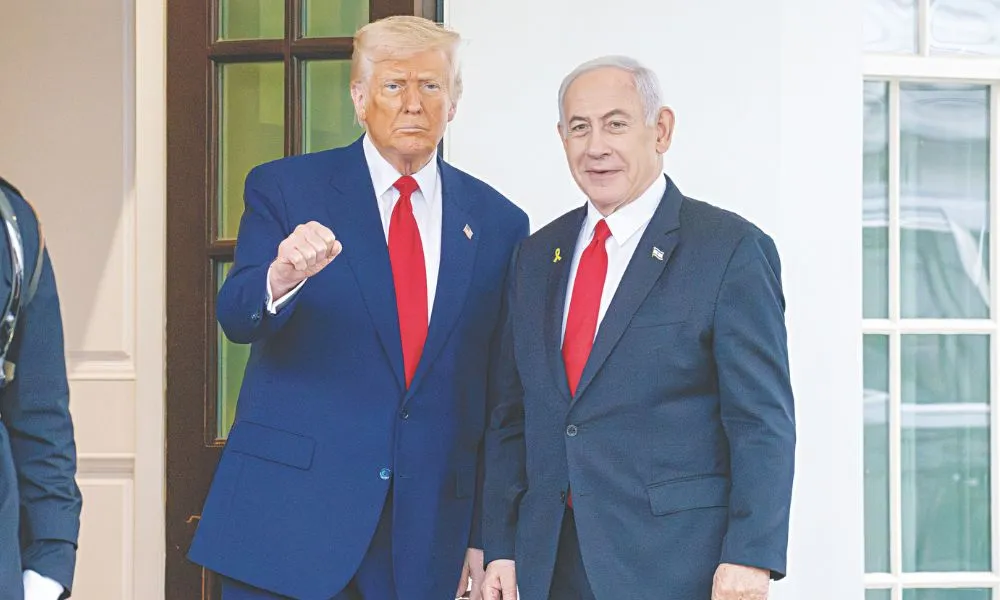

New strain is emerging in relations between Washington and Tel Aviv, as Donald Trump openly warned Benjamin Netanyahu that he risks isolation if he does not restrain military action, while Vice President J.D. Vance publicly acknowledged that US and Israeli interests diverge over a potential nuclear agreement with Iran.
The remarks come a day after the ceasefire announced between Israel and Iran following a brief but intense exchange of strikes, reflecting growing friction within the Western camp.
Speaking to Axios, Trump revealed the content of his phone call with the Israeli prime minister: “Bibi, be careful, or you will be on your own very soon.”
Asked by the BBC whether Netanyahu had acted against his wishes, Trump rejected the suggestion, saying: “No, no. That didn’t happen. The missiles were already launched, already on their way.” He added: “If I tell him to do something, he does it.”
This dual approach – public support combined with private pressure – reflects the current state of relations between Trump and Netanyahu.
The preferred tool
Trump appeared highly optimistic about the prospects of a nuclear agreement with Tehran, saying negotiations are in their “final stages” and could be concluded within days.
“The Strait of Hormuz will open immediately after signing. We will have a document stronger than bombing,” he said, arguing that economic pressure has proven more effective than military action. He added that there are “no dead ends” in the talks and that any agreement would prevent Iran “in every way, form or shape” from acquiring nuclear weapons.
Vice President Vance, speaking to Fox News, struck a more cautious tone, openly acknowledging differences with Israel: “The United States and Israel have many shared interests, but there are also cases where our interests diverge.”
On the prospect of a deal that Israel might oppose, he said: “We believe this is in the interest of the United States.” He also expressed scepticism towards Iranian negotiators, noting that “everyone is always trying to play everyone else.”
Iran remains sceptical
Tehran has not shared the same optimism. Ebrahim Azizi, head of the Iranian parliament’s national security committee, told CNN: “We do not believe Trump is sincere.”
He pointed to “serious obstacles” regarding uranium enrichment and frozen Iranian assets, stressing that Iran will not compromise on what it calls the “axis of resistance.”
Chief negotiator Mohammad Ghalibaf said Trump’s statements contradict previous understandings, while Iran’s foreign ministry described the atmosphere as “deeply suspicious.”
According to Ghalibaf, Iran’s goal is to end the conflict, not to normalise relations with the US, and any continuation of negotiations depends on delivering “tangible benefits for national interests”, particularly in the areas of sanctions, the economy and the banking system.
Conflict not over
Israeli security sources told Channel 12 that, regardless of diplomatic developments, the confrontation with Iran is far from over.
“We have entered a phase of repeated rounds of confrontation. We will face Iran many times in the future,” a source said, reflecting the view that the ceasefire marks a pause rather than a resolution.
Meanwhile, a US Apache helicopter crashed near the Strait of Hormuz, according to The New York Times. Both crew members were rescued safely. It remains unclear whether the crash was caused by mechanical failure or hostile action, as US authorities declined to comment.