
The European Commission has proposed a new package of sanctions against Russia, aiming to keep economic pressure on Moscow and further restrict its ability to finance the war in Ukraine.
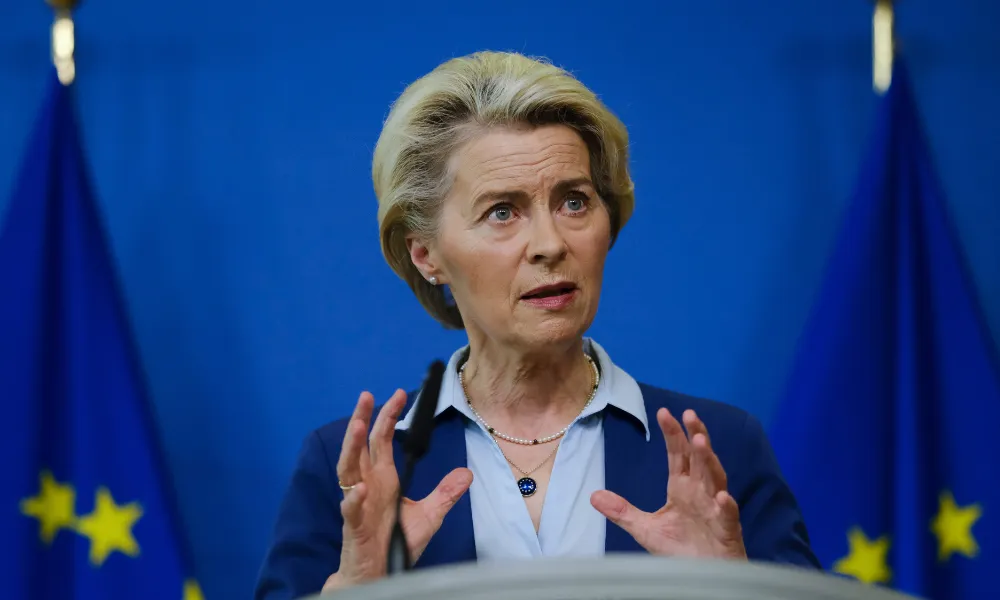
Presenting the proposed 21st package, European Commission President Ursula von der Leyen said the measures focus on energy, financial services, crypto assets, trade and, for the first time, fisheries.
Energy and the shadow fleet
A major part of the package concerns Russia’s energy revenues. The Commission wants to freeze the automatic adjustment of the Russian oil price cap until January next year, citing instability in global energy markets caused by the crisis in the Middle East and pressure on international supply chains. According to von der Leyen, the move is designed to help stabilise markets while maintaining pressure on Russian income from oil.
The proposal would also add another 30 vessels from Russia’s so-called shadow fleet to the EU sanctions list, bringing the number of targeted vessels to more than 660. For the first time, the sanctions would also cover ships and companies that provide support services to the fleet, including refuelling. The Commission is also proposing measures against ports, airports and refineries involved in the transport or processing of Russian oil, along with restrictions on the sale of liquefied natural gas tankers to Russia.
Banks, crypto and sanctions evasion
In the financial sector, Brussels wants to expand transaction restrictions to 31 more Russian banks. The package would also target 20 banks, crypto companies, platforms and oil traders in third countries which, according to the Commission, are helping Russia bypass Western sanctions.
For the first time, the proposal includes the possibility of a full ban on crypto asset services from third-country providers found to be helping Russia access the international financial system.
Trade, drones and fisheries
Trade is another key part of the package. The Commission is proposing new export restrictions on technologies and materials used by Russia’s defence industry, including metals and alloys for aerospace and military production. The measures would also target drone production, with proposed bans on exports of ground-support equipment, jamming systems and launch systems.
The package includes new import bans on goods worth around €60 million, including certain metals, ores and car parts, as the EU seeks to further reduce its dependence on Russian imports. Fisheries are included in the sanctions framework for the first time, with proposed restrictions on imports of some fish products and full bans on others, including cod.
Entry ban for Russian soldiers
Von der Leyen also said the Commission wants to ban entry into the EU for people who have served in the Russian armed forces since the start of the full-scale invasion of Ukraine.
“Europe must remain closed to those who participated in the invasion of Ukraine,” she said.
Pressure on Russia’s economy
The Commission President argued that the sanctions already imposed by the EU are affecting the Russian economy. She said the cost of the war is rising every day and is increasingly being felt by Russian citizens through inflation, high interest rates and a worsening standard of living.
According to von der Leyen, Russia has been largely cut off from international capital markets, while economic growth is slowing, budgetary room is narrowing and energy revenues have fallen sharply. She also referred to the escalation of Russian attacks on Ukraine and violations of European airspace, including drone incidents near the EU’s eastern borders, saying these incidents should not be interpreted as a sign of strength.
“Some call it Russia’s escalation. I see it differently. It is simply failure,” she said, adding that Russia has failed to subdue Ukraine four years after launching its full-scale invasion.
Support for Ukraine
Von der Leyen also underlined the EU’s continued support for Ukraine, describing the country as a “brave neighbour, partner and future member of the European Union”. She said the EU had released almost €3 billion through the Ukraine Facility and expects the first disbursement from a €90 billion loan to Kyiv later in June.
By the end of the month, she added, the EU will have provided €6 billion for drones and more than €3 billion in macro-financial support, with further payments to follow.
Von der Leyen said the EU is also preparing to open the first negotiating chapter with Ukraine and Moldova in the coming days, marking the next stage in their accession process. She said Ukraine had made “extraordinary progress” on reforms and that the Commission was fully ready to support its path towards EU membership.
Source: AMNA