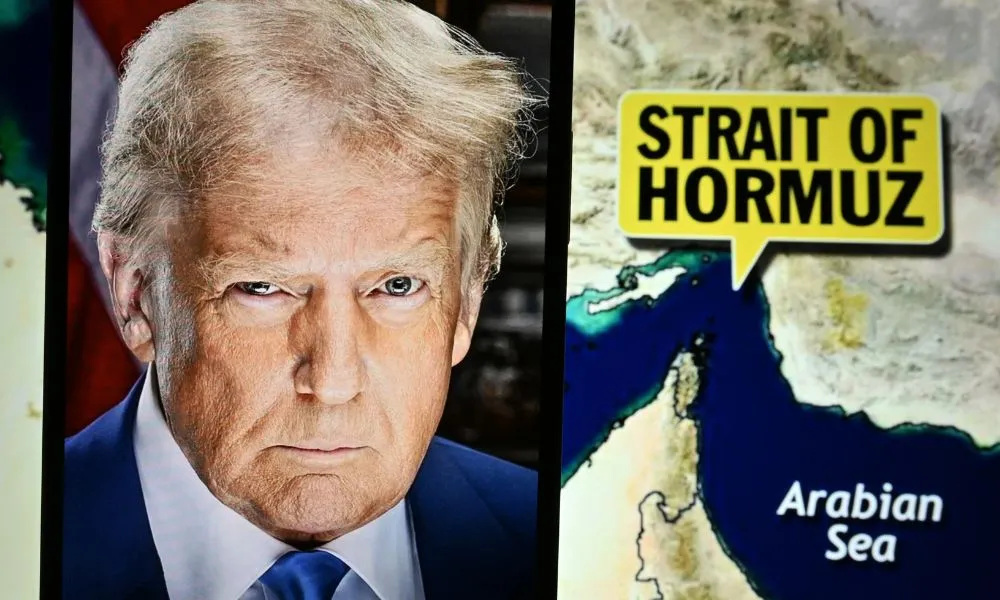
Iran denied today that it had any involvement in the explosion aboard a South Korean cargo vessel flying the Panamanian flag in the Strait of Hormuz, which occurred on Monday.
Tehran “strongly rejects and categorically denies any allegation concerning the involvement of the armed forces of the Islamic Republic of Iran in the incident during which a South Korean ship sustained damage in the Strait of Hormuz,” the Iranian embassy in Seoul said in a press release.
Trump expresses optimism but warns of escalation
On Wednesday, US President Donald Trump said it is “very likely” that an agreement with Iran will be reached, comments that were enough to trigger a sharp drop in oil prices and strong gains in stock markets, even as he repeated threats of renewed US bombardments.
“We’ve had very good discussions over the past 24 hours and it’s very likely we’ll reach an agreement,” Trump told reporters at the Oval Office, reiterating optimism he had already expressed earlier.
“If Iran agrees to give what has been agreed (…) the already legendary ‘Epic Fury’ operation will end,” the Republican billionaire wrote on Truth Social.
However, he warned that if Iranians “do not agree, new bombings will begin, and they will, regretfully, be at a much higher level and intensity than before,” referring to the war launched by US and Israeli forces against Iran on 28 February, which continued until a ceasefire was declared on 8 April.
Tehran accuses Washington of seeking surrender
On the Iranian side, the country’s chief negotiator, Parliament Speaker Mohammad Bagher Ghalibaf, said Washington is seeking Tehran’s “surrender” by applying a “new strategy” aimed at “destroying the country’s cohesion.”
Meanwhile, Iranian Foreign Ministry spokesman Esmail Baghaei said Tehran is “still examining the plan and proposal” put forward by the Americans.
Markets react positively
Markets opted to focus on the optimistic scenario. Wall Street closed sharply higher, following a wave of euphoria across European stock markets, while early Asian trading also saw strong gains.
Brent crude prices fell by nearly 8%, to 101.27 dollars a barrel, far from the 126 dollars reached days earlier.
On Tuesday, Trump announced that, taking into account “the tremendous military success we achieved” and “the significant progress made toward a full and final agreement with representatives of Iran”, he had decided to pause “for a short period” the military operation launched just one day earlier to allow hundreds of stranded commercial vessels to cross the Strait of Hormuz under US naval escort.
Ongoing tensions in the Gulf
Tehran has effectively locked down the Strait of Hormuz, a strategic artery for Middle East hydrocarbon exports, since the outbreak of the war, which has claimed thousands of lives, mostly in Iran and Lebanon.
Washington continues its blockade of Iranian ports, launched on 13 April, with the Pentagon announcing yesterday that an Iranian oil tanker attempting to breach it was “neutralised” after its rudder was hit.
At the same time, French authorities said the aircraft carrier Charles de Gaulle has moved into position in the Gulf region, as a French‑British alliance intends to guarantee the “security” of the strait should an agreement be reached.
In Israel, Prime Minister Benjamin Netanyahu said he is ready “for all scenarios” regarding Iran, while the Israeli military is also ready to resume a “powerful” campaign, according to army chief Lt‑Gen Eyal Zamir.
Source: CNA