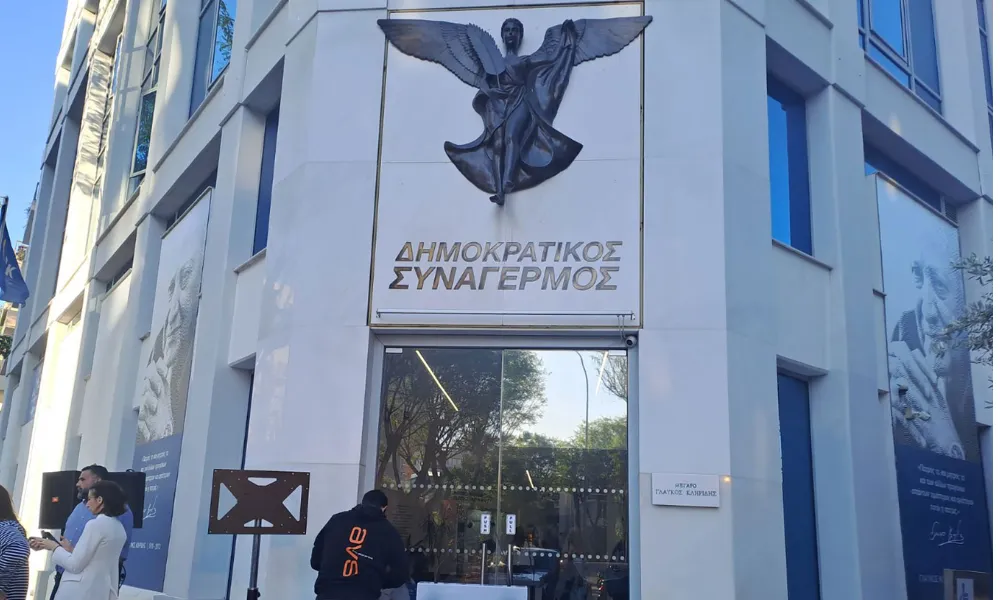
An intense internal debate has been unfolding within the Democratic Rally (DISY) over the past 24 hours over an issue that, from the moment the Mafia State report was made public, should have been resolved within the bounds of basic political propriety. The discussion highlights the depth of the party’s introspection, which has not subsided even after its victory in the most recent elections.
Decision and timing
The former President of the Republic did not, at any point immediately after the report’s publication, show the political courage to request his exclusion from the party’s collective bodies in which he participates as honorary president. For a full week this remained a point of contention, intensifying differing approaches among members of the current leadership.
Yesterday, Nikos Anastasiades informed party leader Annita Demetriou that he has decided to abstain from collective party bodies while the matter relating to the report remains ongoing. However, it can reasonably be inferred that the former president’s decision followed the public intervention of the party’s parliamentary spokesman, Demetris Demetriou, who made it clear that, in his assessment, Anastasiades should from the outset have declared his abstention, as the report exposes him politically regardless of how any potential criminal liability is ultimately assessed by the team of criminal investigators.
Rationality and dependence
Demetriou’s clear position, which effectively set the party on a more rational course in handling a highly sensitive issue, nevertheless came under pressure from other DISY officials. These included deputy leader Efthymios Diplaros, MP Fotini Tsiridou, and former deputy leader Harris Georgiades.
It should also be noted that both Diplaros and Tsiridou were quick, immediately after Anastasiades’ press conference—in which he claimed that the allegations against him had been disproven—to express admiration and publicly state that he had responded clearly and overturned the accusations levelled against him.
However, rather than prompting reflection within the party over the fact that key figures appear willing, in advance, to depart from the position that justice and due process should be allowed to run their course, concern has instead been directed at the parliamentary spokesman’s clear, bold and responsible stance. That stance, in effect, preserves the party’s sense of dignity.
According to prevailing assessments, what is happening within DISY is an attempt to reverse a reality the party should already have addressed. In essence, the former President appears to be seeking, indirectly and through others, to keep the party in a form of political dependency. In pursuing this objective—and in shaping a more favourable environment for himself within party ranks—he is finding willing supporters among well-known party figures, who stand by him under any circumstances, even if this exacerbates internal divisions and creates negative impressions.