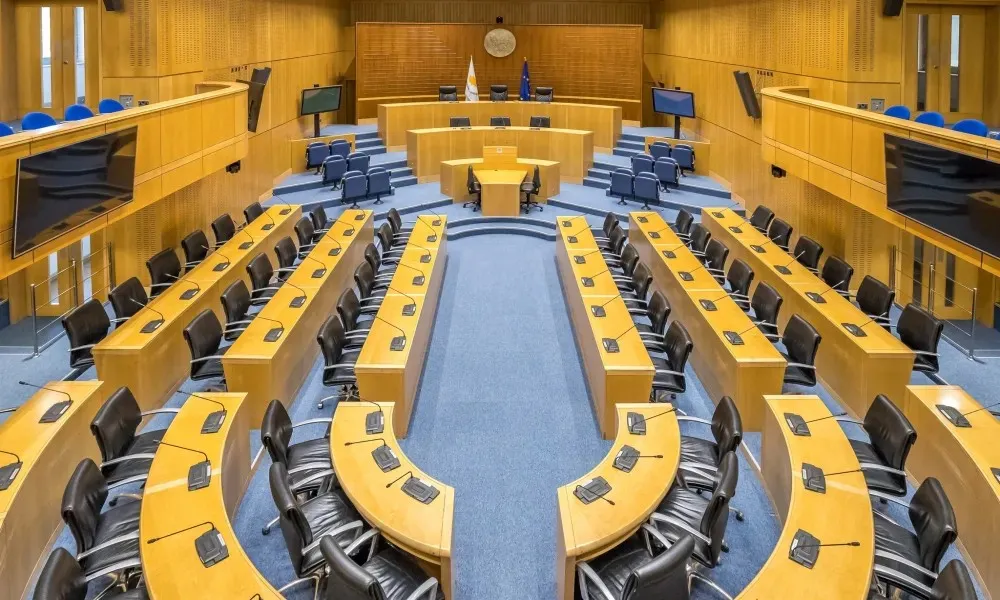
Today’s elections will elect the 56 new members of the House of Representatives for the next five‑year term through a complex and sequential electoral system aimed at proportional representation of political forces.
The first allocation of parliamentary seats is carried out separately in each electoral district by the respective District Returning Officers, based on local results and the electoral quota of each district. This is followed by the second allocation, during which unallocated seats are pooled and distributed at nationwide level by the Chief Returning Officer, taking into account parties’ vote remainders.
If seats remain unallocated, a third allocation is carried out, which finalises the composition of the new House.
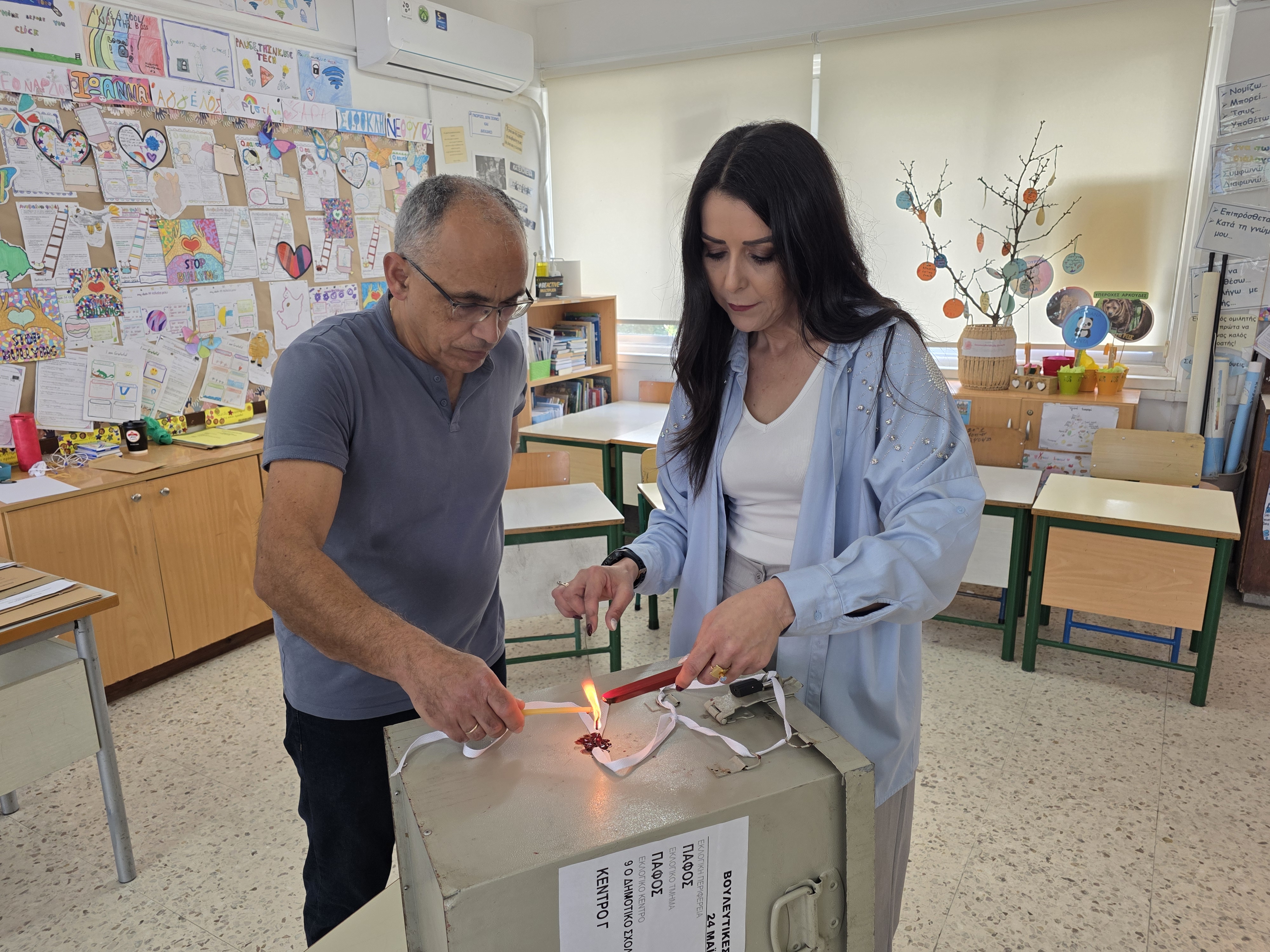
Specifically, immediately after voting ends, each ballot box is opened on site at the polling station, under the responsibility and supervision of the presiding officer and in the presence of candidates’ representatives, and the process of sorting and counting votes begins. Those entitled to be present at the polling station are on‑duty officials, candidates, representatives of party lists and independent candidates, and no one else. Once vote counting is completed, the process of allocating the 56 seats begins.
In a nutshell
Ø First allocation
- Conducted at electoral‑district level by the District Returning Officers
- The electoral quota is calculated in each electoral district (total valid votes ÷ number of district seats)
- Each party receives as many seats as the number of times the electoral quota is contained in the number of votes it secured
- The procedure is carried out separately in each district
Ø Second allocation
- All unallocated seats from the first allocation are gathered from all electoral districts
- Only parties that secured 3.6 per cent of valid votes nationwide take part
- Seats are allocated based on the unused vote remainders from the first allocation
Ø Third allocation
- If seats remain unallocated, they are distributed to the parties with the largest vote remainders from the second allocation
- Seats are allocated one by one until all seats are exhausted
Seats of the first allocation
The electoral quota differs in each electoral district and is calculated as follows: the total number of valid votes in each district is divided by the total number of parliamentary seats allocated to that district. The resulting quotient, with any fraction disregarded, constitutes the electoral quota for that district.
The total number of valid votes obtained by each party in the specific district is then divided by the electoral quota. Each party secures as many seats as the number of times the electoral quota is contained within its vote total.
Example
Let us assume that in the Nicosia electoral district, which has 19 parliamentary seats, there are a total of 140,000 valid votes. To determine the electoral quota for Nicosia, the total valid votes are divided by the number of district seats:
140,000 valid votes ÷ 19 seats = 7,368 votes
Thus, 7,368 votes is the electoral quota for the Nicosia district for the purposes of the first allocation.
To determine how many parliamentary seats each party receives in Nicosia, the total number of valid votes obtained by each party is divided by the Nicosia electoral quota.
If DISY received 40,000 votes, the party’s seats are calculated as follows:
40,000 votes ÷ 7,368 (the electoral quota) = 5 seats
This leaves 3,160 votes as an unused remainder, which will be taken into account for the second allocation of seats. The 3,160 unused votes result from the following calculation:
40,000 votes − 36,840 votes corresponding to five seats (5 × 7,368) = 3,160 votes
In this way, DISY receives a total of five seats in the Nicosia district in the first allocation. The remaining 3,160 unused votes will be used to the party’s benefit in the second allocation.
The same method is applied to calculate the electoral quota in every electoral district and to allocate seats accordingly.
If the total valid votes of a party in a district are fewer than the electoral quota, the party is not entitled to a seat in the first allocation. In the example above, the Nicosia electoral quota is 7,368 votes. Any party receiving fewer than 7,368 votes in that district will not secure a seat in the first allocation. The same practice applies in every other district, based on the electoral quota calculated for each.
Based on the above example, the five parliamentary seats won by DISY in Nicosia in the first allocation will be assigned to the five DISY candidates in Nicosia who received the highest number of preference votes.
In the event of a tie between two or more candidates of the same party, the seat is awarded by lot, conducted by the relevant District Returning Officer in the presence of the party’s candidates.
Independent candidates
As far as independent candidates are concerned, in order to be elected they must secure, in the first allocation, votes equal to or greater than the electoral quota of the district in which they are running. Otherwise, they cannot be elected and are not entitled to carry their votes forward to the second allocation.
The second allocation
For the purposes of the second allocation, the entire Republic is considered a single electoral district. The unused vote remainders of each party in every district are aggregated and take part in the second allocation. At the same time, all seats left unallocated after the first allocation across all districts are pooled to determine the total number of seats to be distributed in the second allocation.
Only the following may participate in the second allocation:
- Parties that secured 3.6 per cent of valid votes nationwide
- Coalitions of two parties that secured 10 per cent of valid votes nationwide
- Coalitions of more than two parties that secured 20 per cent of valid votes nationwide
There are no party coalitions in today’s parliamentary elections. Therefore, the second allocation will include only parties that secure at least 3.6 per cent of valid votes nationwide.
The electoral quota
To determine the electoral quota for the second allocation, the total unused vote remainders from the first allocation across all six electoral districts are added together for all parties entitled to participate in the second allocation. This sum is divided by the number of seats left unallocated after the first allocation. The resulting quotient constitutes the electoral quota for the second allocation.
Example
Let us assume that DISY, AKEL, ELAM, ALMA and Direct Democracy Cyprus qualify for the second allocation and have unused vote remainders from the first allocation of 30,000, 22,000, 20,000, 15,000 and 12,000 votes respectively (a total of 99,000 votes).
If the total number of seats remaining unallocated after the first allocation across all six districts is 18, the second‑allocation electoral quota is calculated as follows:
99,000 unused votes ÷ 18 seats = 5,500 votes
Thus, 5,500 votes is the electoral quota for the purposes of the second allocation.
The results for each party would be:
- DISY: 30,000 ÷ 5,500 = 5 seats, with 2,500 votes remaining for the third allocation
- AKEL: 22,000 ÷ 5,500 = exactly 4 seats, with no remainder; therefore it does not take part in the third allocation
- ELAM: 20,000 ÷ 5,500 = 3 seats, with 3,500 votes remaining
- ALMA: 15,000 ÷ 5,500 = 2 seats, with 4,000 votes remaining
- Direct Democracy Cyprus: 12,000 ÷ 5,500 = 2 seats, with 1,000 votes remaining
As shown above, a total of 16 seats are allocated in the second allocation, leaving two seats unallocated, which will be distributed in the third allocation.
The unallocated seats
The next question is how seats are distributed in the second allocation based on the example above. Seats are allocated in order to the electoral districts where each party records its highest unused vote remainder, provided there is a vacant seat in that district. If no seat is available, the Chief Returning Officer moves to the next district where the party has the next highest remainder.
Example
DISY, which has the highest unused vote total (30,000) among the five parties participating in the second allocation, will be the first party in the distribution process. The electoral district in which DISY has its highest unused remainder will receive the first seat, provided there is a vacant seat.
If DISY’s highest remainder is in the Limassol district and a vacant seat exists, the first of the five seats it receives in the second allocation will be assigned to Limassol. If no vacant seat exists, the Chief Returning Officer proceeds to the district where DISY has the next highest remainder.
The same process is then followed for AKEL to determine where its first of four second‑allocation seats will be assigned. The same applies to ELAM, ALMA and Direct Democracy Cyprus.
The third allocation
As shown in the example, 16 parliamentary seats were allocated in the second allocation, leaving two seats to be distributed in the third allocation.
These two seats are allocated to the parties with the highest unused vote remainders after the second allocation.
Based on the example above, where DISY has 2,500 remaining votes, AKEL has none, ELAM has 3,500, ALMA has 4,000 and Direct Democracy Cyprus has 1,000, the two unallocated seats will be awarded, one each, to ALMA and ELAM, which have the highest remainders.
As regards the determination of the electoral districts in which these seats will be allocated, and consequently the candidates who will receive them, the same procedure used in the second allocation applies. That is, seats are awarded one by one to ALMA and ELAM in the districts where vacant seats exist and where each party has its highest unused vote remainder from the first allocation. The seats are assigned to the candidates of those parties who received the highest number of preference votes.