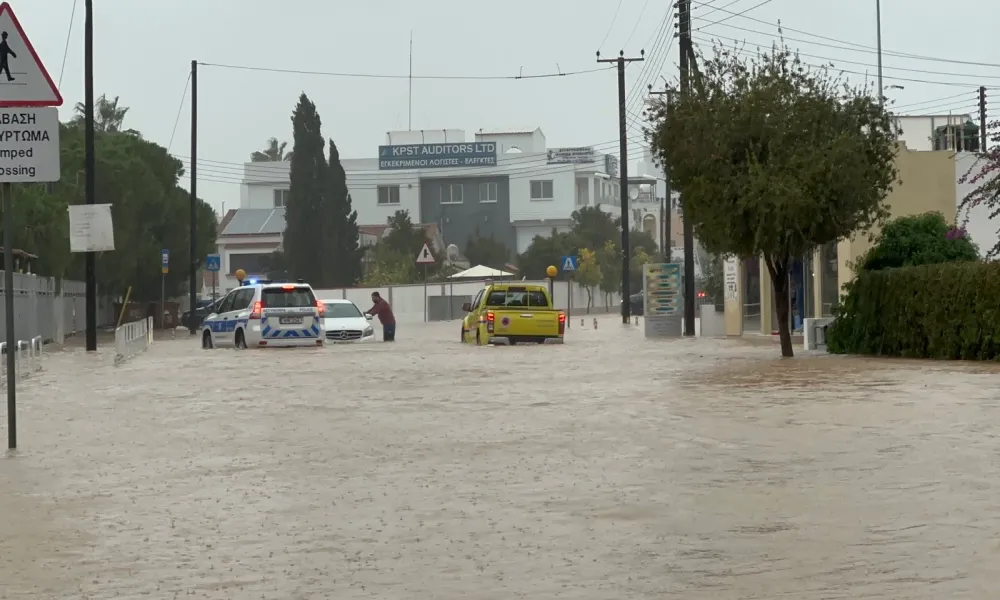

In recent years, the frequency and intensity of floods, both large and small, have increased as a result of the climate crisis. The devastating scenes left behind by Mediterranean storm Daniel in September 2023 remain vivid across the wider region, from eastern Libya to Greece's Thessaly region, southeastern Bulgaria and northwestern Türkiye.
In Libya, some 20,000 people were killed, including around 10,000 reported missing. In Thessaly, the disaster claimed 17 lives in addition to causing extensive destruction. Four people died in Bulgaria and seven in Türkiye.
More recently, in August, Nepal experienced a deadly flood triggered by the collapse of a glacier. The disaster left more than 1,400 people dead, over 7,500 missing and caused billions of dollars in damage, with the United Nations warning that the crisis should serve as a global alarm over the consequences of climate change.
Flash floods
These events were caused by flash floods, intense flooding episodes that develop within a very short period, usually within three to six hours of heavy or extreme rainfall.
In the case of Storm Daniel, the flash floods resulted from exceptionally intense rainfall. In Nepal, a collapsing glacier triggered rockslides that created a natural dam, which later burst.
According to experts, extreme flash floods cannot be predicted accurately in advance, but preparation and prevention can reduce the scale of destruction.
Is Cyprus ready?
As weather events become increasingly severe and unpredictable, questions are growing about Cyprus' preparedness for both major flood emergencies, such as Storm Daniel, and smaller but frequent flood incidents that continue to affect communities across the island.
Earlier this year, intense rainfall during the summer months caused widespread disruption, highlighting the vulnerability of infrastructure and communities.
Forecasts suggest heavy rainfall and extreme storms may become more common across Europe, while a powerful El Niño cycle could further increase weather volatility, potentially affecting Cyprus.
Flood-risk management plan
Recognising the need for a unified framework, the European Union adopted the Floods Directive (2007/60/EC), establishing procedures for assessing and managing flood risks.
In Cyprus, the Water Development Department (WDD) has developed and implemented the country's flood-risk framework, aimed at reducing threats to human life, public health, the environment, cultural heritage and economic activity.
The department has produced a Flood Risk Management Plan, involving multiple government agencies. Public awareness responsibilities, for example, largely fall under the Civil Defence Force of the Interior Ministry.
As part of its work, the WDD has identified areas at elevated flood risk. This month, five additional zones, four in Larnaca and one in Limassol, were added, bringing the total number of recognised high-risk areas to 43.
These locations are spread across Cyprus' urban centres and largely involve risks from riverine flash floods due to small drainage basins, steep terrain, limited vegetation cover, intense rainfall and rapid water accumulation.
Need for local action
The Flood Risk Management Plan is publicly available and includes guidance on prevention, preparedness and recovery.
Measures include flood-defence projects, public information campaigns, emergency-response planning and post-disaster recovery strategies.
However, Christos Demopoulos, associate professor at the European University Cyprus and scientific director for civil protection at the CERIDES Centre of Excellence, told Politis that fragmented responsibilities among government agencies remain a challenge.
He argued that local communities, both urban and rural, need to take a more active role, particularly in areas already identified on flood-risk maps or with a history of flooding.
Escape routes and local planning
Demopoulos stressed the need for regular local planning meetings rather than relying solely on initiatives from Civil Defence.
He said communities should develop local flood-response plans, including evacuation routes and emergency procedures.
For example, he questioned whether communities hosting youth camps and festivals in the Troodos region have adequately assessed how they would respond if severe flooding occurred during major events.
He also advocated tabletop emergency exercises to test local readiness and reveal potential weaknesses.
Concerns beyond urban areas
Demopoulos noted that current flood-risk maps do not cover mountainous regions.
He recalled historical flooding of the Karkotis River in Kakopetria, which caused serious damage during the presidency of Archbishop Makarios and prompted a personal visit by the late leader.
Storm-water systems under pressure
The expert also highlighted challenges in cities such as Nicosia, where floodwater volumes can exceed the capacity of storm-water drainage systems.
In many areas, natural riverbeds have been covered or altered through urban development, reducing the ability of infrastructure to cope with extreme rainfall.
He said local authorities should determine in advance how resources would be mobilised, which services would respond and how residents would be informed beyond official CY ALERT notifications.
This is particularly important for flash-flood events, where warnings may provide less than six hours of lead time.
Development in flood-prone areas
Asked about legal and illegal developments in flood-risk zones, Demopoulos said much more needs to be done.
He argued that a serious discussion is required, both at government and community level, regarding developments located in areas where they should not be, including some sites within Natura 2000 protected zones.
Dam-failure risk
Demopoulos also pointed to the potential consequences of dam failure following a major earthquake.
Given Cyprus' extensive network of dams, created in response to chronic water shortages, he said the issue should remain part of flood-risk planning.
Even the failure of a relatively small dam could devastate downstream agricultural areas or developments, including legally approved projects.
He acknowledged that such discussions often trigger accusations of fear-mongering but stressed that risk communication is essential.
According to Demopoulos, historical experience and global trends show that climate change has made flood events more intense and frequent than in previous decades.
Public awareness gaps
The issue of public preparedness was also highlighted by Marios Stavrou, head of operations for the voluntary SupportCY group run by the Bank of Cyprus.
Stavrou participated in relief efforts following the Thessaly floods in 2023 and said he witnessed significant shortcomings that, while unlikely to prevent a disaster on the scale of Storm Daniel, could reduce damage and improve public safety.
Based on both his experience in Greece and conditions in Cyprus, he warned that Cypriots remain insufficiently informed about how to respond during major flood emergencies.
Education from an early age
Stavrou called for flood-awareness education to begin in childhood.
Just as children are taught how to react during earthquakes, he said they should also learn how to respond to flood events, particularly as climate change continues to increase the severity of extreme weather.
Simple protective measures matter
SupportCY teams responding in Greece also found that many properties lacked even basic protective measures.
Stavrou cited inadequate drainage systems that failed to absorb water effectively and allowed buildings to flood.
He also urged businesses to ensure they have operational pumps in flood-prone basements and, crucially, to test them regularly rather than discovering failures during an emergency.