Scientists estimate that an organised relocation of residents in New Orleans should begin immediately, in order to avoid a chaotic and socially unequal wave of abandonment of the city.
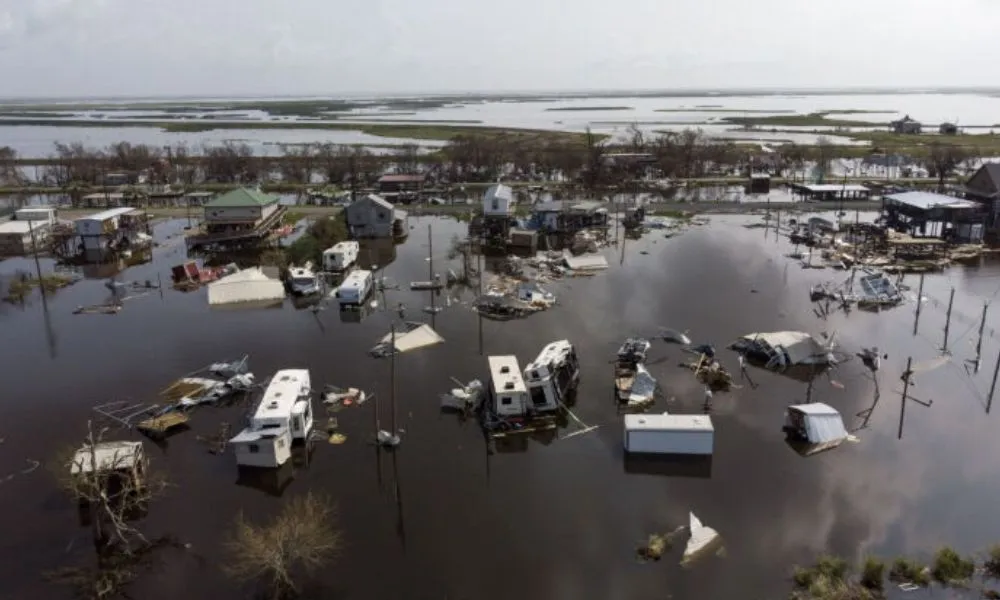
New Orleans has long been considered one of the most vulnerable cities in the world to the climate crisis and rising sea levels. A large part of it already lies below sea level, within a basin surrounded by wetlands that are gradually disappearing.
Rising seas will swallow New Orleans. People need to start relocating now, scientists say https://t.co/nUqC14fRPl
— CTV News (@CTVNews) May 25, 2026
Loss of 5,000 square kilometres of wetlands
Since the 1930s, the state of Louisiana has lost approximately 5,000 square kilometres of wetlands, due to human intervention, infrastructure projects and the oil and gas industry.
The new study, published in the scientific journal Nature Sustainability, estimates that sea levels along coastal Louisiana could rise by between 3 and 7 metres in the future. If this happens, around 75% of the remaining wetlands in the area will disappear, while the coastline could retreat by up to 100 kilometres inland.
Researchers argue that the area has already “passed the point of no return.”
“New Orleans may be surrounded by the Gulf of Mexico before the end of this century,” they state.
Geologist Torbjörn Törnqvist, one of the study’s authors, notes that scientists identified ancient coastlines formed around 125,000 years ago, when temperatures were similar to today but sea levels were much higher.
A new study warns New Orleans has crossed a "point of no return."
— TaraBull (@TaraBull) May 25, 2026
Researchers say severe coastal erosion and rising sea levels will surround the city before the end of this century urging officials to begin planning RELOCATION now. - CNN pic.twitter.com/OZE6XFTleH
Concern over relocation of residents
According to him, the question now is not whether it will happen, but when and how adaptation should be organised.
According to CNN, the city has already experienced a mass exodus of residents following Hurricane Katrina, which caused nearly 1,400 deaths in 2005. Since then, New Orleans has lost around 25% of its population.
Scientists warn that without an organised relocation plan, the situation will become even more unequal for poorer residents of the city. As the population declines, insurance costs rise, public services deteriorate and property values collapse.
At the same time, there are concerns that large‑scale population movement could disrupt New Orleans’ distinctive cultural identity – a city built on music, neighbourhoods and its Black cultural heritage.
Environmentalist Beverly Wright says she is particularly concerned about how the city’s Black communities will be treated under such a scenario.
“After Katrina we saw what happened. I fear that many families will be forced to start again from scratch,” she says.
Despite the bleak projections, scientists insist that there is still time for a more organised and sustainable plan, which could turn New Orleans into a global example of adaptation to the climate crisis.