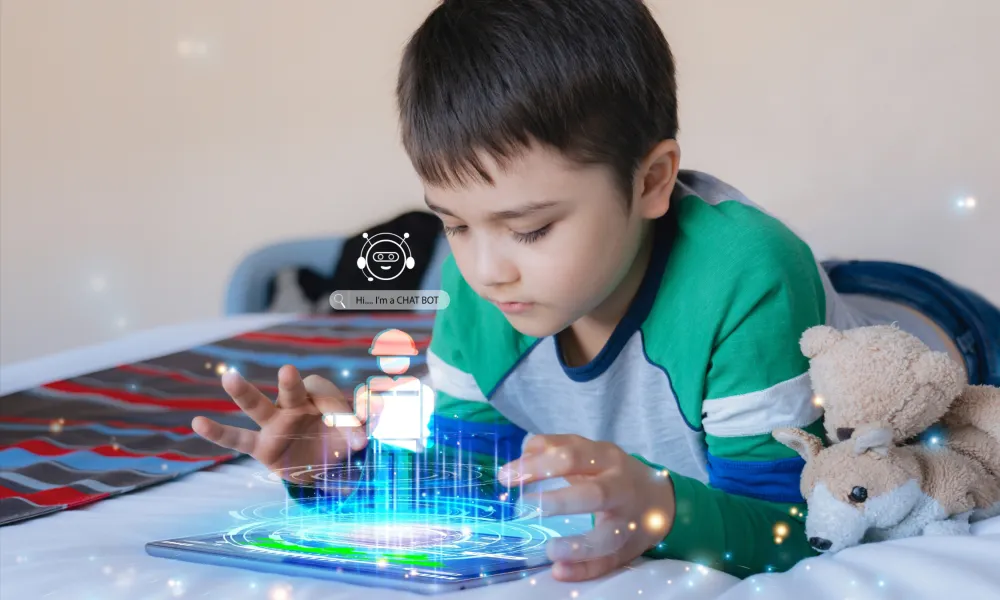

Artificial intelligence is no longer confined to the screens of phones, tablets and computers. It has begun making its way into children's bedrooms too, through dolls and interactive toys that talk, listen and respond to children, creating a new reality that scientists are warning about. The National Committee on Child Environment and Health has set out its concerns over the so-called digitisation of childhood in a memorandum submitted to parliament, noting that digital technology now begins reaching children from their very first months of life. Particular reference is made to the new generation of toys incorporating artificial intelligence features.
When the toy 'answers back'
Citing the "Child Safety Online" report prepared for the European Commission in July 2026, the National Committee notes that the "digitisation of childhood" now goes beyond traditional screen exposure. An increasing number of toys, including dolls and interactive playthings, are gaining digital functions and artificial intelligence.
The concern centres on the fact that an AI-powered toy, or a voice-activated device, may be perceived by a child not simply as an object but as a "responsive social partner." Yet in early childhood, attachment, language acquisition and play depend on human interaction. Artificial intelligence can simulate responsiveness, but not the genuine reciprocity and emotional attunement of a human relationship.
This also opens a second front: personal data. Such toys may include microphones, cameras, voice processing and personalisation features, with the Committee highlighting the privacy risks for children who, because of their age, cannot understand or consent to the processing of their data.
From the first months of life
The warning is not limited to AI. The National Committee expresses strong concern over the uncontrolled use of digital technology from the very first months of life, linking it, based on the scientific evidence it cites, to problem behaviour, anxiety, depression, reduced concentration and attention, delays in cognitive and speech development, and addiction.
It also refers to the position of the American Academy of Pediatrics on children under two, who are in a critical period for developing cognitive, language, sensorimotor and social-emotional skills. Particular reference is made to the use of phones or tablets as a way to calm a child, and the possible effects on the development of self-control and emotional regulation.
Safety first, then use
The Committee does not stop at warnings. In cooperation with the Pediatric Society, it has proposed that the use of digital technology be incorporated into children's clinical assessments. It also calls for the child health booklet to be revised to cover possible symptoms and causes linked to digital device use, such as unexplained headaches and insomnia. It also believes the health system needs to strengthen its ability to diagnose and treat addiction and other mental health conditions linked to social media and other digital services.
On the policy front, the National Committee is calling for the creation of a "healthy digital environment" for children, through a comprehensive legislative framework and prior safety checks. Under its approach, responsibility should shift toward those who create the products and services: where these are aimed at children, platforms should have to demonstrate their safety in advance, on the basis of a "safety by design" principle. It is also calling for mandatory digital literacy education in schools.
Finally, it proposes updating the National Mental Health Strategy to incorporate the effects of digital technology use. The goal, as the memorandum makes clear, is not to exclude children from technology, but to allow them to make use of its benefits within an environment that has first been proven safe for them.