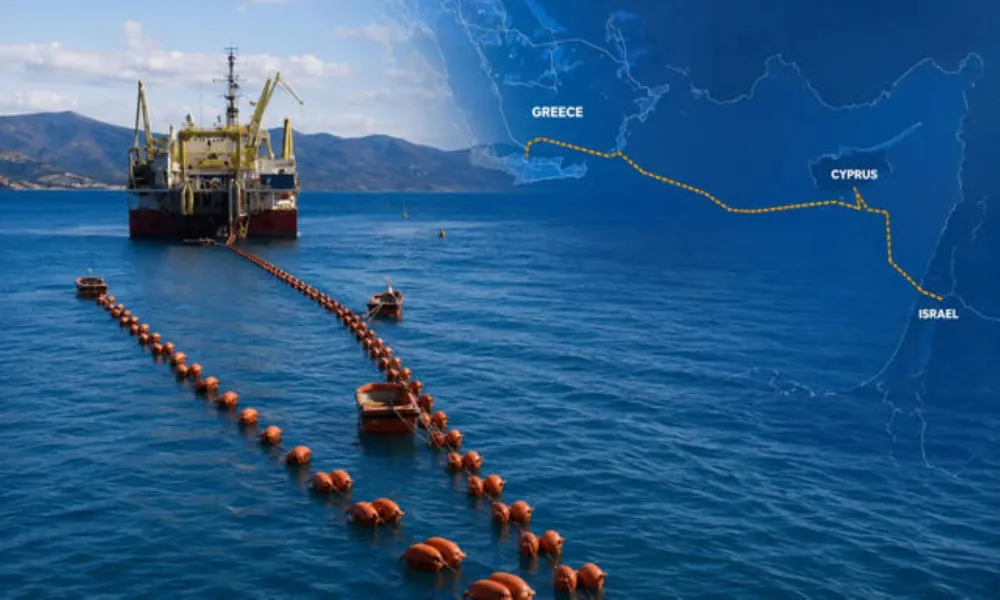

President Nikos Christodoulides has publicly thrown his weight behind the Great Sea Interconnector (GSI), marking a notable shift from the reservations expressed earlier this week by members of his government and effectively placing the long-delayed electricity interconnection project back on a path towards implementation.
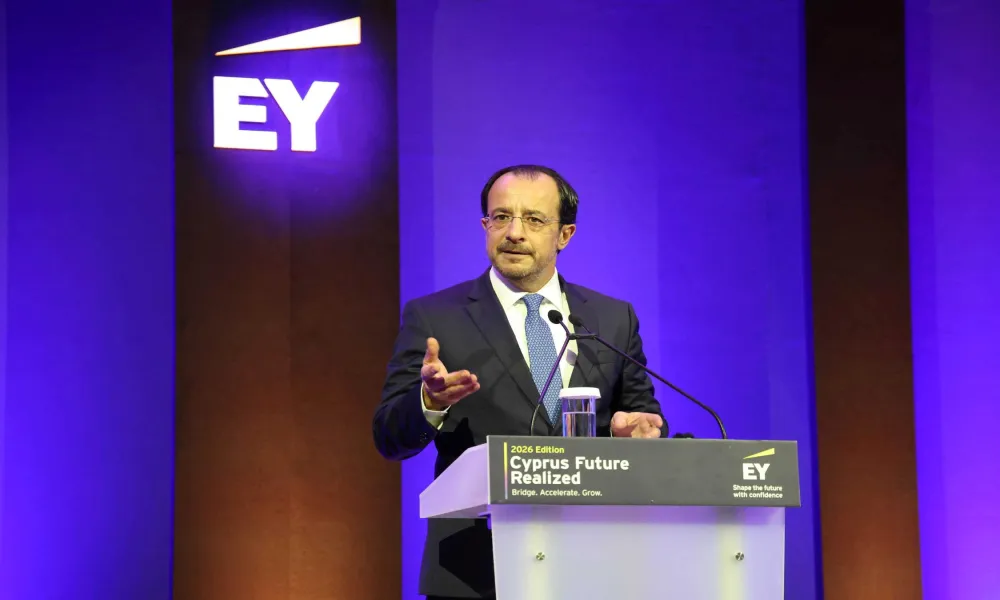
Speaking on Wednesday evening, Christodoulides described the entry of French investment company Meridiam as a development of decisive importance, both economically and geopolitically. His remarks contrasted sharply with the more cautious stance presented on Monday before Parliament by Finance Minister Makis Keravnos and Energy Minister Michalis Damianos.
A key difference was that the President made no reference to the need for updated studies by the European Investment Bank (EIB) as a prerequisite for government decisions regarding the project.
"For the first time since 2012, when the issue of the GSI began, we have substantive developments in the direction of implementing this project," Christodoulides said while attending an event in Nicosia.
Meridiam's entry seen as decisive
Christodoulides said the participation of Meridiam had changed the outlook of the project significantly.
"The entry of the French investment company Meridiam was of decisive importance, both in relation to the economic and geopolitical dimensions of the project, and everything is proceeding on the basis of the understanding and complete agreement we have with the Greek Prime Minister," he said.
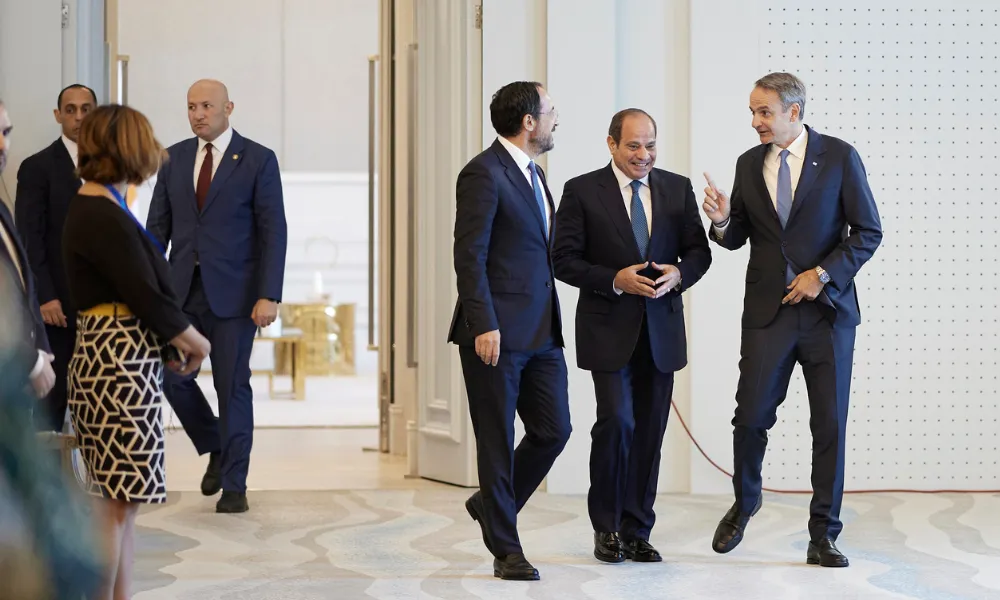
The President also revealed that implementation of the GSI had been discussed during the recent trilateral summit involving Cyprus, Greece and Egypt.
He disclosed that his diplomatic office had held a meeting with the French embassy exclusively on the issue and noted that Greek Prime Minister Kyriakos Mitsotakis was in France on Wednesday, where he was expected to discuss the matter with French President Emmanuel Macron.
"After the understanding reached in August with the French President and the Greek Prime Minister, for the first time since this idea emerged in 2012, we are very close to the stage where we can begin and produce results," he said.
Government still faces key decisions
Despite the President's endorsement, the government must still take important decisions concerning the project.
These include whether the Republic of Cyprus will participate as a shareholder-investor in the project company and whether it will proceed with annual payments of €25 million for five years to the implementing body.
Diverging approaches between Nicosia and Athens
Until Christodoulides' intervention, differing approaches between Cyprus and Greece had once again become apparent, particularly as Turkey has intensified its rhetoric regarding claims in the Eastern Mediterranean.
Only 24 hours earlier, Keravnos and Damianos had appeared before the House Energy Committee and indicated that government decisions would depend on the completion of updated economic assessments by the EIB.
At the time, Meridiam's entry into the project, despite the company's management of infrastructure assets worth approximately €23 billion, did not appear to have dispelled concerns within the Cypriot government regarding the project's financial viability.
The message from Athens was very different.
Senior Greek officials insisted that the laying of the electricity cable would proceed despite deteriorating Greek-Turkish relations, particularly after Mitsotakis reiterated Greece's right to extend its territorial waters to 12 nautical miles.
Greek Foreign Minister Giorgos Gerapetritis told SKAI television that Greece would maintain communication channels with Ankara while making clear that it was not acting out of fear.
"There will, of course, be the laying of the Greece-Cyprus electricity interconnection cable," he said, adding that the project constituted a European obligation and would proceed according to schedule.
Deputy Foreign Minister Tasos Hadjivasiliou likewise described the GSI as a strategic European infrastructure project and said implementation would continue as planned.
Referring to Meridiam's participation, he said: "The arrival of Meridiam means the project is secure. Otherwise, the French giant would not invest its money."
Turkey remains a factor
Despite the renewed optimism, Turkey's position continues to cast a shadow over the project.
Attention is now focusing on a future NAVTEX expected to be issued for seabed surveys between Crete and Rhodes.
According to reports from Athens, the notice could be issued in October and in any case before the end of 2026.
The surveys are expected to provide an early indication of how far Ankara is prepared to go in challenging Greek activity in the area.
Despite tougher rhetoric between Greece and Turkey, some officials in Athens do not believe the interconnection is necessarily under threat.
There is reportedly an assessment that a practical arrangement could still be found, particularly since Turkish officials had previously conveyed to European interlocutors that the project was not a matter of concern to Ankara.
One idea reportedly under discussion is for Meridiam to send a formal notification document to all states in the region regarding the project. However, the proposal is said to face resistance within the Greek Foreign Ministry, where some diplomats are wary of creating such a precedent.
DISY increased political pressure
Before Christodoulides' remarks, the government was facing growing political pressure to clarify its stance.
Earlier on Wednesday, DISY called on the government to support the Great Sea Interconnector without hesitation.
Party leader Annita Demetriou described the project as one of strategic and geopolitical importance and called for a "clear and definitive political decision".
DISY argues that the involvement of international investors, growing interest in a future Cyprus-Israel interconnection and stronger engagement from Greece, France and the United States all strengthen the project's importance.
While the party does not reject the need to update economic data, it insists that additional studies should not become an excuse for further delays.
DISY noted that the European Union had already funded technical, economic and environmental studies and subsequently approved €658 million in European funding for the project.
Cost-benefit debate
Former Finance Minister Haris Georgiades argued that discussion should focus on the project's overall benefits rather than solely on its costs.
Using a hypothetical total project cost of €3 billion, he noted that the EU grant of €658 million would significantly reduce the financial burden. Under the agreed allocation, €866 million would fall to Greece and €1.476 billion to Cyprus.
According to the scenario he presented, Cyprus' contribution would be spread over a period of 30 years and, even under the extreme assumption that the project generated no revenue, would amount to approximately €50 million annually.
DISY plans lobbying push
DISY also announced that it would launch initiatives in Athens and Brussels aimed at strengthening political support for the project and countering Turkish objections.
Demetriou is expected to hold contacts with officials in both capitals, drawing on the party's links with the European People's Party and the Greek government.
At the same time, DISY intends to seek cooperation with other political forces in Cyprus and make greater use of parliamentary diplomacy.
House Energy Committee chairman Nicos Georgiou argued that the European Union, Greece and France had all moved forward in supporting the interconnection and that Cyprus could not afford to remain "watching the developments from the sidelines."