
By Christina Stavrinou
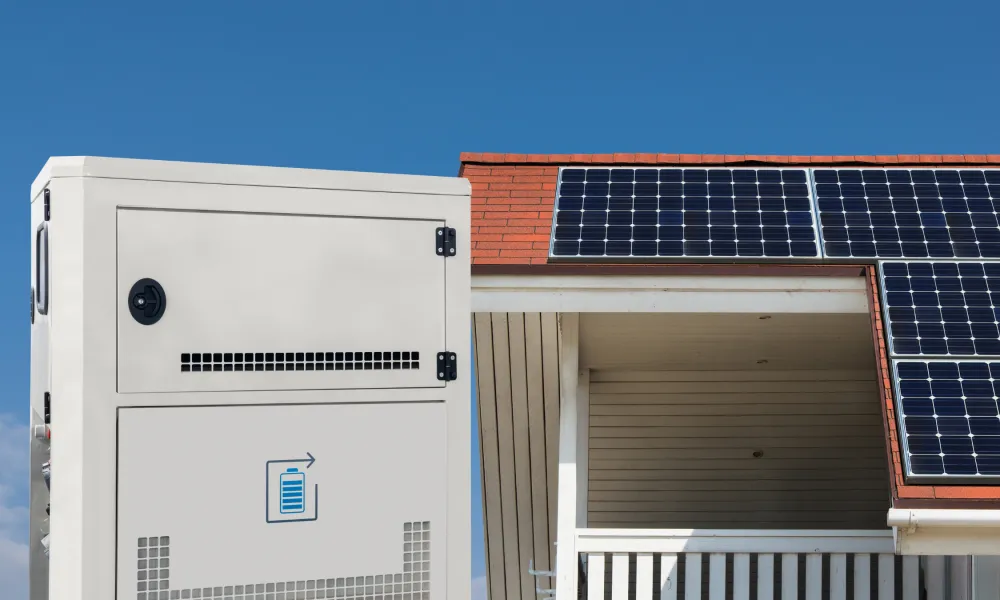
Demand for residential battery storage systems is increasing rapidly following Cyprus's transition from Net Metering to Net Billing, as photovoltaic owners seek to maximise their use of self-generated electricity.
At the same time, the absence of a dedicated legal framework governing the installation of home battery systems, combined with reports of installations by unlicensed individuals, is raising safety concerns among industry professionals and authorities.
Net Billing drives demand
The Net Billing scheme replaced Net Metering on 1 January 2026.
Under the previous system, electricity generated by photovoltaic systems was offset against consumption on a kilowatt-hour-for-kilowatt-hour basis at retail prices.
Under Net Billing, however, excess electricity exported to the grid is compensated at the lower wholesale rate. As a result, homeowners now have a stronger financial incentive to store surplus energy rather than export it.
According to licensed electrician Heracles Chrysanthou, who specialises in photovoltaic and battery installations, demand for residential batteries has increased substantially since the change.
He said many Cypriot consumers had only recently become aware of the option to install battery storage alongside their solar systems.
Installation costs
Chrysanthou said costs vary depending on storage capacity.
As an example, a photovoltaic system combined with a 5-kilowatt-hour battery typically costs between €8,000 and €9,000.
For consumers purchasing only a battery, costs are around €1,500 per kilowatt-hour of storage capacity.
Regulatory vacuum
At the same time, George Kyriakou, president of the Cyprus Association of Licensed Electrical Contractors, highlighted what he described as a significant regulatory gap.
According to Kyriakou, Cyprus has yet to adopt a comprehensive legal framework specifically regulating the installation of residential electricity-storage batteries.
He noted that in April 2025, the Fire Service circulated guidance to electricians outlining safety recommendations for battery installations, but a formal regulatory framework remains pending.
Concerns over DIY installations
Kyriakou also raised concerns about batteries being installed by amateurs or individuals lacking the necessary qualifications.
He noted that online searches often present home battery installation as a do-it-yourself process.
Such work, he warned, can pose serious safety risks and should not be undertaken by unqualified individuals.
He further referred to cases where unlicensed persons allegedly carry out installations in private properties for payment.
Providing such services without the required licence is illegal and constitutes a criminal offence, he said.
EAC stresses licensing requirements
Speaking to Politis, Christina Papadopoulou, spokesperson for the Electricity Authority of Cyprus (EAC), stressed that battery installations should always be carried out by licensed professionals.
The electrician is responsible not only for the installation itself but also for coordinating with the EAC so that required inspections can be completed and a Certificate of Suitability issued.
Papadopoulou said any installation that does not undergo the required inspections is illegal, even if it was performed by a professional contractor.
She noted that EAC inspections are provided free of charge and are essential for protecting both residents and the electricity network.
Fire Service calls for regulation
Andreas Kettis, spokesperson for the Fire Service, confirmed concerns regarding the absence of dedicated legislation.
He said the Fire Service had submitted guidance to the Interior Ministry setting out recommended safety standards for battery installations because no specific legal framework currently exists.
According to Kettis, work on the legislation has not progressed since then.
Call for caution
Until a dedicated regulatory framework is introduced, industry bodies and authorities are urging consumers to work exclusively with licensed professionals and ensure that all required inspection and certification procedures are completed.
Officials say compliance with these procedures remains essential for the safety of both households and the wider electricity system.