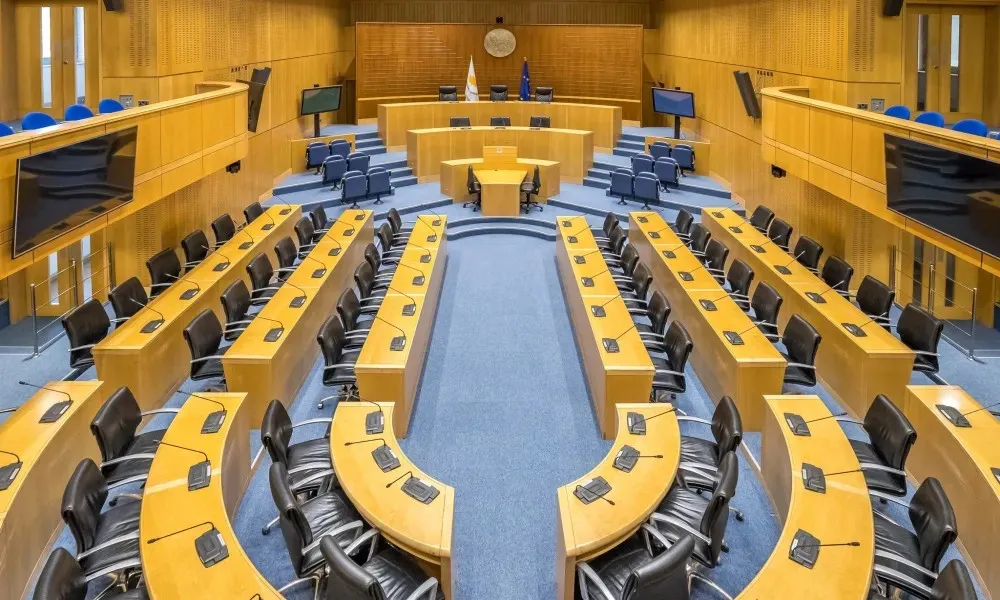
The new House of Representatives emerging from today’s parliamentary elections is being called upon to manage an economy that shows positive macroeconomic indicators, while at the same time facing a series of persistent structural challenges that affect the daily lives of households and businesses. Despite strong growth in recent years, falling unemployment and fiscal stability, several open fronts remain.
The Cypriot economy enters the new political period with positive performance compared with many European countries. Growth remains higher than the eurozone average, public debt has declined significantly as a percentage of GDP, and the labour market records historically low unemployment and high employment levels. However, this picture coexists with accumulated pressures, particularly in the cost of living, housing, private debt and the sustainability of the growth model.
Foreclosures and private debt
One of the most complex issues concerns the foreclosure framework and the overall management of private debt. Despite the significant reduction of non‑performing loans on bank balance sheets, a large part of the problem has been transferred to credit‑acquiring and loan‑servicing companies.
Recent legislative interventions by parliament, which slow down or complicate property foreclosure procedures, have raised concerns. The main argument of those expressing reservations is that any weakening of the foreclosure framework could affect repayment culture, increase credit risk and further hinder the reduction of private debt.
On the other hand, social organisations and political forces insist on the need to protect primary residences and strengthen safeguards for vulnerable borrowers, arguing that economic recovery has not been evenly distributed. These two seemingly competing priorities can coexist if the focus is genuinely on vulnerable groups. Unfortunately, horizontal measures leave room for abuse by those unwilling to restructure their debts.
According to repeated recommendations by international organisations and institutions, including rating agencies, the European Union and the International Monetary Fund, the most rational approach is considered to be the maintenance of a functional and predictable framework for managing non‑performing loans, without materially altering the core debt‑recovery tools. The main concern expressed is that weakening the foreclosure framework could negatively affect repayment culture, increase credit risk and slow down the clean‑up of the financial system.
In the background, particular importance is attached to the role of the European Commission and specifically the Directorate‑General for Competition (DG Comp), which closely monitors the state‑aid recovery plan linked to the former Cyprus Cooperative Bank through Kedipes. Kedipes operates under specific commitments to the European authorities regarding value recovery from assets and the management of problematic loans.
Should there be a significant deviation from the existing plan or failure to meet state‑aid recovery targets, the European Commission has the institutional capacity to intervene. Such a development, however, is considered undesirable by economic circles, as it could send negative signals about the country’s credibility and the stability of its financial framework.
Cost of living and housing pressure
Despite the easing of inflation – which remains lower compared with other eurozone countries – increases in food, services and rental prices continue to put pressure on a significant share of households. Housing has evolved into one of the most serious socio‑economic challenges, particularly for young couples and low‑paid workers.
Limited housing supply, increased demand from foreign investors and professionals relocating to Cyprus, as well as rising construction costs, have pushed purchase and rental prices upwards. The issue has now acquired political dimensions, as pressure mounts for targeted housing policy interventions, tax incentives and the expansion of affordable housing.
Productivity and wages
Despite growth, the Cypriot economy continues to face the long‑standing problem of low productivity. Businesses are confronted with higher labour costs, staff shortages and the need for technological transformation.
At the same time, employees are demanding wage increases that reflect the higher cost of living. The debate over the Cost‑of‑Living Allowance (COLA), wage claims across various sectors and pressures in the public sector are expected to remain at the top of the economic agenda.
For the new parliament, the key challenge is to strengthen competitiveness in an economy that must transition towards a more productive growth model.
Fiscal discipline
Although public finances present an improved picture, pressure for new social spending, tax relief and income support remains strong. The question is whether fiscal discipline can be maintained in an environment of heightened social expectations, particularly given stricter fiscal rules in Europe, with limits on expenditure growth.
The positive element is that all major parties converge on the view that there should be no return to fiscal loosening and deficits. This national consensus is a significant achievement.
Geopolitical uncertainty
At the same time, the Cypriot economy remains exposed to external factors. Uncertainty in the Middle East, global trade tensions, fluctuations in energy prices and the slowdown of key European economies create an environment of increased risk.
Tourism, services and foreign investment continue to be key pillars of growth. However, dependence on external factors makes the economy vulnerable to international shocks. This reality requires the country to remain in a state of reform readiness.
Problems must be addressed promptly so that any external pressures find the economy capable of absorbing them, without heavy consequences for households and businesses.