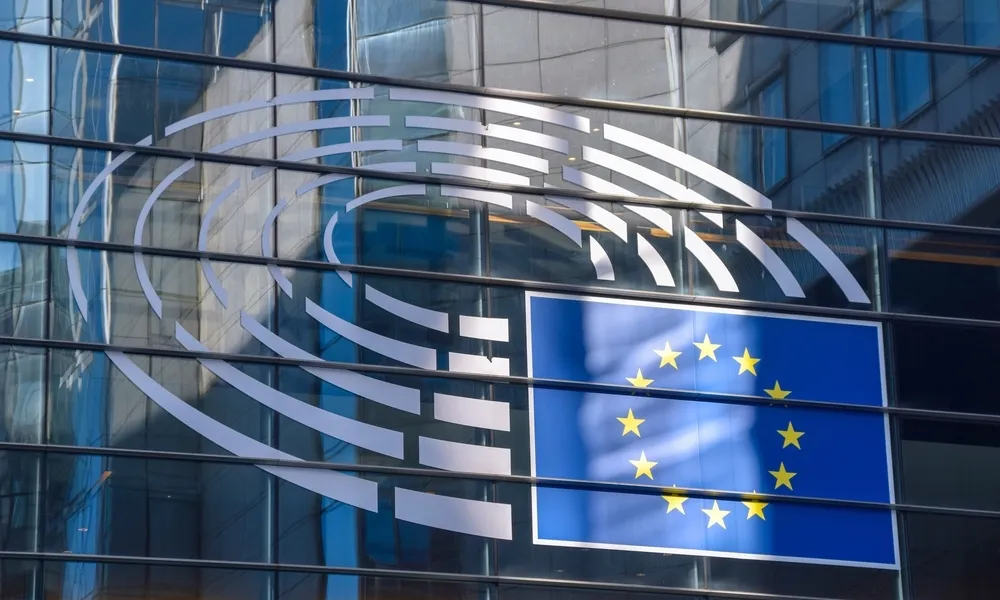
The European Parliament on Tuesday approved a new package of EU rules aimed at tightening the screening of foreign investments that may pose risks to security, public order or the bloc’s strategic interests.
The agreement, reached between Parliament and Council negotiators, was adopted with 508 votes in favour, 64 against and 90 abstentions. It makes foreign direct investment screening mandatory in sensitive sectors, including defence, semiconductors, artificial intelligence, critical raw materials and financial services. The revised framework is designed to help authorities identify and address potential security or public order risks at an early stage, while maintaining the EU’s open approach to international capital flows.
It also seeks to streamline national screening mechanisms, reduce bureaucracy and preserve the EU’s attractiveness as an investment destination. Coordination between national authorities and the European Commission will be strengthened through a horizontal cooperation framework intended to address cross-border risks. The rules will also cover certain intra-EU transactions where ultimate control of the investment lies with individuals or legal entities from third countries.
A stronger economic security framework
The approved text states that the EU must further strengthen its ability to respond to economic security risks linked to foreign investment. In this context, the Commission has already presented a proposal known as the Industrial Acceleration Act, aimed at speeding up industrial production, in March 2026.
The new rules also clarify when a foreign investment is considered to create a direct or indirect control relationship with a company in the EU. This includes cases where a foreign investor gains decisive influence, or a substantial ability to influence the commercial policy of a European company, through shareholding, voting rights, contractual arrangements or representation on management bodies.
Adapting to geopolitical risks
The revision of the foreign investment screening framework is linked to the need to respond to changing global economic conditions and rising geopolitical tensions.
The text notes that strengthening the EU’s economic security is considered necessary because of the integration of global markets and the new risks arising from dependencies in critical supply chains and technologies. It also refers to previous strategic communications by the Commission and the EU High Representative for Foreign Affairs, which identified foreign investment screening as a key tool for protecting the Union’s economic security and addressing risks such as technology leakage and economic coercion.
Raphaël Glucksmann, the European Parliament’s rapporteur, said the new regulation “closes a chapter of European naivety”, adding that some third countries seek to weaken the European Union. He said the legislation marks a shift in how the EU approaches foreign investments in sensitive sectors.
Following approval by the European Parliament, the new regulation is expected to be formally adopted by the Council of the European Union before entering into force. It is set to apply 18 months after its official adoption.
Source: CNA