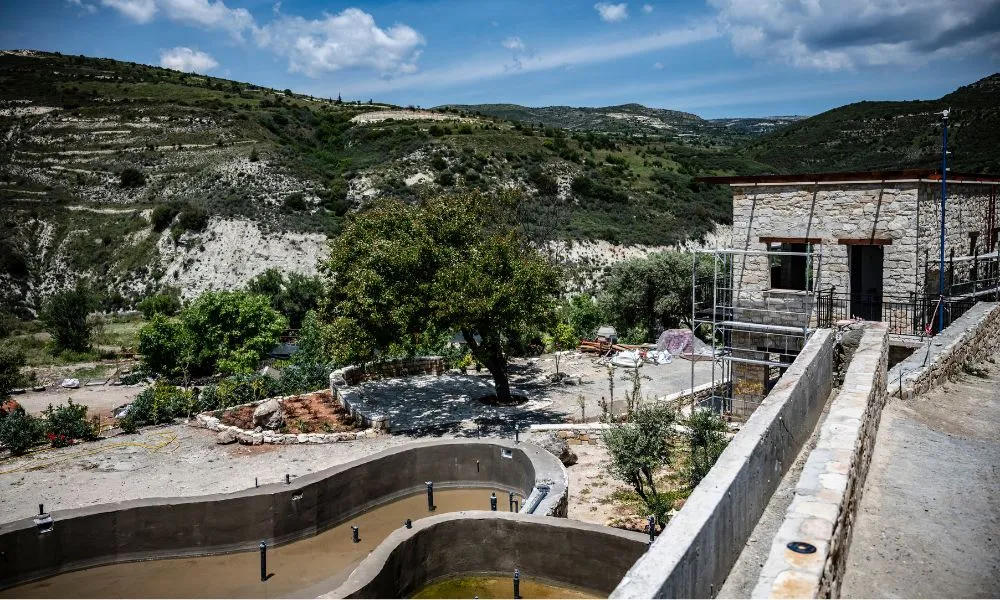

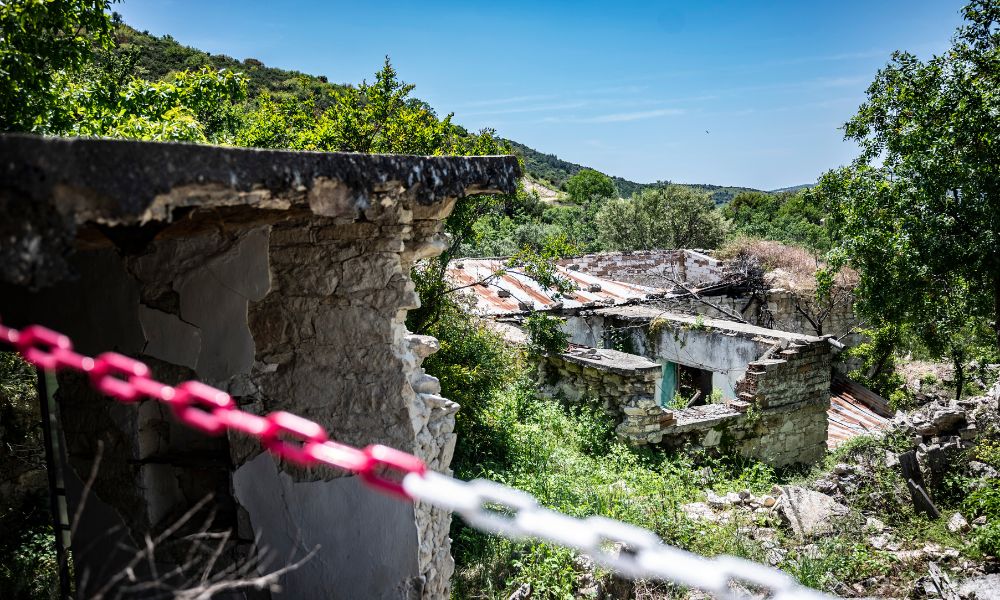
Few people in Cyprus knew of the village of Trozena until recently. Some may have heard of it because of its famed waterfalls, others because of its distinctive bridge dating back to the period of British rule. Those who knew Trozena knew it either because they had some personal connection to the village or because they are nature lovers, as the natural landscape in the area is indeed unique.
Trozena will never be the same again. Quite simply, it will regain life and residents, permanently changing the reputation that followed it as an abandoned village of exceptional natural beauty. Trozena lies on the “border” between Limassol and Paphos. Administratively it belongs to Limassol, while ecclesiastically it falls under Paphos.
Trozena has entered the public spotlight because an investor, holding Hungarian and Israeli citizenship, purchased around 70 per cent of the abandoned houses in the settlement, along with extensive tracts of land, with the aim of creating “New Trozena”.
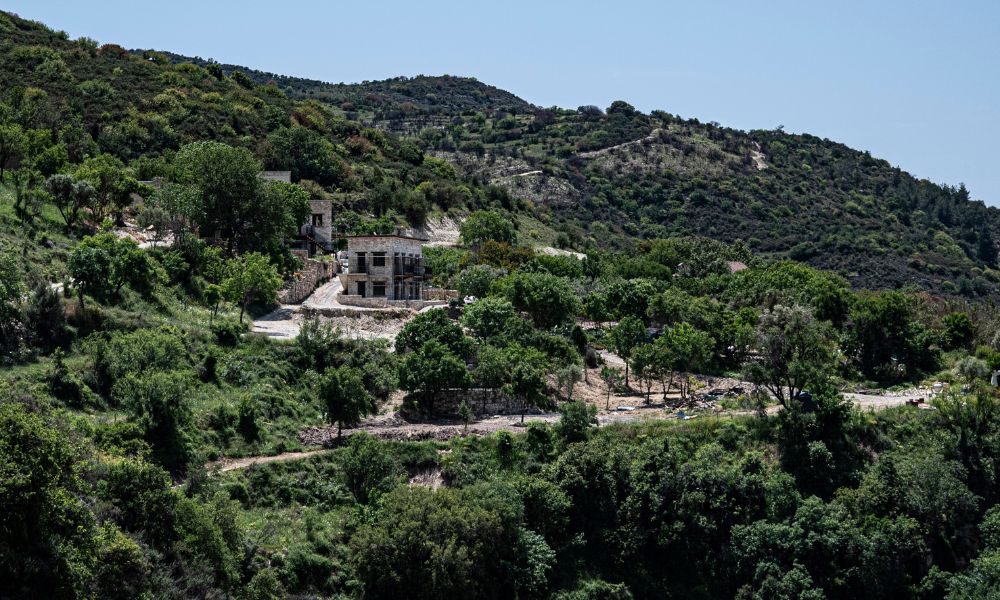
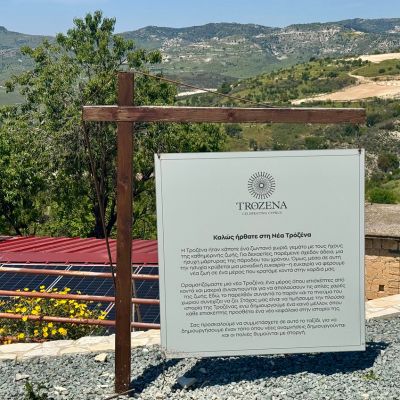
According to the licensing applications on record, the project will include 60 rental rooms in scattered dwellings that will either be restored or newly built, a camping area – essentially glamping – and a winery. Large areas of land were also purchased for the operation of the winery, either where vineyards already exist or where new ones will be planted. A restaurant and a café are also planned.
On Friday, Politis visited the village. Following the uproar that first erupted on social media and later spread to mainstream media, it was clear that no one would restrict access to the area, nor did we expect to see security teams guarding the site. What we encountered was very different.
Two things stand out about Trozena. The village is genuinely isolated, built on a slope and literally hidden from all sides. What also stands out is the clear, running water flowing through its channels.
Public allegations that circulated on social media have been dismissed by the community leader of Arsos, who also has administrative responsibility for Trozena.
He wants to create a ‘place of retreat’
Near the village church, in a lush green area with running water, we met Uriel Kertesz, the investor who purchased much of Trozena.
Uriel Kertesz is a retired businessman and holds dual citizenship, Hungarian and Israeli. One of the first things he told us was that he is a European citizen and has every right to purchase land in Cyprus, as elsewhere in Europe, insisting that “I forced no one to sell to me”.
While he generally appears willing to talk about the Trozena project, he is not prepared to put his personal life “on display”. Despite repeated questions, he never told us how much the project will cost or how much he paid for the land he acquired in Trozena. Some information suggests that he has so far paid around €2-3 million.
He is nevertheless ready to purchase additional plots of land, if they are offered at the right price. He admits that from the outset he wanted to buy as much as possible in order to create a “place of retreat” in Trozena.
“At first we bought cheaply, then a bit more expensively, now some are asking for much more – let them keep it for themselves.”
He has a background in civil engineering, which perhaps explains his hands-on involvement in the works, as he does not simply oversee from a distance but actively engages and gives instructions to the workers himself.
Nonsense about ‘plans’
Uriel Kertesz “discovered” Trozena in 2021, when he was looking to buy a large area of land in Cyprus for development. A property agent was trying to sell him another area, but when he saw Trozena he became fixated on it.
When asked whether he intends to create a “kibbutz” in Trozena, he laughed, replying that he has no interest whatsoever in the nationality of the people who will live there, as long as they respect what will exist.
He also described as “nonsense” claims that Cyprus is part of a plan for a “Greater Israel”. “Nowhere in the Scriptures was Cyprus part of the Jewish state. It is not the same as what is today called Palestine – that was Jewish land,” he said.
He explained that he came to Cyprus for the pleasant climate, the sense of security and because it is a country where almost everyone speaks English, meaning that as a retiree he did not need to learn a new language.
“In Trozena I want to create a ‘place of retreat’, a place where someone can come and calm down when they have important life decisions to make. To leave the noise behind and find peace.”
He is seen as a benefactor by residents of Arsos
In the community of Arsos, he is held in very high regard. Reporting indicates that no one has a bad word to say about him.
At the village café we met three residents and the community priest.
“It was a forgotten and abandoned area where every year we tried to open the road so we could get to the church. Now he helped us restore the church.”
Another villager, speaking more angrily, said: “Those who are shouting today did not even know where Trozena was. What do they expect people in the countryside to do to survive? Everyone had written off the fields and houses there, and this man came to help us. The investment he is making will bring many benefits to the entire area, not just Trozena. Jobs will open up.”
A man sitting nearby added: “We had vineyards in the area and we abandoned them because the state does not help. In the summer we almost burned. Today, with this man taking care of the land, isn’t it much better?”
What stands out is that most villagers have personally met Uriel Kertesz, as he frequently visits the community. He also appears to have supported its development in various ways, including financially.
At the same time, residents deeply appreciate the fact that locals – young people from the village – are employed on the Trozena reconstruction works. Under different circumstances, they would have had no employment opportunities in mountainous Limassol.