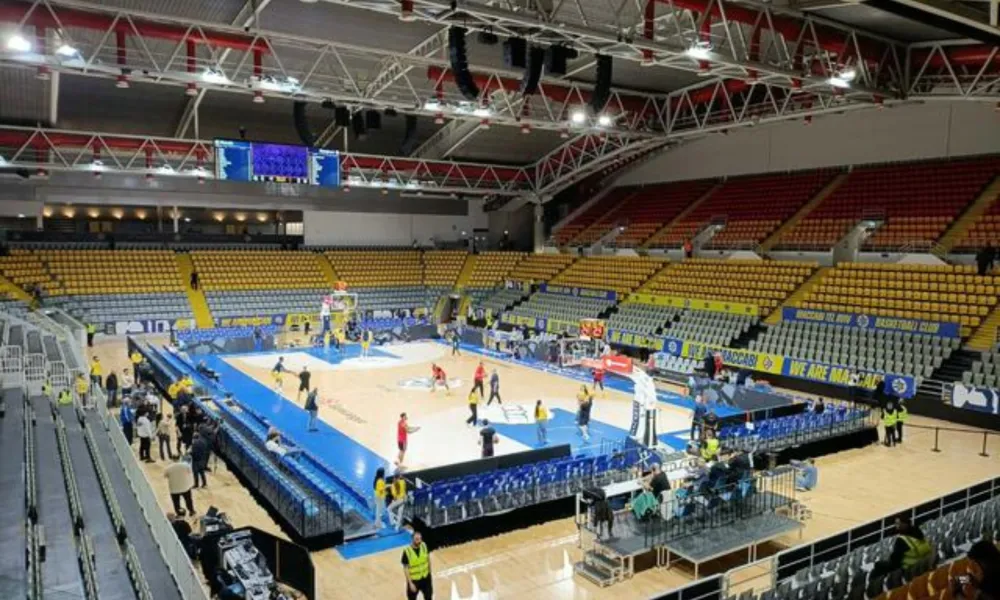
The decision to make the Spyros Kyprianou Arena available to Maccabi Tel Aviv for EuroLeague matches has sparked strong reactions from parents, athletes, coaches and sports clubs in Limassol, with around 500 athletes, the vast majority of them children, affected by the arrangements.
The measures required for Maccabi's home games mean that athletes can lose up to four days of training in weeks when the Israeli club plays twice.
According to information obtained by Politis, the Cyprus Sports Organisation (KOA), which owns and manages the arena, will receive €10,000 per match for the venue's use. However, no alternative training facility has been secured for the affected clubs.
Under the guidelines issued to users of the arena, the facility must be vacated at 12 noon on the day before each game for security reasons.
In practice, this means children attending school are unable to make use of the hours technically available before the closure. By the time classes end, the venue is already shut and remains inaccessible throughout match day.
Hundreds of children affected
Most of those impacted belong to three artistic and rhythmic gymnastics clubs and academies.
They include hundreds of children aged between three and 13, ranging from beginners taking their first steps in the sport to young athletes training daily for competitive gymnastics.
Weightlifters, fencers and table tennis players are also affected by the restrictions.
An exception has been made for just two elite athletes, who are permitted to train at the venue until 3pm each day.
For everyone else, including national team athletes who normally train daily until late evening, training hours have been removed from their schedules at a crucial stage of their preparation.
Training moved to other cities
Around 100 athletes are now travelling to Nicosia and Larnaca to continue training, following arrangements made directly between clubs, coaches and parents.
The solution mainly benefits athletes competing at a high level and is considered impractical for younger children participating recreationally.
Some students now leave Limassol after school and travel to another city for three-hour training sessions scheduled after 5pm.
Families and coaches are covering the transport costs themselves, while KOA has not provided transport or alternative facilities. For many academy members, training sessions are simply cancelled.
Concerns over long-term impact
Speaking to Politis, Onisilos Famagusta coach Yiannos Parpas said it was disappointing that clubs were being disrupted again after the arena's renovation.
He said the affected organisations were not consulted before the decision was taken.
Parpas described the option of training until midday as meaningless for schoolchildren and warned that repeated disruptions, combined with the burden placed on parents, could lead some children to abandon the sport altogether.
He noted that simply finding another hall is not enough because gymnastics requires specialised equipment permanently installed at the Spyros Kyprianou Arena.
According to Parpas, discussions could have taken place about allowing athletes and coaches to remain at the arena for longer periods, provided they also underwent the necessary security checks.
More games still to come
The issue is unlikely to disappear after the first few matches.
According to Parpas, Maccabi Tel Aviv is expected to play between 10 and 12 games in Limassol, meaning the disruption could continue for months.