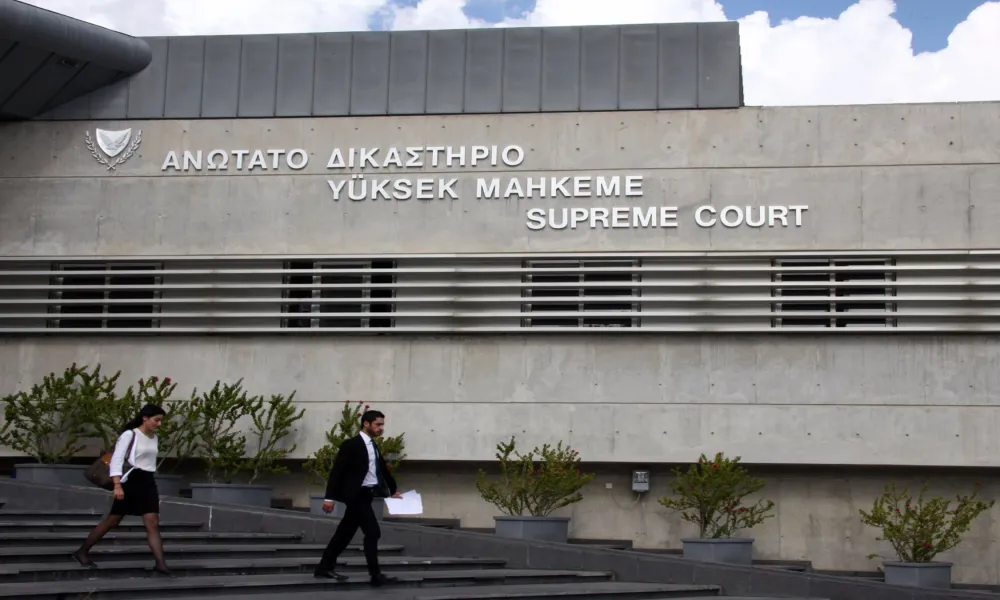

The Supreme Court has rejected an application seeking the issuance of a writ of certiorari to nullify search warrants executed as part of an investigation involving influencer Nataly Tziapoura and convicted prisoner Giorgos Christodoulou, also known as "Zavrantonas".
The application, filed by Tziapoura's lawyer, challenged warrants authorising searches of homes and other premises linked to the accused.
Allegations outlined by investigators
According to evidence previously presented to the court by the investigating officer, authorities are examining allegations of organised criminal activity that purportedly generated substantial sums of money.
Investigators allege that the operation was directed by a convicted prisoner serving a sentence at the Central Prisons, who allegedly used a smartphone with a UK telephone number to communicate with individuals outside prison.
Court documents cited in the report allege that the inmate communicated with Tziapoura and others, providing instructions regarding the management, storage and distribution of funds believed to have originated from illegal activities.
Police further alleged that approximately €50,000 per week was collected and transferred, with the total amount generated over a six-month period approaching €1 million.
Authorities claim that following receipt of the funds, Tziapoura allegedly distributed money in accordance with instructions or arrangements made with the prisoner. The allegations include payments linked to personal expenses, business operations and third parties connected to the case.
Additional allegations
The sworn police statement also referred to information from a source alleging that Tziapoura worked with three prison officers.
According to the allegations, money was allegedly provided in exchange for preferential treatment for the inmate, including the smuggling of prohibited substances and advance warnings of prison searches.
These allegations remain part of the prosecution's case and are yet to be tested at trial.
Supreme Court's ruling
In its decision, the Supreme Court concluded that the lower court had sufficient grounds to believe there was reasonable cause to suspect that evidence, including cash and mobile phones, could be found at the premises covered by the warrants.
The court stated that the material before the lower court supported the belief that the items sought were connected to the investigation of serious, organised and repeated criminal offences.
The judgment also noted that there was a genuine risk that money allegedly derived from criminal activity, as well as mobile phones allegedly used in communications between suspects, could be concealed or removed if immediate searches were not carried out.
One warrant previously cancelled
The report notes that Tziapoura had separately challenged a warrant authorising the search of a bank safe-deposit box.
In that instance, the Supreme Court found that the legal requirements had been met for intervention and annulled the warrant.
Trial scheduled for November
The criminal proceedings are due to continue before the Assize Court in November 2026, where the allegations against the accused will be examined.