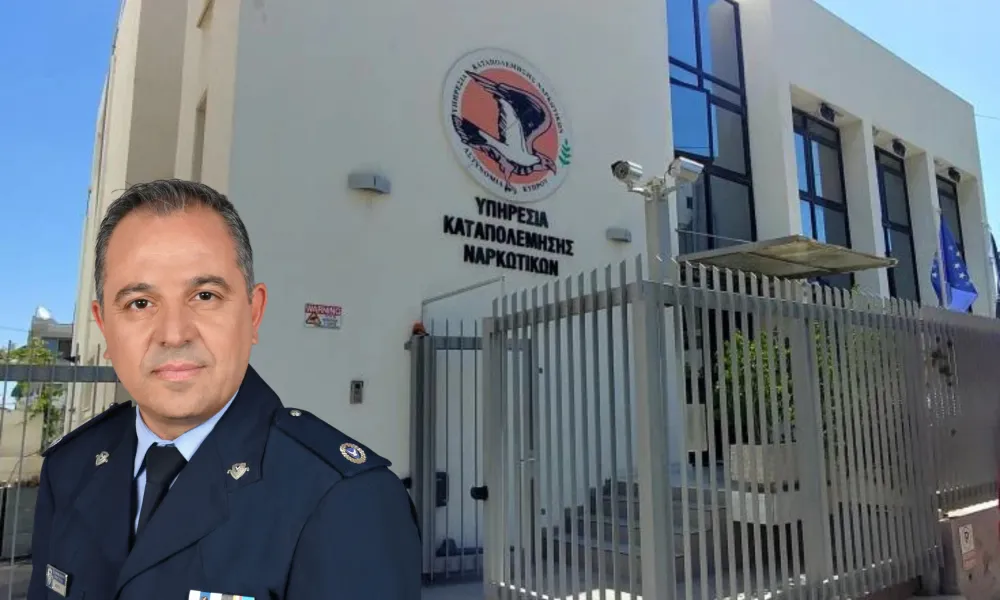

Investigators are expanding their inquiry into Cyprus' largest-ever ketamine seizure after authorities recovered more than 390kg of the drug in Limassol and uncovered indications of a possible organised criminal network operating through the island.
The investigation, led by the Cyprus Drug Law Enforcement Unit (YKAN), is now focused on identifying the sender of the shipments, determining their final destination and establishing whether additional consignments have previously passed through Cyprus or remain en route.
Record seizure for Cyprus
Speaking on the Morning Briefing programme, YKAN commander Christos Andreou described the quantity seized as unprecedented for Cyprus.
He noted that from 2022 until the recent operation, authorities had detected a total of just 220 grams of ketamine nationwide.
The latest seizure therefore represents a dramatic escalation in both scale and sophistication.
Europol assisting investigation
Authorities believe the consignments arrived at the Port of Limassol from another European country.
Andreou said it has already been made public that the shipments originated from Germany.
YKAN is working with Europol to identify the individual or individuals responsible for sending the consignments to Cyprus.
Investigators are also seeking to determine the intended destination of the drugs.
Cyprus may have been a transit point
Given the scale of the seizure, investigators consider it likely that Cyprus was being used as a transit hub rather than the final destination for the drugs.
Authorities are examining whether the ketamine was intended for re-export to another country and whether any processing was planned in Cyprus before onward shipment.
So far, investigators have not established where the drugs were ultimately headed.
Other shipments under scrutiny
The investigation is not limited to the drugs already seized.
Andreou said authorities are examining whether previous ketamine shipments may have entered Cyprus undetected and whether additional consignments could still be on their way.
"Based on the information available and the findings so far, this appears to involve an organised criminal group," he said.
Four suspects in custody
Four foreign nationals remain in custody in connection with the case:
- Two Israeli nationals.
- Two Palestinians.
Investigators are examining the possible involvement of additional individuals both in Cyprus and abroad.
They are also exploring whether Cypriot associates may have played a role.
Andreou said further arrests remain possible if additional evidence emerges.
From homes to warehouse
The first major seizure, amounting to approximately 127kg, was discovered primarily inside a residence, with a smaller quantity recovered from a second property.
Subsequent investigations led police to a warehouse where another large quantity was found, bringing the total seized to more than 390kg.
According to Andreou, the drugs entered Cyprus through normal commercial shipping channels rather than by sea vessels using marinas.
The consignments were declared as sanitary products and construction materials, with the ketamine concealed inside product containers.
Major police operation
The investigation began after intelligence was passed to YKAN by another police service.
Authorities assessed the information and launched an operation lasting between two and three days.
The operation led to the issuance of court warrants, searches of two residences, the seizure of the drugs and the arrest of the four suspects.
Up to 700,000 doses
Investigators estimate the seized quantity could be converted into between 300,000 and more than 700,000 doses, depending on dosage levels.
Andreou declined to place a monetary value on the drugs but said the quantity involved could generate substantial criminal profits.
Authorities are also examining whether part of the shipment was intended for the Cypriot market.
Growing concern over ketamine use
Andreou noted that drug consumption trends change continuously and said Cypriot authorities had recently received warnings from European counterparts about increasing ketamine use.
He described ketamine as a Class B depressant drug that can be consumed directly or used in the production of other synthetic narcotics.
Entry-point controls
Asked about controls at Cyprus' entry points, Andreou said airports, ports, marinas, fishing shelters and courier companies remain under constant scrutiny because Cyprus is not a producer of synthetic drugs.
He said regular spot checks are conducted in cooperation with the Customs Department, alongside targeted operations when specific intelligence is received.
However, he acknowledged that thousands of packages and shipments enter Cyprus every day, making comprehensive inspection impossible.
The investigation remains ongoing, with authorities focusing on identifying the sender, determining the final destination of the shipments, mapping the suspected criminal network and establishing whether the seizure forms part of a wider ketamine trafficking route operating through Cyprus.