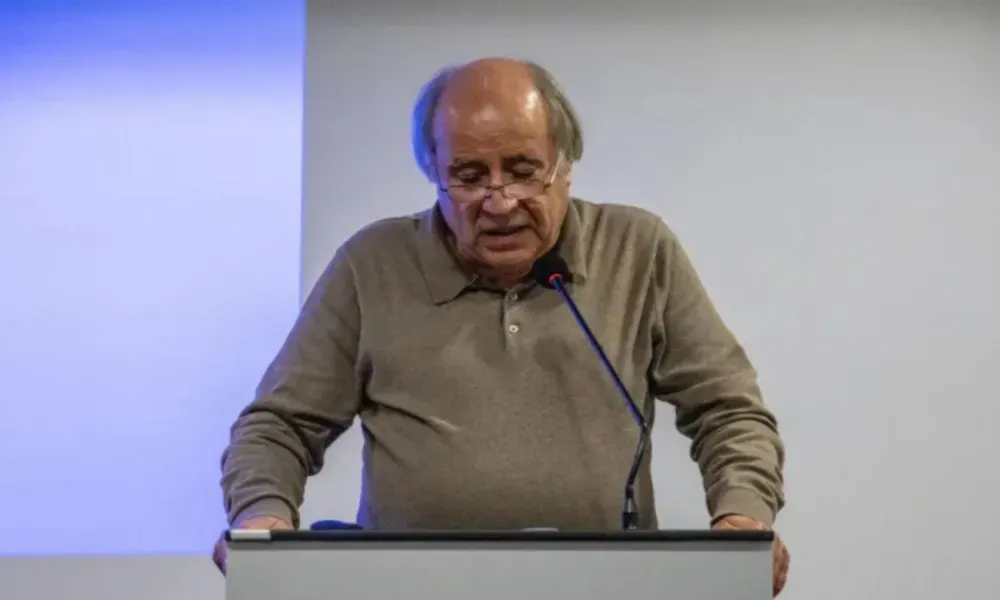

The appearance of independent criminal investigator Andreas Paschalides before the House Institutions Committee on Friday has intensified debate over the findings of his report in the high-profile Videogate case, with opposition MPs and legal observers questioning aspects of his testimony and methodology.
The discussion took place amid restrictions imposed by Assistant Attorney-General Savvas Angelides, who cautioned that the criminal investigation remains ongoing and that public discussion of certain matters could affect or contaminate evidence.
Edited footage and authenticity
One of the main points of contention concerned Paschalides' assertion that an eight-minute video published on social media on 8 January 2026, featuring close associates of President Nikos Christodoulides, was not authentic because it had been edited.
During questioning, Paschalides said he had relied on the opinion of an expert who concluded that the video was the product of editing.
Critics argued, however, that the existence of editing does not in itself mean that audiovisual material is false, fabricated or misleading. They pointed out that editing is a standard technical process used to select and compile footage, and that the key issue is whether the edits alter or distort the underlying events being depicted.
The broader 26-hour audiovisual archive from which the footage originated has previously been deemed authentic by the Legal Service.
Remarks on possible offences
Paschalides also faced questions over references in an earlier public statement in which he used the term "idle talk" or "empty chatter" when discussing matters under investigation.
Lawmakers sought clarification on how such comments related to the existence of potential criminal offences, with several members expressing confusion over the connection between the terminology used and any alleged criminal conduct.
Findings could change
Further questions were raised when Paschalides acknowledged that conclusions and recommendations contained in the report he submitted to the Attorney-General on 17 July could be revised if new evidence emerges.
He said his findings were based on the evidence available at the time and noted that the investigation remains active.
Paschalides has been granted an extension in his role as criminal investigator until the end of the year as efforts continue to identify those responsible for the production and dissemination of the video.
According to his testimony, any significant new evidence could lead to a reassessment of the report's conclusions.
Questions over timing of publication
Committee members also questioned why preliminary findings were made public before the investigation had concluded and before the report had been fully assessed by the Legal Service.
Paschalides said the intention was to keep the public informed.
However, critics argued that the initial announcement generated political confusion and created the impression that no criminal wrongdoing had been identified, prompting public declarations of vindication from government officials.
Paschalides acknowledged that the wording of his initial statement had contributed to misunderstandings about the status of the investigation.
Hybrid warfare claim and impartiality concerns
The investigator declined to elaborate on references linking the case to a possible hybrid warfare operation against the Republic of Cyprus, citing the ongoing nature of the criminal investigation.
Questions were also raised regarding perceptions of impartiality following his reappointment by the government to a third term as chairman of the Independent Authority for the Investigation of Allegations and Complaints Against the Police shortly before the completion of his report.
Paschalides rejected suggestions that the appointment affected his objectivity, noting that his reappointment had been recommended by the Attorney-General.
Black Cube lawyer addresses committee
The committee also heard from Antonis Demetriou, lawyer for Black Cube, the company paid to produce the disputed video.
Demetriou said his role was limited to representing the company and relaying information provided by his client.
He stated that he did not know who was behind the video and stressed that he would not knowingly represent a company acting against Cyprus' interests.
He also said he had not personally concluded whether the video's purpose was to damage the Republic of Cyprus, as suggested by Paschalides, or to expose alleged corruption, as claimed by Black Cube.